
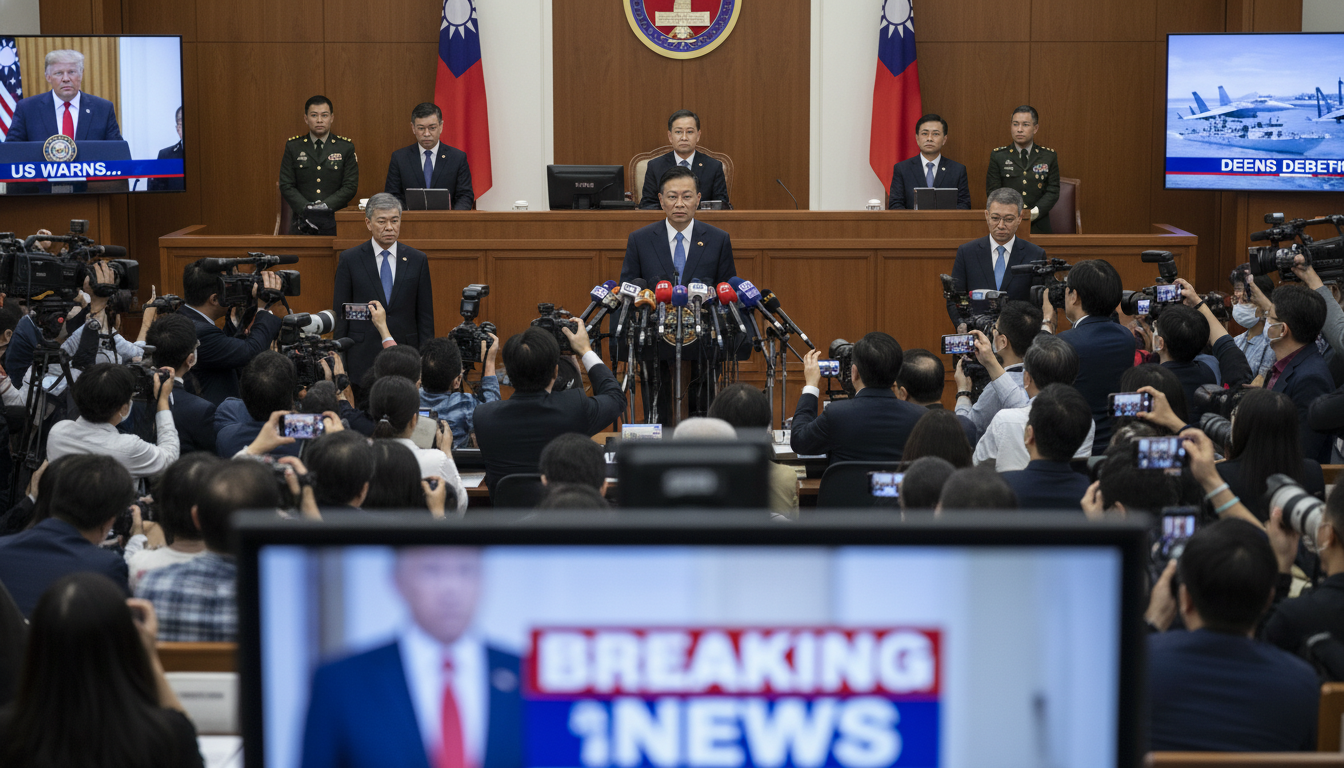
Taiwan independence: Taipei declares island sovereign after Trump warns a declaration could spark war
Taiwan independence: Taipei calls the island sovereign after Trump warned a declaration could spark war with China; U.S. arms sales and regional tensions grow.
Taiwan independence became the focal point of a diplomatic flare-up this weekend after Taipei publicly asserted that the island is a sovereign, independent nation following comments by U.S. President Donald Trump warning against any formal declaration that might precipitate conflict with Beijing.
The remark, made during a recorded Fox News interview before Mr. Trump departed Beijing on May 15, 2026, prompted a swift rebuttal from Taiwan’s foreign ministry and renewed debate over U.S. arms sales and regional deterrence.
The episode underscores the precarious balance between deterrence and escalation that has defined cross‑Taiwan‑Strait relations for decades.
Taiwan’s official response
The Ministry of Foreign Affairs in Taipei issued a statement asserting that “Taiwan is a democratic, sovereign and independent nation” and that it is not subordinate to the People’s Republic of China.
The ministry also reiterated that U.S. arms sales form part of bilateral security commitments and described those exchanges as a shared deterrent against regional threats, signaling that Taipei sees defensive cooperation with Washington as central to its survival.
Trump’s warning from Beijing trip
During the television interview broadcast after his meeting with Chinese President Xi Jinping, Mr. Trump said he did not want Taiwan to declare independence if that would require the United States to travel “15,000 kilometres to make war.”
He added that he would make a decision “in a fairly short time” on pending U.S. arms sales, language that introduced uncertainty into already tense consultations among Washington, Taipei and Beijing.
U.S. policy and the legal framework for arms sales
U.S. policy toward Taiwan continues to rest on a mix of robust security support and deliberate political ambiguity: Washington provides military assistance without extending formal diplomatic recognition.
That posture is anchored in the Taiwan Relations Act of 1979, which obliges the United States to supply Taiwan with defensive weapons, and has been implemented alongside decades of strategic ambiguity intended to deter unilateral moves toward independence while dissuading coercion from Beijing.
Recent arms transactions and their scale
In December 2025, the U.S. government approved what was described as a second major arms package to Taiwan since President Trump returned to office, valued at approximately US$11.1 billion.
Officials and analysts noted the sale was the largest proposed U.S. package for the island in decades and prompted a closer look in Taipei at how to finance and modernize its own defence capabilities in concert with American suppliers.
Taiwan’s domestic debate over defence spending
President Lai Ching‑te’s government proposed a wide‑ranging programme to modernize Taiwan’s armed forces, originally framed as a 40‑billion‑dollar plan intended to strengthen deterrence and reduce vulnerability.
That proposal confronted opposition in the legislature from the Kuomintang, which warned against a costly arms race, before lawmakers approved a narrower 25‑billion‑dollar envelope on May 8 to purchase U.S. equipment and accelerate capability upgrades.
Beijing’s stance and Xi’s admonition
China continues to regard Taiwan as a breakaway province to be reunified with the mainland, and Beijing has consistently warned that moves perceived as steps toward formal independence would cross a red line.
At the May meeting in Beijing, Mr. Xi told Mr. Trump that the Taiwan question is “the most important” issue in Sino‑American ties and cautioned that mishandling it could drive the two powers into confrontation rather than stability.
Diplomatic calendar and the coming test in Washington
Analysts say the diplomatic calendar will put the Taiwan question back in the spotlight when President Xi is expected to visit Washington in the autumn of 2026, an event that could become the next high‑stakes test of the fragile status quo.
Observers such as Bonnie Glaser of the German Marshall Fund have predicted Beijing will press Washington to refrain from major arms decisions ahead of that trip, seeking to limit friction and preserve the broader bilateral agenda.
The coming weeks will be watched closely in Taipei, Beijing and Washington as officials decide whether to move forward with planned arms transfers and how to calibrate public messaging on Taiwan independence and deterrence.
