
Simile Series B: AI startup raises $200M at $2B valuation
Simile raises $200M in Series B at a $2B valuation to expand its AI simulated-user platform for marketing and product research, led by Greenoaks and partners.
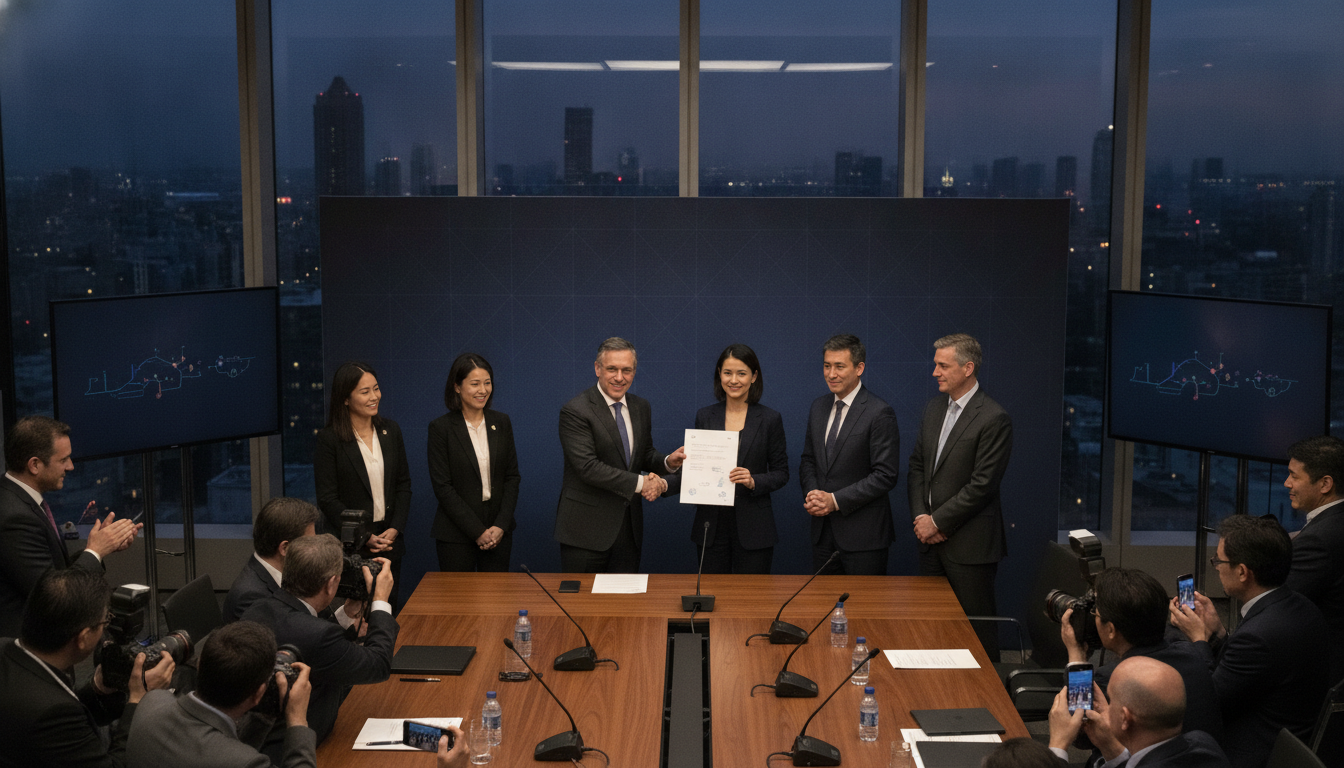
Simile announced a $200 million Series B that values the company at roughly $2 billion, marking a rapid escalation in funding since its public debut. The Simile Series B was led by Greenoaks and included participation from previous backers and strategic investors. The raise positions the company to scale its simulated-user technology for marketing and product research across enterprise customers.
Funding round and valuation
Simile disclosed that its Series B was led by Greenoaks and completed at a $2 billion post-money valuation. The round follows a $100 million Series A raised earlier this year, reflecting a fast pace of investor interest in synthetic research platforms. Company leaders say the new capital will be used to expand engineering, broaden data partnerships, and accelerate go-to-market efforts.
Investor group and strategic backers
Alongside Greenoaks, the Series B included Index Ventures, Hanabi, Bain Capital Ventures, A*, Factory, Definition, and CVS Health Ventures. Several investors in the round already had ties to the company from prior financing, while CVS Health Ventures serves both as an investor and a customer. The mix of traditional venture firms and corporate VCs suggests investors see commercial applications across healthcare and consumer markets.
Product focus: simulated users for research
Simile builds AI "simulated users" intended to stand in for human respondents in marketing and product research scenarios. The platform can generate behaviorally varied profiles to test product concepts, ad creative, and user flows without recruiting large panels of live respondents. Company materials describe use cases including rapid concept screening, diverse audience modeling, and early-stage product validation for design teams.
Founder background and research lineage
The company was founded by Joon Sung Park, a Stanford PhD whose academic work explored computational agents that mimic human-like behavior. Park’s dissertation projects involved simulations of social interactions and lifelike agent behavior, work the company says underpins its modeling approach. That academic lineage is central to Simile’s pitch that agent-based simulations can complement traditional qualitative and quantitative research methods.
Customer relationships and commercial traction
Simile highlights enterprise engagements as evidence of commercial traction, with CVS Health named among its marquee customers. The dual role of CVS as both investor and customer underscores the product’s appeal to corporations seeking faster, scalable research workflows. Executives say customer pilots have focused on reducing cycle time for creative testing and broadening demographic coverage in early-stage research.
Market context and competitive landscape
Simile enters a crowded and fast-moving category of synthetic research and AI-driven testing tools, where several startups have recently attracted sizable capital. Peer companies have also reached high valuations, reflecting investor appetite for technologies that can accelerate insights at lower marginal cost than traditional panels. Observers caution, however, that simulating human unpredictability remains difficult and that synthetic results will likely need validation against real-world behavior.
The company has articulated an ambitious long-term goal of modeling entire populations, a target that executives say will be pursued incrementally as models improve. Critics note that human decision-making mixes emotion and context in ways that are hard to capture, but supporters argue that even imperfect simulations can provide early directional signals and reduce the number of live tests needed.
Simile’s latest funding round intensifies the race to commercialize synthetic research, and the new capital should enable the company to scale engineering and customer operations. As enterprises weigh the trade-offs between speed and fidelity, the industry will be watching how simulated-user platforms integrate with traditional research methods and regulatory expectations.
