
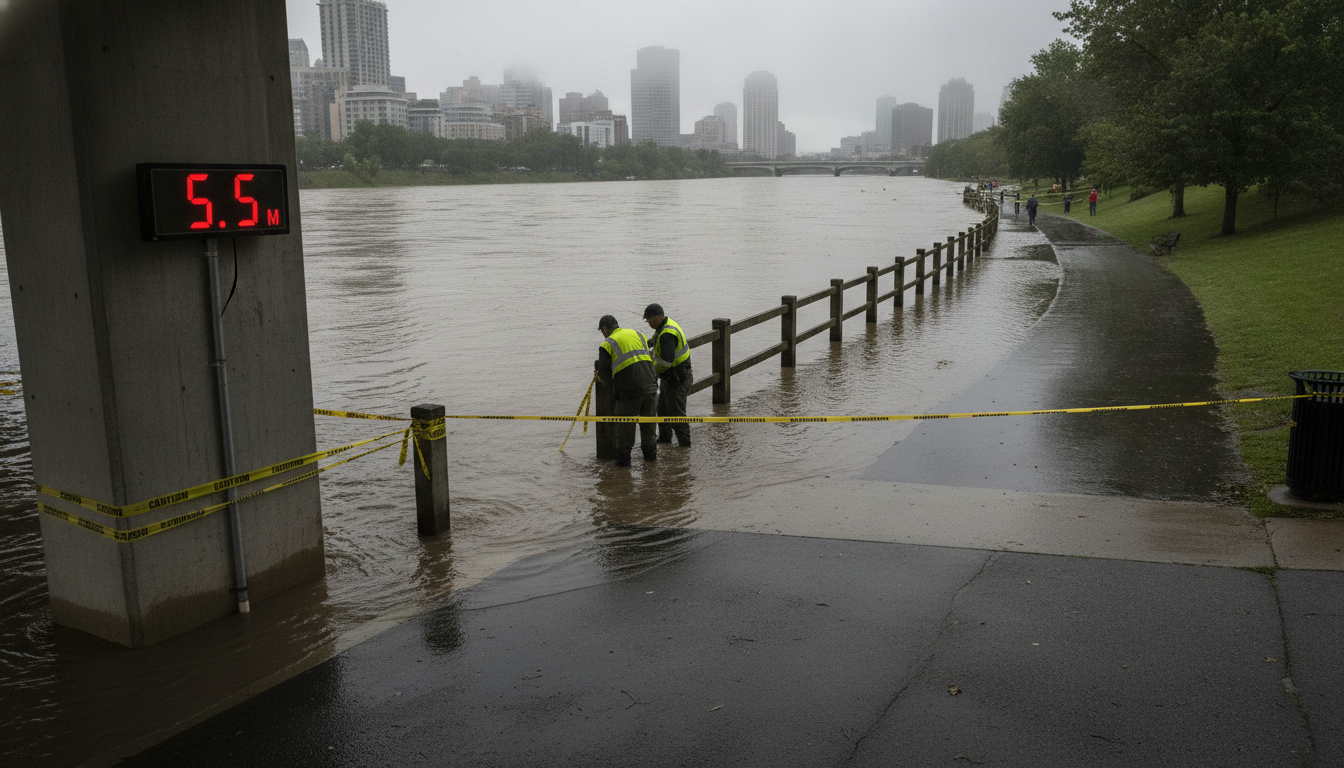
River levels near 5.5 metres prompt safety reviews and possible trail closures
Rising river levels near 5.5 metres have prompted safety reviews and possible closures of low-lying trails, with municipal crews monitoring conditions and issuing advisories.
A spike in river levels has led municipal park officials to begin formal safety evaluations of riverside and low-lying trails, city sources confirmed. River levels reaching about 5.5 metres are now treated as a threshold at which water can overtop or encroach on pathways, prompting inspections and contingency planning. Officials say the assessments aim to prevent public access to sections that could become hazardous from fast currents, submerged surfaces, or unstable banks.
Flood threshold triggers trail review
Officials explained that the 5.5-metre mark is a practical trigger for trail inspections given local topography and the location of popular pathways. When gauges approach that stage, crews step up patrols and map the sections most likely to be affected. These early evaluations allow staff to recommend targeted closures instead of wide-area restrictions, limiting disruption while protecting users.
Municipal engineers and park managers noted that the exact point of flooding varies from site to site, depending on embankment height and trail elevation. That variability means some trails may remain open at 5.5 metres while adjacent sections require immediate closure. The precautionary approach prioritizes safety and reduces the risk of emergency rescues.
Low-lying trails identified for closure
Park planners have identified riverside promenades, boardwalks, low-lying gravel paths, and sections that run through floodplain meadows as the most vulnerable. These locations are prone to rapid inundation when river stages rise, and footing can become slick or wash away without warning. In past events, water has crept onto trails at similar stages, creating hidden hazards such as submerged root systems and shifted path surfaces.
Closure decisions are being made on a site-by-site basis and communicated through municipal channels, with signs and barriers deployed where necessary. Where possible, authorities are marking safe detours and advising users to choose higher-elevation routes until water levels recede.
Monitoring and forecasts guide decisions
River stage monitoring from hydrometric stations and weather forecasts form the backbone of the response. City officials said they are tracking data from provincial river forecast centres and local gauge readings to anticipate changes in river levels over the coming days. Short-term precipitation and upstream releases from reservoirs can alter projections quickly, so the situation is being reviewed multiple times daily.
Forecasts currently indicate a period of elevated water levels influenced by recent precipitation and seasonal melt, according to municipal statements. Officials cautioned that small shifts in weather or upstream flows could change the timing and severity of impacts, and emphasized the value of continuous monitoring.
Municipal response includes inspections and signage
Municipal crews have been mobilized to inspect vulnerable trail segments, install warning signs, and prepare temporary closures where necessary. Park rangers and public works teams are coordinating to ensure that barriers are placed safely and that closed sections are clearly marked to prevent inadvertent access. Public information officers are distributing advisories through official social channels and local news outlets.
The city also reported plans to deploy additional staff to remove debris and check infrastructure such as footbridges and boardwalk supports once water levels allow safe access. Any structural damage identified during inspections will be assessed before trails are reopened to the public.
Park rangers and emergency services on alert
Park rangers and local emergency responders have been briefed and placed on heightened alert to respond to reports of unsafe conditions. Authorities stressed that self-rescue attempts in fast-moving water are extremely dangerous and that people should avoid entering flooded areas. The presence of submerged hazards and strong currents can trap even experienced swimmers and boater.
Rangers will increase patrols along popular corridors and are prepared to enforce closures if necessary. Emergency services underscore that swift response times are hampered during high-water events, reinforcing the importance of heeding closure notices and posted warnings.
Advice for trail users and recreation groups
Officials urge walkers, cyclists, and dog owners to check municipal advisories before heading out and to plan routes away from riverside corridors when river levels are elevated. Trail users should respect closure signs and barriers and report any observed flooding or damage to municipal hotlines. Keeping a safe distance from swollen water and avoiding bridge approaches and overhanging banks reduces the chance of accidents.
Recreation groups and organized events are being asked to coordinate with parks staff to confirm route safety and to consider postponement where needed. User education on the hazards of high water and the rationale for temporary closures is being emphasized to reduce confrontations and risky behaviour.
Municipal authorities stress that the safety review process is precautionary and aimed at keeping the public safe while maintaining access where conditions permit. Continued monitoring of river levels and forecasts will determine whether additional closures are required or if previously restricted trails can be reopened when water recedes.
