
Quebec signals review of water pricing as infrastructure shortfall looms
Quebec signals review of water pricing as infrastructure shortfall looms (151 chars)
The Quebec government said Thursday it is open to a broader discussion about water pricing after examples of metering cut consumption, while new municipal figures underline a multi‑billion‑dollar maintenance gap. The water pricing debate was raised in a parliamentary committee by Municipal Affairs Minister Samuel Poulin, who cited cases where installing water meters significantly reduced use and delayed costly plant expansions. The exchange came after a report from the Union des municipalités du Québec prompted renewed attention to the condition and funding of municipal drinking‑water systems.
Poulin frames the discussion around conservation
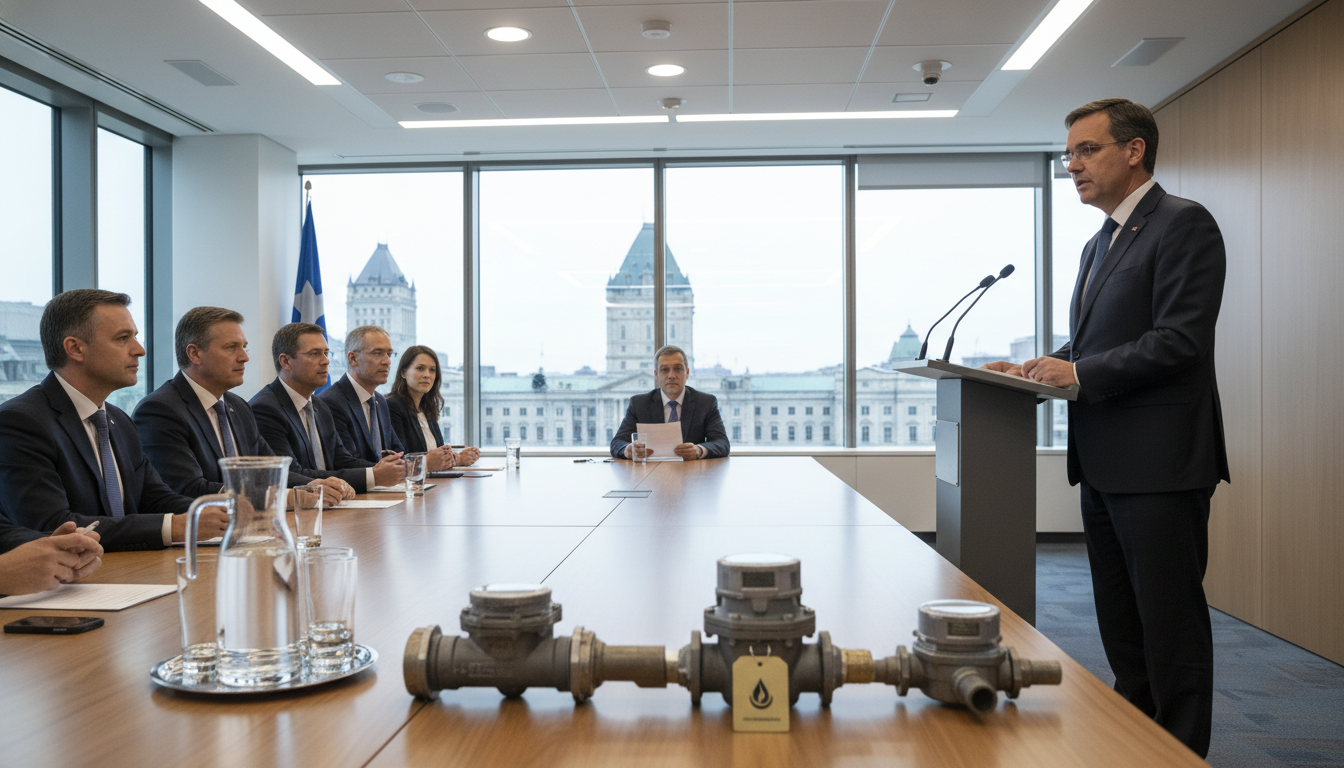
Minister Samuel Poulin told the committee he is “reflecting more” with municipal partners on the use and pricing of potable water, pointing to meter programs that produced marked declines in consumption. He noted provincial funding programs are available to help municipalities install meters, but he stressed the government does not intend to override municipal autonomy on setting local tariffs. Poulin also said the province will launch a public campaign aimed at encouraging responsible potable water use across Quebec.
UMQ report highlights a $49.7‑billion maintenance gap
The water pricing conversation was intensified by a recent report from the Union des municipalités du Québec, authored by former finance ministers Monique Jérôme‑Forget and Nicolas Marceau. The report cites a 2025 estimate that the deficit in maintaining municipal water and road assets above pipes stands at $49.7 billion, based on research from the Centre d’expertise et de recherche en infrastructures urbaines. Those figures prompted the UMQ and other stakeholders to recommend greater reliance on targeted pricing mechanisms to help fund rehabilitation work.
Government points to planned infrastructure funding
In response, Minister Poulin stressed that the provincial Plan québécois des infrastructures earmarks $7.3 billion for municipal asset upkeep, and that additional transfers to municipalities total $7.4 billion in 2026. He argued a large share of treatment, supply and distribution facilities—about 95 percent—are in satisfactory condition, with 92 percent of wastewater and stormwater facilities also rated satisfactory. At the same time, Poulin acknowledged the government’s own analysis shows $19.3 billion would be required to upgrade water infrastructure currently assessed at high or very high risk of failure.
Municipal capacity constraints affect housing and development
Opposition and municipal representatives highlighted the practical consequences of limited water‑system capacity for local development and housing supply. Liberal MNA Marie‑Claude Nichols reminded the committee that municipalities manage more than 101,000 kilometres of water and sewer pipes and some 10,400 related facilities. She said 43 municipalities have had to slow or cancel housing projects because treatment plants lack the capacity to support new construction, leaving an estimated 36,000 homes unbuilt.
Metering cited as a tool to delay costly upgrades
Proponents of metering argue it gives households greater control over consumption and can defer expensive infrastructure upgrades by reducing demand. Poulin pointed to examples where meter installation produced “important” reductions in use and prevented the need to expand a local filtration plant. Government programs to subsidize meters, he said, can lower the barrier for municipalities considering such measures, though he reiterated any decision on local water pricing would remain with municipal councils.
Tension between municipal autonomy and provincewide solutions
The committee exchange underscored a persistent tension in Quebec public policy: municipalities seek both greater resources and the freedom to set local rates, while the province balances fiscal commitments and political caution about mandating tariffs. Poulin repeatedly invoked municipal autonomy when asked whether Quebec would encourage or require water pricing changes, saying it is not the government’s intention to impose a uniform tariff regime. At the same time, the province is preparing a public information campaign that officials say will encourage conservation without dictating municipal policy.
Quebec’s water pricing debate now sits at the intersection of infrastructure finance, municipal authority and housing policy, with concrete figures—$49.7 billion in maintenance backlog and $19.3 billion for high‑risk upgrades—driving urgency. Municipalities, advocacy groups and provincial officials have signalled differing remedies, from increased direct funding to targeted pricing and expanded metering programs. How those options are balanced will shape local budgets, development approvals and conservation efforts in the coming years.
