
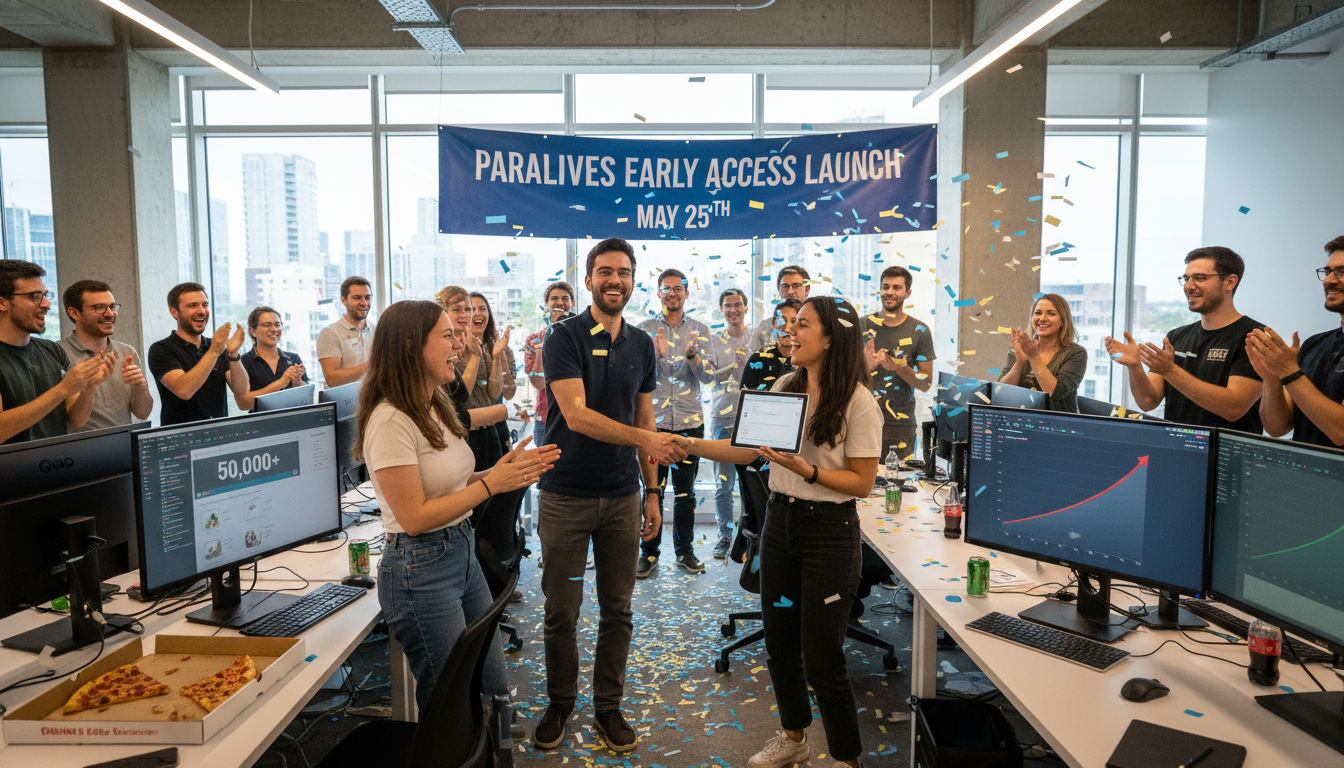
Paralives sells more than 500,000 copies after May 25 early-access launch
Paralives sells over 500,000 copies after its May 25, 2026 early-access launch, as Quebec studio promises free updates amid industry debate over EA’s takeover.
Since launching in early access on May 25, 2026, the Paralives game has sold more than half a million copies, a striking result for a small Quebec studio. Developer Alex Massé and his team say the volume of player feedback and purchases has far exceeded expectations and given the project early momentum. The release has reignited discussion about player-driven design and alternatives to long-dominant franchises.
Sales milestone and player response
Paralives reached sales of over 500,000 units within days of its early-access release, according to studio figures shared publicly. The developer reported receiving more than 150,000 distinct messages from players, underscoring intense community engagement. That reaction, the team says, validates years of work and signals strong appetite for new life-simulation options.
From solo project to a 15‑person studio
Alex Massé began Paralives as a solo effort in 2019 and used crowdfunding to grow the project into a full team. The campaign allowed him to hire specialists and now a 15-member studio is managing development, community relations and ongoing updates. Massé has described the sales and feedback as a relief after seven years of development, and credits backers for enabling expansion.
Gameplay focus and Quebec identity
Paralives offers core life-simulation features familiar to players of similar titles: home building, career paths and interpersonal relationships. The studio emphasizes deeper customization tools, positioning Paralives as more flexible than some competitors on character and world design. The game also incorporates local touches — a virtual city inspired by Quebec City, regionally flavored items such as poutine, and even a version of the interface in Quebec joual.
Community split and comparison with The Sims
The release arrives amid long-standing frustration among some fans of The Sims franchise over bugs, monetization and perceived developer distance. Researchers and community observers have documented complaints that expansions and a new business model have made fully-featured play costly for dedicated players. Paralives has capitalized on that sentiment by promising no paid expansions and committing to free updates, while stressing close two-way communication with its player base.
Industry context and concerns around EA’s takeover
Broader industry developments helped shape the reception of Paralives, particularly Electronic Arts’ high-profile sale announced in September 2025 to a consortium that includes the Saudi Public Investment Fund, Affinity Partners and Silver Lake. The transaction prompted protests and petitions in the United States and drew attention in Canada, where a media union urged federal scrutiny of national-security and content concerns. Activists and some players fear ownership shifts could alter content decisions on issues such as LGBTQIA+ representation.
Representation, censorship worries and creative freedom
Developers and academics have highlighted the importance of creative freedom in life-simulation titles, noting that game spaces can provide safe expression for LGBTQIA+ players. Paralives includes LGBTQIA+ character options, pronoun selection and relationship flexibility, features its creators say are central to the studio’s mission. Observers point out that a small, Canadian-based team faces much lower risk of external censorship compared with a title controlled by owners operating under different legal or political constraints.
Independent titles that arrived recently offer a cautionary note about early hype, however. A competing life simulator, InZoi, attracted large crowds at launch in 2025 but struggled to sustain that initial interest. Analysts say retention and continuous content support will determine whether Paralives can convert early sales into a lasting player community.
Massé and his team acknowledge the challenges. They have been open about remaining bugs and describe the current release as an early-access product that will be refined over time. Players and researchers praise the studio’s responsiveness, noting that direct exchanges with developers have produced tangible changes in past updates.
The next months will be critical as Paralives moves from launch surge to longer-term operation. The studio must balance delivering regular, free content with technical improvements and community requests while navigating a market still dominated by large publishers. For now, Paralives has delivered a notable commercial and cultural debut for an independent Quebec developer, but its ability to sustain momentum will hinge on execution and ongoing player support.
