
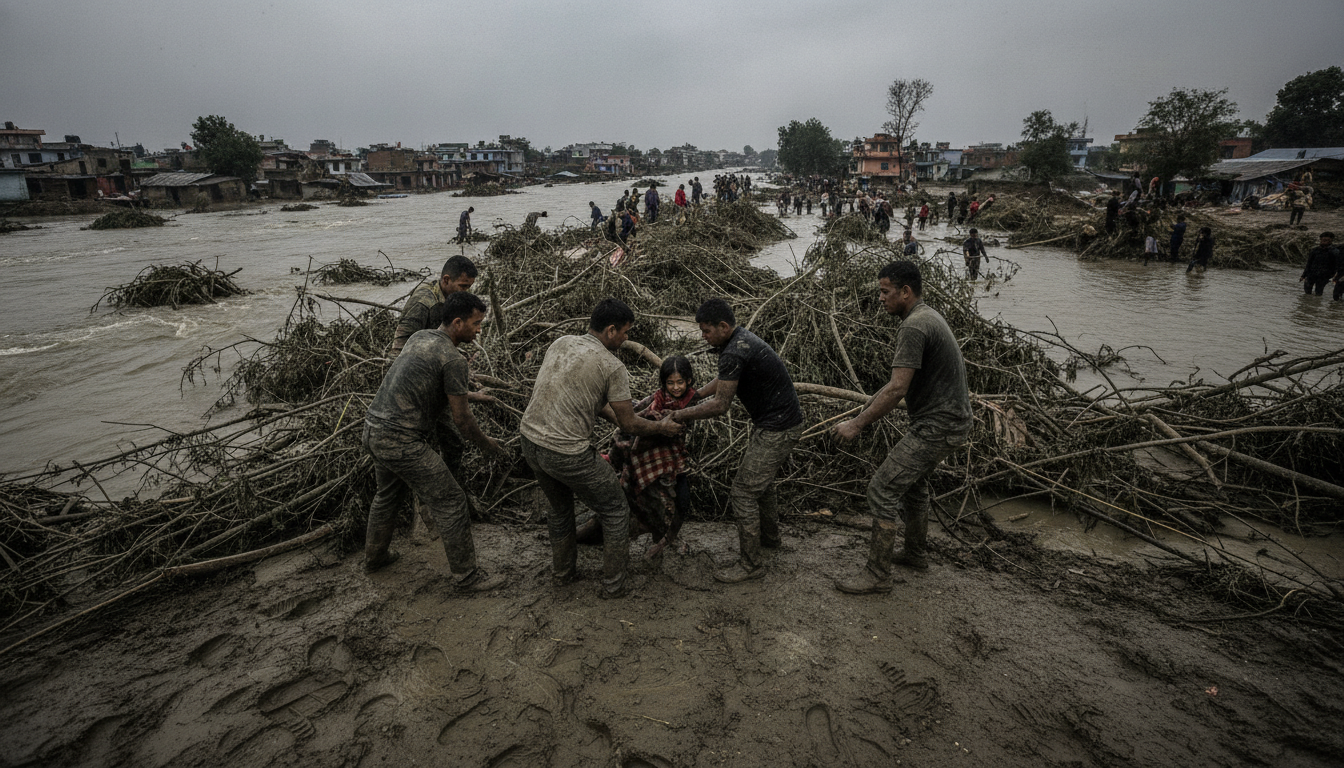
Nepal floods: young girl rescued from rubble as survivors search for missing loved ones
A child was pulled alive from collapsed homes days after the Nepal floods devastated communities, as survivors use social media to find missing relatives. The Nepal floods have left nearly 800 people dead and more than 3,000 unaccounted for as of August 30, 2026.
The dramatic rescue of a young girl rekindled hope for families still awaiting word on loved ones buried by landslides and flash floods. Emergency crews and volunteers continued round‑the‑clock searches while communities shared images and names online to speed identifications and reunions.
Dramatic rescue revives search efforts
Days after the heaviest rains struck, rescue teams extracted a child alive from the rubble of a collapsed house, officials said. Footage and reports from the scene show responders carefully removing debris amid unstable structures, underscoring the thin margin between survival and tragedy.
The rescue galvanized further deployment of search-and-rescue units to hard-hit districts, where heavy machinery and trained dogs were dispatched to locate people trapped beneath mud and wreckage. Local authorities described the find as a rare but vital sign that more survivors might still be reachable.
Casualty figures and missing persons by the numbers
Government and relief agencies reported nearly 800 fatalities and upwards of 3,000 people missing nationwide as of August 30, 2026. Those numbers reflect widespread damage to homes, roads and bridges, complicating both rescue operations and efforts to account for the displaced.
The scale of loss has overwhelmed regional mortuary services and registration systems, prompting emergency directives to streamline the identification process. Officials cautioned that both death and missing counts remain provisional while teams continue to survey isolated valleys and mountain settlements.
Families turn to social media in desperate searches
Relatives are posting photographs and details of missing people on social platforms to crowdsource leads and speed identifications. In many communities, images of recovered bodies are circulated to help families determine whether a loved one has been found, a practice that has become central to the search effort.
Volunteers, journalists and activists have helped amplify appeals, creating digital databases and local messaging groups. Authorities have urged caution and coordination with official registries to reduce duplication and to ensure accurate documentation for eventual reunification or grief counselling.
Humanitarian response and international offers of aid
Domestic agencies mobilized emergency shelters, medical teams and food supplies to meet urgent needs, while international partners signalled readiness to assist. Non‑governmental organizations have set up temporary clinics and water‑purification units to prevent secondary health crises among displaced populations.
Coordination centres at district level are prioritizing the delivery of relief to communities cut off by landslides, and airlifts have been used where roads remain impassable. Donor countries and multilateral organizations have been briefed on requirements for heavy equipment, rescue specialists and longer‑term recovery funding.
Access problems slow operations in remote regions
The monsoon‑affected areas include steep terrain and narrow valleys where landslides have erased access roads, forcing crews to rely on helicopters and foot patrols. These logistical constraints have slowed the retrieval of survivors, the recovery of the deceased and the delivery of life‑saving supplies.
Officials warned that ongoing rain and unstable slopes increase risks for rescue teams and survivors alike, complicating safe entry into affected villages. Engineers are conducting rapid assessments to identify safe corridors and temporary bridges that will allow heavier equipment to reach isolated communities.
Psychological toll and community coping mechanisms
Grieving families face a shortage of formal support while community networks and religious groups step in to provide solace and practical help. Volunteers are organizing local memorials and collecting lists of missing persons to maintain a record for subsequent identification and aid claims.
Mental health practitioners and relief agencies have highlighted the need for coordinated psychosocial services as part of the relief package, noting that long‑term recovery will require attention to trauma as well as physical reconstruction.
As search teams continue to comb through debris and families scan social feeds for any sign of missing relatives, authorities have called for patience and discipline in reporting and identification. The coming days will determine whether more survivors can be found and how quickly communities can begin the slow process of rebuilding.
