
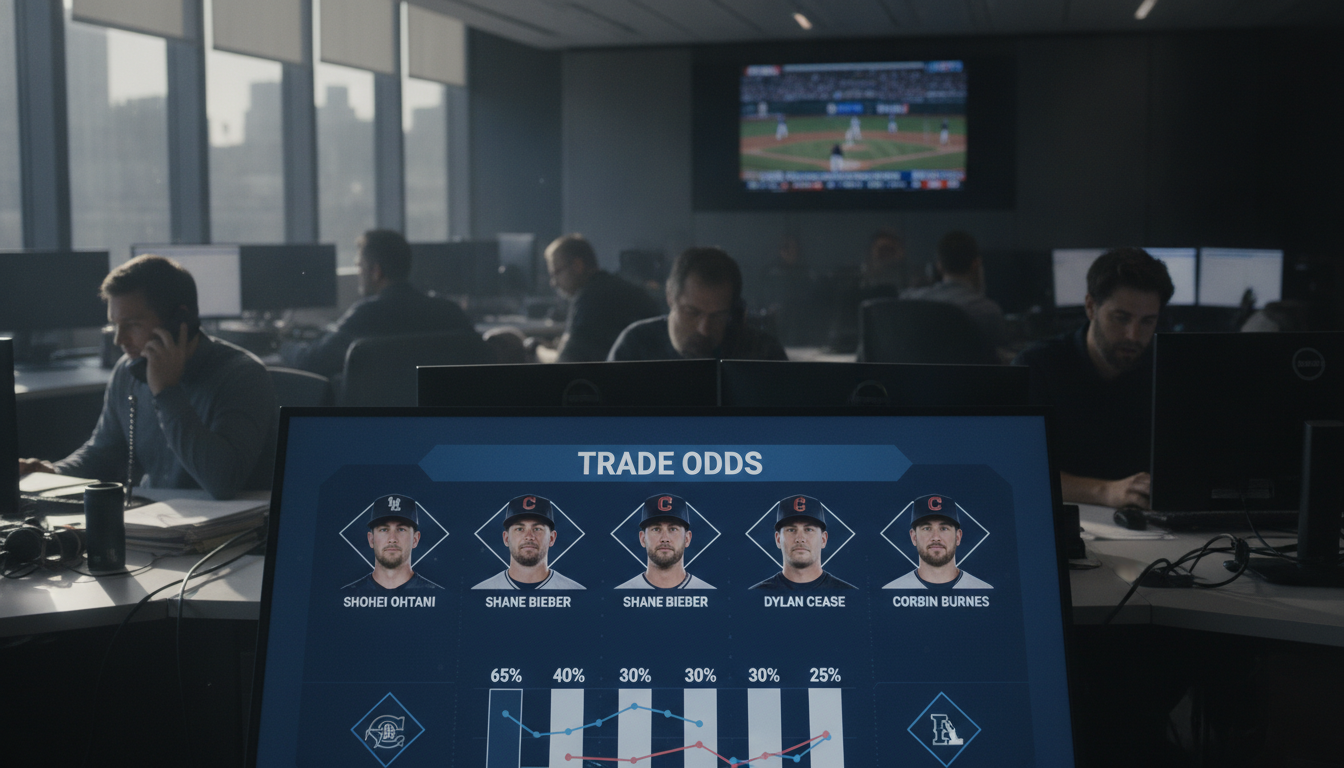
MLB trade deadline: Odds rise that several top-flight arms will change teams
Which top-flight pitchers could move at the MLB trade deadline? Overview of likely targets, team interest, contract status and playoff impact for contenders.
The approaching MLB trade deadline on July 31, 2026, has intensified speculation about whether top-flight arms will be moved before the non-waiver deadline closes. Teams weighing title bids are balancing immediate rotation upgrades against the cost in prospects and 2027 payroll flexibility. Front offices are parsing medical reports, workload histories and contract control to determine which pitchers can be acquired without mortgaging future competitiveness.
Market Snapshot: Demand for Starting Pitching
Teams in contention across both leagues continue to prioritize frontline and high-leverage pitching as the calendar advances toward July 31, 2026. Clubs with shaky rotations or recent injuries often see starting arms as the clearest path to protecting or climbing into playoff position. The market shapes itself around a few variables—how many years of control a seller retains, the pitcher’s recent strikeout and walk rates, and perceived durability.
General managers say rotation depth is the most sought-after commodity, and that demand frequently outstrips supply at the deadline. Short-term rentals remain attractive for buyers chasing a postseason run, while teams focused on longer-term construction look for controllable starters or high-upside bullpen pieces.
Teams Most Likely to Pursue Starting Arms
Contending clubs with thin depth charts or inconsistent veteran starters are expected to be primary bidders for top-flight arms. Those teams typically prioritize starter acquisitions that can immediately slot into the rotation and provide multiple quality innings. Clubs juggling an overworked bullpen may also target swingmen who can help bridge starts and preserve late-inning relief options.
Non-contenders and sellers have leverage when they can offer multiple seasons of control or high upside in young pitchers. The interplay between desperation — for buyers — and leverage — for sellers — often determines whether a trade is completed and how steep the asking price becomes.
Contract and Control Considerations Driving Deals
A pitcher’s contract status is central to trade calculus; controllable years remaining usually command higher prospect returns than a one-month rental. Clubs willing to surrender top prospects typically seek multi-year remainers or established veterans under team-friendly contracts. Conversely, teams seeking a single-season boost are often willing to pay a premium for rentals, accepting higher prospect cost for a shorter commitment.
Salary and arbitration timelines also shape negotiations, as buyers must account for immediate payroll impact and potential future raises. Teams aiming to remain compliant with their long-term budgets factor in the 60- or 90-day costs of larger acquisitions, while sellers evaluate whether financial relief offsets the loss of pitching depth.
Types of Arms Drawn to Deadline Trading
Front-line starters with swing-man versatility and relievers with high-leverage track records are the two primary categories that shift at the deadline. Proven starters who miss bats and limit walks typically see the most interest because of their ability to alter series outcomes. High-octane relievers surface as valuable commodities too, particularly for contenders seeking to tighten late-inning matchups.
Emerging starters with high upside but limited big-league track records are increasingly coveted by buyers willing to gamble on upside for a lower prospect price. Teams often prefer pitchers with reliable spin rates, strong velocity profiles and favorable platoon splits, which analytics departments believe translate more predictably across ballparks.
Trade Economics and Prospect Currency
Prospects remain the primary currency in trades for top-flight pitching, but teams also include cash considerations and player-to-be-named-later provisions to bridge valuation gaps. The premium for a controllable starter frequently requires multiple top-50 organizational prospects, while rental deals can sometimes be completed for a package of mid-to-high-level prospects and a single top-tier talent.
Front offices negotiate on medical inspections and workload protections, sometimes inserting clauses tied to innings remaining or performance thresholds. Those protections can alter the immediate return for the seller, but they also allow buyers to mitigate injury risk in trades involving heavy-usage pitchers.
Playoff Implications and Roster Construction
Acquiring a top-flight arm can be decisive in tight division races and wild-card chases, both by improving rotation stability and by preserving bullpen health. A single impactful starter can swing a series and influence matchup planning late into October. For sellers, dealing an established pitcher can accelerate a rebuild or replenish a prospect pipeline, but it also concedes near-term competitiveness.
Managers must integrate new additions quickly, adjusting rotation schedules and bullpen usage to maximize the newcomer’s value. The ability to assimilate a pitcher into a staff’s existing culture and strategy often separates successful deadline pickups from those that underperform.
Despite the noise, not every top-flight arm will change hands before the deadline, and some deals are deterred by medical concerns or prohibitive asking prices. Clubs will continue to evaluate performance trends and internal options through July 31, 2026, leaving the final market shape uncertain until the deadline passes.
As the calendar advances toward the deadline, teams and fans should expect focused activity around starting pitching, with several headline trades possible but no guarantees. The final days will reveal which buyers are willing to pay top prospect prices and which sellers opt to hold assets for the long term.
