
World Cup opener draws jubilant crowds to Mexico City’s Zócalo Square
Jubilant crowds filled Mexico City’s Zócalo on June 11, 2026, for the World Cup opener, prompting public screenings, security measures and transit advisories.
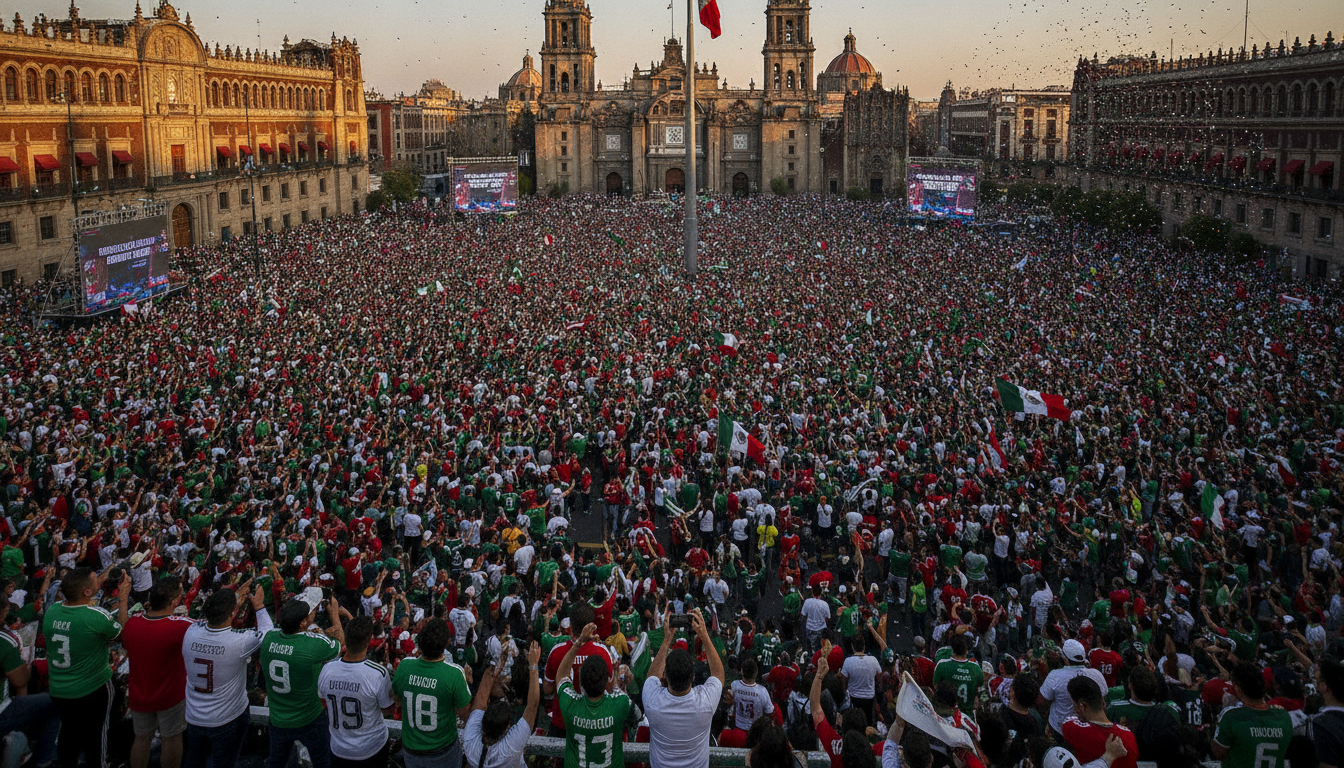
Mexico City’s central Zócalo Square overflowed with fans and flags on Thursday as the World Cup opener drew supporters to the capital’s heart. The scene combined festive street parties, official fan zones and large public screens broadcasting the first match of the tournament. Organizers and city authorities worked to manage the influx, balancing celebratory atmosphere with crowd control and transport planning.
Fans Fill Zócalo Ahead of World Cup Opener
Thousands of supporters converged on the Zócalo hours before kickoff, creating a dense but largely orderly crowd that spilled onto adjacent streets. Vendors sold scarves, jerseys and street food while music and chants set a boisterous tone across the plaza. The public screening areas, arranged by municipal authorities, attracted families alongside long-time fans eager to witness the tournament’s opening moments together.
City Deploys Security and Emergency Services
Mexico City police and emergency medical teams were visible throughout the square and on surrounding avenues as part of a coordinated safety operation. Officials said checkpoints, bag inspections and visible patrols aimed to deter disruptions and ensure rapid response to any incidents. Fire services and medical tents were staged nearby to treat heat-related issues and other minor injuries common at mass gatherings.
Transport Authorities Issue Travel Advisories
Local transit authorities announced temporary route changes and service adjustments to accommodate the surge of visitors to the historic centre. Metro stations nearest the Zócalo were subject to capacity restrictions at peak times, and road closures affected several adjacent thoroughfares to create pedestrian zones. Commuters were advised to use alternative routes, arrive early and expect delays on both public transit and municipal buses.
Local Businesses and Vendors See Revenue Spike
Restaurants, hotels and street vendors reported brisk sales as fans poured into the downtown area, with many establishments extending opening hours to serve the influx. Hoteliers noted strong last-minute bookings tied to the tournament’s opening, while small vendors benefited from large daytime crowds. City tourism officials said the economic boost from match-day activity would be felt across a range of sectors, particularly hospitality and retail.
Cultural Celebrations Complement Match-Day Atmosphere
Beyond the match itself, the Zócalo hosted cultural performances, traditional music and family-oriented activities that reflected Mexico City’s festival culture. Public art displays and choreographed performances punctuated free-viewing areas, giving the event a civic as well as sporting character. Organizers emphasized that the blend of culture and sport was deliberate, aimed at showcasing the city’s heritage to visitors and residents alike.
Organizers Stress Health Protocols and Accessibility
Event officials reiterated guidelines on hydration, shade and assistance for vulnerable spectators amid warm June conditions in the capital. Designated cooling zones and first-aid points were set up within the fan zones to address heat stress and crowd fatigue. Accessibility measures, including reserved viewing areas and assistance services, were also in place to ensure people with reduced mobility could join the public viewing.
The World Cup opener at the Zócalo unfolded with a festive but carefully managed energy, reflecting months of planning between tournament hosts, municipal authorities and emergency services. As dusk fell and the match continued on giant screens, the plaza remained a focal point for collective celebration, with volunteers and officials maintaining order.
Spectators left the square in waves after the game, and city services moved to clear temporary structures and restore traffic flow. Authorities urged attendees to check official updates from municipal channels for information on post-match transport and any follow-up events.
The day’s events underscored the Zócalo’s role as Mexico City’s civic stage, where sport, culture and commerce intersected to mark the opening of the world’s most-watched football tournament.
