
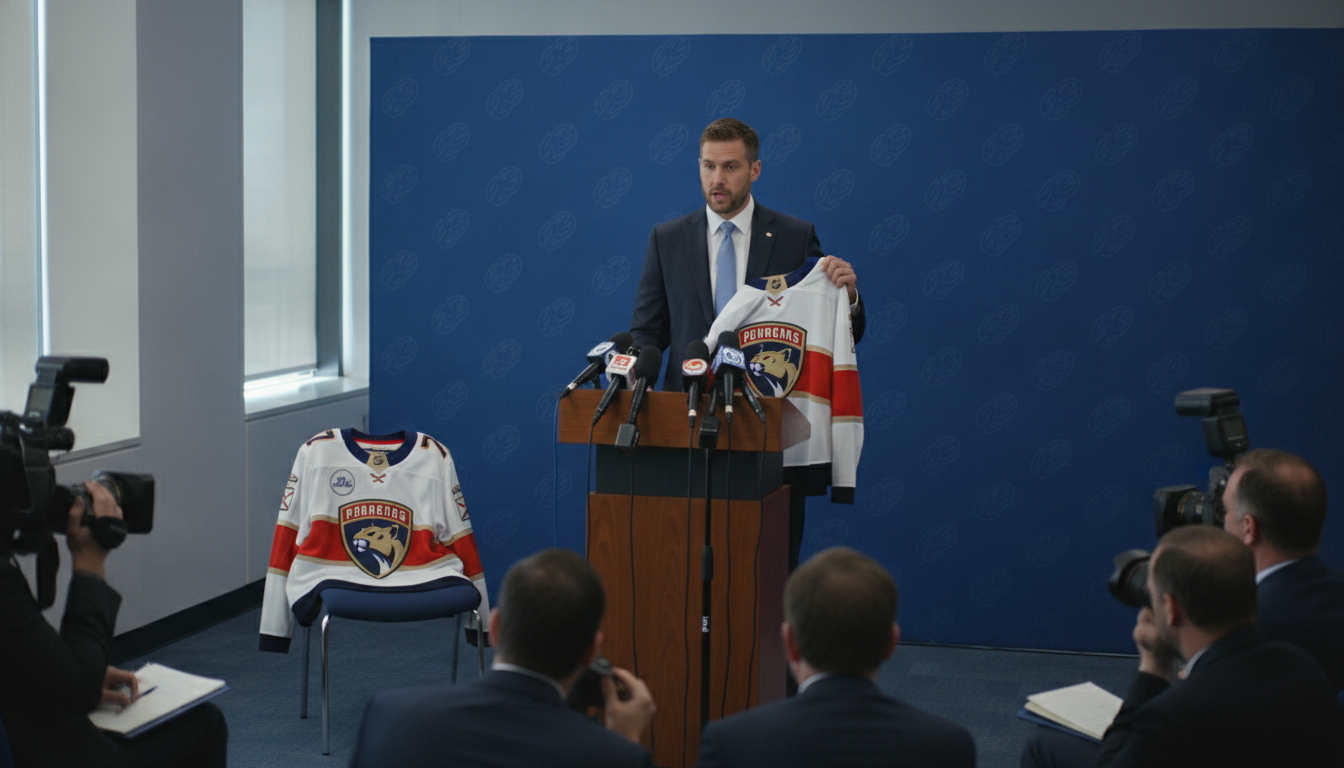
McKenna Says He Won’t Wear No. 72 Out of Respect for Sergei Bobrovsky
McKenna told Sportsnet he will not wear No. 72 to honor Sergei Bobrovsky, explaining his jersey choice and what it signals about respect and lockerroom culture.
McKenna declines No. 72 in Sportsnet interview
McKenna confirmed in a Sportsnet video segment that he will not claim the No. 72 jersey currently associated with Sergei Bobrovsky.
He told the broadcaster, in plain terms, “not gonna take his number,” signaling a deliberate choice rather than an oversight or coincidence.
McKenna framed the decision around respect for a veteran player’s identity and legacy.
His remarks were succinct and delivered without fanfare, underscoring a personal boundary on a highly visible element of a player’s public image.
McKenna explains respect for Sergei Bobrovsky
When asked about jersey selections, McKenna cited Bobrovsky’s established connection to No. 72 as the primary factor.
He emphasized that the choice was out of deference to Bobrovsky and to avoid unnecessary attention or perceived disrespect.
The exchange in the Sportsnet clip illustrated how jersey numbers can carry symbolic weight inside NHL locker rooms.
McKenna’s explanation suggested he prioritized team harmony and veteran recognition over personal preference.
Jersey-number etiquette in the NHL
Jersey numbers often become part of a player’s brand and can hold sentimental or cultural value within hockey organizations.
Players joining new clubs routinely consult teammates and management before adopting a number closely tied to a long-serving or celebrated teammate.
McKenna’s public decision follows a familiar pattern in the league where incoming players either request permission or choose alternative numbers to avoid conflict.
The protocol helps to preserve locker-room relationships and prevent off-ice distractions during a season.
Fans and media reaction to McKenna’s choice
Reaction to McKenna’s statement on social media and in fan forums was mixed but largely understanding.
Many commentators praised the gesture as respectful, while some noted that numbers are ultimately arbitrary and vary in significance from player to player.
Media outlets covered the remark as a straightforward example of sportsmanship rather than a major news event.
Analysts said the conversation about numbers often reflects broader narratives about leadership, legacy and player identity.
Implications for McKenna’s public profile
By declining No. 72, McKenna has given himself an early opportunity to define his public persona through other means.
How he performs on the ice and the alternative number he chooses will shape the next phase of his recognition among fans and sponsors.
The decision may also ease short-term media scrutiny and reduce headlines focused on perceived slights or roster drama.
For McKenna, the move appears calculated to keep attention on hockey performance rather than symbolic gestures.
What the exchange reveals about locker-room dynamics
The brief Sportsnet clip illuminated how small decisions can carry outsized meaning in professional sports environments.
Respect for established veterans remains a practical touchstone when new players integrate into existing team cultures.
McKenna’s posture—concise and respectful—reflects an awareness of those unspoken rules that govern clubhouse life.
Coaches and general managers typically view such gestures as positive signs of a player’s willingness to fit into team norms.
McKenna’s comment, delivered in a short video interview, quickly clarified his stance and moved the narrative away from controversy.
Rather than creating a stir, the remark reinforced a recurrent theme in hockey: that traditions and personal histories continue to shape daily decisions in the sport.
