
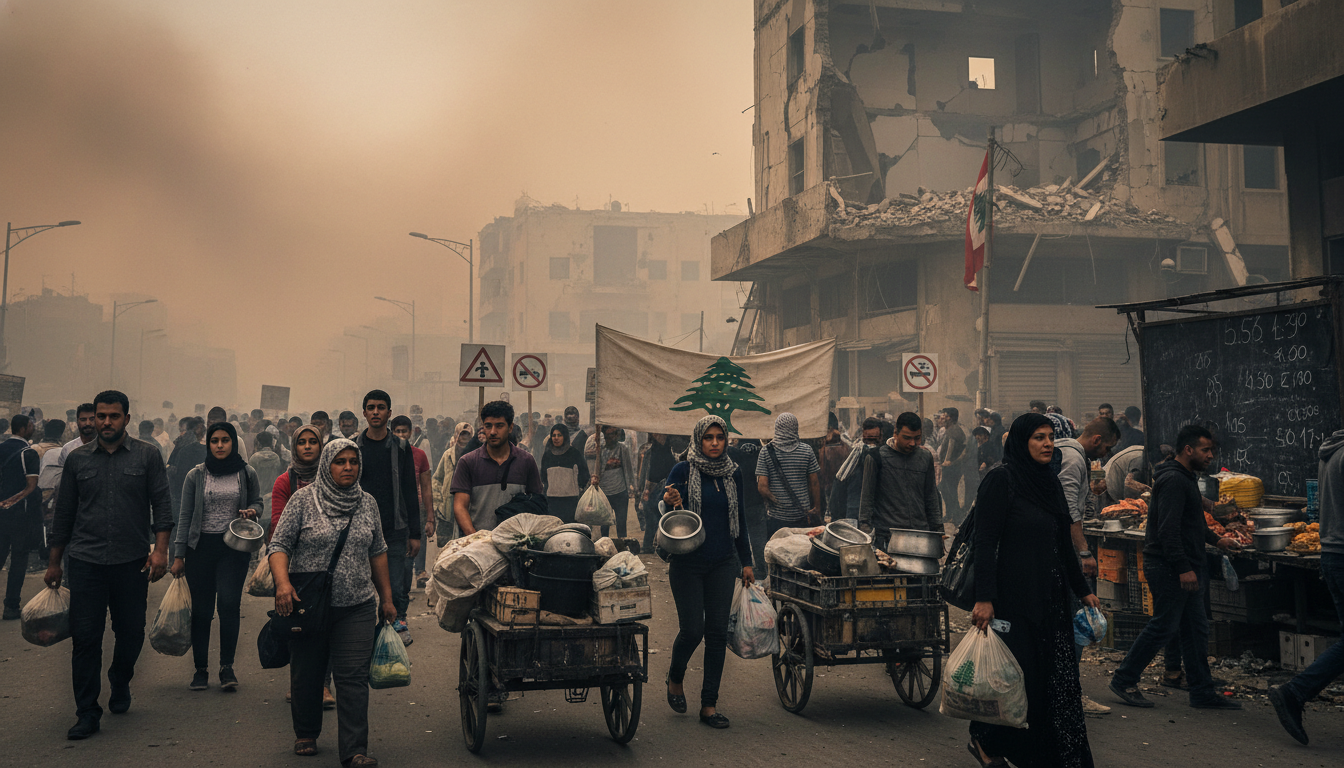
Lebanon economy strained as renewed war reverses 2025 recovery
Renewed war in Lebanon has wiped out 2025 gains, driving inflation, fuel costs and displacement. Lebanon’s economy faces stagnation and business closures.
Lebanon’s economy has been pushed back toward stagnation after renewed fighting in early March erased a fragile recovery from 2025. The escalation has driven sharp price rises, widespread displacement and new supply disruptions that are squeezing households and small businesses across the country. Local shopkeepers, farmers and service workers report fewer customers, higher operating costs and growing difficulty accessing essential imports. Economists warn that continued conflict could undo years of progress and deepen a crisis that began with the 2019 financial collapse.
Renewed fighting erases recent gains
Government and international estimates showed modest improvement last year, with the World Bank recording growth in 2025 and some businesses reopening after a ceasefire. Those gains evaporated once the conflict intensified in March, as cross-border strikes and counterattacks disrupted trade routes and damaged infrastructure. Inflation climbed to an 18-month high in March, reflecting higher fuel and food prices and the reappearance of severe supply bottlenecks. Analysts say the cumulative effect of renewed hostilities is already visible in stalled investment and shrinking consumer demand.
Small businesses squeezed by energy and import costs
Shop owners and service providers describe decisions that once seemed routine as untenable choices today: pay generator bills or keep the lights on for customers. A barber in Beirut’s southern suburbs said petrol and product costs have doubled, forcing longer working hours and slimmer margins even as customer traffic falls. Many small enterprises rely on costly private generators and imported stock, making them vulnerable to rising fuel prices and delays at supply points. Business owners report absorbing price increases where possible to preserve clientele, but many predict closures if conditions persist.
Compounding crises since 2019
Lebanon’s current distress is the result of layers of economic and political shocks over the past seven years. A 2019 banking and currency crisis cut off savers’ access to funds and reduced the lira to a fraction of its former value. The 2020 Beirut port explosion killed hundreds and destroyed vital infrastructure, accelerating public service failures and prompting waves of emigration. A period of relative recovery after a 2024 ceasefire was short-lived; the March escalation reopened wounds and drained resources that had been allocated to rebuilding. Economists say the sequence of bank failures, infrastructure loss and now renewed conflict is producing uniquely severe and overlapping economic pressures.
Displacement, remittances and rural losses
The wave of displacement since the most recent hostilities has shifted populations internally and put pressure on already overstretched social networks. More than one million people were displaced during earlier phases of the conflict, and recent estimates indicate the number has risen substantially since March, with whole villages razed in the south. Sectors that underpin livelihoods—agriculture, commerce and tourism—accounted for the majority of losses during prior fighting and remain fragile. Remittances, a vital support for many households, are expected to decline as Gulf income is squeezed by higher oil prices and regional instability.
Social fissures and political risks
Economic strain is deepening social divisions, with analysts warning that lower-income communities are bearing the brunt of the crisis. Observers note that displacement patterns and targeted attacks have disproportionately affected certain areas, creating pressures within mixed communities and increasing the potential for social scapegoating. Political elites, they say, may exploit economic anxiety to deflect responsibility, a strategy that historically has undermined cross-class solidarity. Aid organizations and social protection experts stress that without targeted support, the poorest families will face the highest risk of long-term marginalization.
Economic outlook and investor confidence
Banks and think tanks caution that if the conflict continues, GDP growth could fall to zero in 2026 and investment will remain subdued. Reconstruction estimates issued after earlier rounds of destruction placed recovery costs in the billions, and fresh rounds of damage will raise those sums further. International donors and private investors face heightened risk assessments, making long-term financing harder to secure. Economists warn that prolonged instability could render significant parts of the economy unviable, with cascading job losses and weakened public revenues.
Local voices underscore the human consequences behind these figures. Small-business owners, teachers and farmers describe the daily balancing act of paying for fuel, feeding families and deciding whether to stay or seek work abroad. Many continue to keep prices low or provide services at a loss to help neighbours cope, even as their own reserves dwindle.
For now, the Lebanon economy remains fragile and heavily dependent on the conflict’s trajectory. Without a sustained reduction in violence and coordinated support for reconstruction and social protection, recovery prospects will be dim, and the social and economic costs for ordinary Lebanese will continue to rise.
