
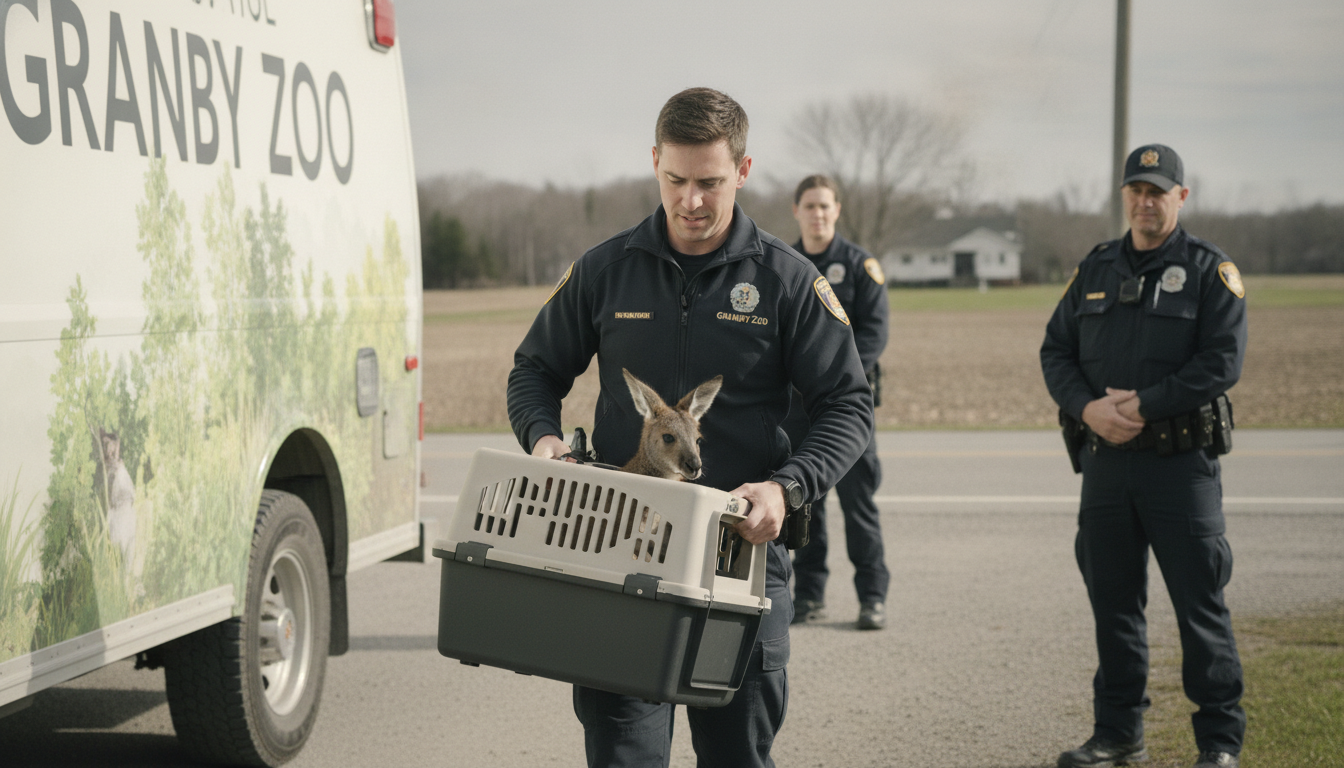
Boucherville kangaroo Joey captured and transferred to Granby Zoo after week on the loose
Joey, the Boucherville kangaroo, was captured and taken to Granby Zoo after a week on the loose; authorities probe possible illegal ownership and permits.
Joey, a red kangaroo that escaped from a stable near Boucherville nearly a week ago, was sedated and taken Tuesday evening to the Granby Zoo where staff say he is awake and in good condition. The Boucherville kangaroo’s capture ends a multi-day search that included public sightings along Highway 20 and volunteer tracking coordinated through animal welfare groups. Provincial officials and animal advocates say the episode has exposed regulatory gaps around exotic pets and prompted calls for better enforcement.
Escape and reported sightings
The animal broke free from a private stable in the Boucherville area and was first reported missing several days before his capture. Witnesses posted sightings to social media and to the Galahad refuge’s page, creating a trail of reports that guided responders during the search. Multiple reports placed the marsupial near Highway 20 and in fields on the South Shore, raising concerns about traffic hazards and public safety.
Galahad, an SPCA-affiliated refuge specializing in large-animal rescue, became a focal point for witnesses and volunteers who were tracking Joey. The refuge relayed information to authorities and to members of the public, urging people not to attempt to capture or corner the animal. Those warnings reflected official concerns that amateur attempts to catch the kangaroo could escalate risk to both the animal and bystanders.
Capture operation and veterinary precautions
Trained responders from the Granby Zoo and provincial wildlife officials conducted the operation that ended with Joey tranquilized and loaded into a zoo transport vehicle. The capture team used sedatives administered by qualified personnel to minimize stress and lower the chance of injury during handling. Veterinarians involved emphasized that sedating a large marsupial requires careful timing and dose calculation to avoid complications associated with capture.
Officials noted the risk of capture myopathy—a dangerous physiological reaction to extreme exertion or stress in wild and captive animals—if the kangaroo had been chased or mishandled before sedation. That risk informed the decision to restrict public interference and to allow wildlife professionals to coordinate the response and transport under controlled conditions.
Health assessment and species confirmation
After arrival at the Granby Zoo, state officials reported that the animal was awake and in stable condition following sedation. Zoo veterinarians carried out an initial health assessment to check for injuries, dehydration, parasites and stress-related conditions. The provincial ministry later confirmed that the animal was a kangaroo rather than a wallaby, clarifying earlier uncertainty among experts about the species.
Zoo staff said they would continue monitoring Joey for several days and provide any necessary medical treatment before determining longer-term care. The Granby facility has the resources and expertise to stabilize the animal and evaluate whether he can remain under institutional care or be transferred to a more suitable long-term placement.
Regulatory questions and political response
The provincial ministry reminded the public that keeping animals that require special permits is illegal in Quebec without proper authorization. The episode has drawn criticism from local elected officials who argue that existing rules and enforcement mechanisms are not functioning effectively. A member of the provincial legislature described the case as an example of regulatory blind spots that left responders without a clear, authorized rescuer.
Officials have said they will investigate the animal’s origin and whether appropriate permits were in place for ownership. That inquiry is likely to examine the role of the stable where Joey was kept and whether any provincial animal welfare or licensing statutes were breached. Animal welfare groups have urged authorities to pursue enforcement actions if illegal possession is confirmed.
Expert warnings and public safety advice
Veterinarians and zoo directors repeatedly urged members of the public not to attempt to capture or chase the animal, saying such actions could provoke defensive aggression or serious injury. Kangaroos are capable of delivering powerful kicks and can bite or scratch when stressed, and well-intentioned interference can complicate professional capture efforts. Experts stressed that leaving the area and promptly reporting sightings to authorities gives trained teams the best chance to secure the animal safely.
Local zoo operators and wildlife specialists also encouraged people to avoid feeding or cornering exotic animals found in urban or suburban settings. They said community reporting, clear sighting information and keeping a safe distance are the most helpful contributions citizens can make during such incidents.
Implications for exotic-pet policy and next steps
Advocates say the episode should trigger a review of how exotic animals are sold, kept and tracked within the province, including whether inspection and permitting processes need strengthening. Shelters and rescue groups called for clearer lines of authority so qualified responders can be identified quickly when an escape occurs. Lawmakers and enforcement bodies may now face pressure to tighten oversight and improve coordination between provincial agencies and rescue organizations.
The immediate next steps include a formal inspection of the premises where Joey was kept, a veterinary follow-up at Granby Zoo, and a determination by authorities about any regulatory action. Meanwhile, the case has renewed debate about the risks of private ownership of large exotic species and the resources needed to manage escapes when they occur.
Public interest has centered on both the animal’s welfare and the policy gaps the incident exposed, underscoring the need for clearer rules and better enforcement to prevent similar episodes in the future.
