
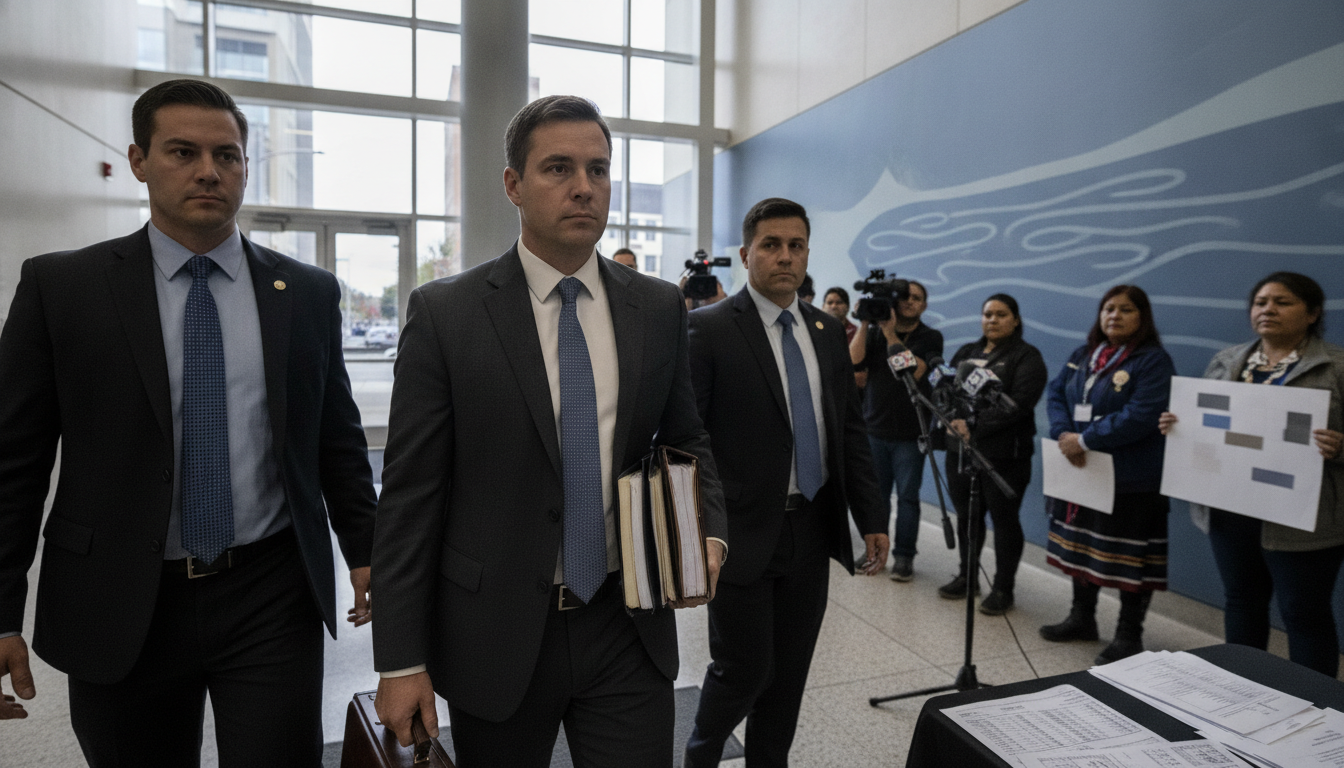
Jeffrey Rath hit with Mareva order as Sturgeon Lake alleges $12M withdrawn from trust
Jeffrey Rath faces a Mareva order after Sturgeon Lake Cree Nation alleges $12M in trust withdrawals and a receivership was ordered to trace missing funds and records.
Strong opening: court freezes assets amid trust dispute
The Alberta court has issued an interim Mareva order against lawyer Jeffrey Rath and his professional corporation after Sturgeon Lake Cree Nation alleged roughly $12 million in withdrawals from a trust overseen by Rath & Company.
The order, granted as part of separate litigation involving Tallcree First Nation, also led the court to place assets and records under receivership to protect and trace funds pending further hearings.
The developments mark an escalation in overlapping legal challenges to Rath’s handling of multiple First Nations’ settlement trusts and have prompted urgent calls for detailed accounting from beneficiaries and auditors.
Judge extends Mareva order and appoints receiver
Justice John Gill extended the freezing order and set a receivership to preserve trust property and financial records until further court supervision.
The Mareva injunction, which prevents respondents from moving or dissipating assets, was extended through Aug. 11, 2026, while a court-appointed receiver takes control of relevant accounts and documents.
In handing down his reasons, the judge identified a strong prima facie case that improper payments and breaches of fiduciary duty may have occurred, and he flagged a real risk that assets could otherwise be concealed or dispersed.
Allegations centre on $12 million in withdrawals
Sturgeon Lake Cree Nation’s affidavit, filed by Chief Sheldon Sunshine, alleges about $12 million was withdrawn from the Nation’s trust, including more than $11 million paid to Rath & Company as administrative fees.
The affidavit also references roughly $575,000 described as legal expenses tied to trust management, and says the trust was responsible for holding minors’ shares until beneficiaries reached adulthood.
Those figures emerged after audit materials and correspondence surfaced in a related Tallcree proceeding, prompting Sturgeon Lake leaders to demand immediate accountings and protections for remaining trust assets.
Auditors say records are incomplete and seek outside opinion
According to materials in the court filings, auditors raised questions about several large withdrawals and requested an independent legal opinion to assess whether the charges qualified as permitted administration costs under the trust agreement.
Rath reportedly resisted the auditors’ request, contending his interpretation of the trust terms was sufficient and, at one point, threatening to terminate the auditors if they did not complete the engagement on his terms.
The auditors — identified in court documents as Doane Grant Thornton — described the explanations and invoices they received as falling short of the evidence needed to support the disputed withdrawals.
Specific transactions identified in filings
Court documents point to four transactions that auditors and the Nations have questioned, including two payments on Jan. 23, 2024, totalling about $11.47 million to Rath & Company listed as administrative fees.
In addition, two 2023 withdrawals of nearly $500,000 and roughly $75,000 were described in Rath’s records as legal expenses related to trust management.
When auditors sought invoices and independent confirmation, the supporting bills from external law firms were characterized as reviews of the very retainer arrangements the Nations had already been litigating, which heightened concerns about the arm’s-length nature of those charges.
Parallel Tallcree litigation and earlier appellate ruling
The Sturgeon Lake allegations unfolded in the shadow of a separate Tallcree First Nation lawsuit in which courts previously scrutinized Rath’s contingency fee arrangements.
In February 2025, an Alberta Court of Appeal ruling upheld an order preventing Rath from enforcing a 20 per cent contingency contract that underpinned a roughly $28.6-million fee claim in one settlement.
That prior litigation resulted in orders requiring Rath’s professional corporation to refund significant sums to a trust, and Tallcree’s court filings subsequently alleged additional large charges and transfers to Rath PC in 2024.
Contested fee calculations and disputes over retainer terms
Rath has asserted that a retroactive administrative fee covering 2017–2024 was permissible and within the range charged by similar trusts, a claim he grounded on his interpretation of the trust agreement.
Sturgeon Lake counters that Rath’s firm originally drafted the trust agreement and that the Nation has been unable to obtain complete, audited financial statements beyond 2021.
The Nation says later years yielded only abbreviated financial summaries for 2022 and 2023 despite repeated requests, a gap that increased mistrust and prompted the Nation to seek the money paid into court for independent resolution.
Third-party invoices and disputes over legal expenses
The auditors’ scrutiny extended to invoices provided for external legal services, which were, according to the filings, billed by firms such as Parlee McLaws and Reynolds Mirth.
Those invoices reportedly described work as review of the retainer agreement between Sturgeon Lake and Rath & Company — the same topic at the core of ongoing litigation — raising questions about whether those expenses were truly arm’s-length or were effectively internal litigation costs.
Court records also show Parlee McLaws filed a separate claim against Rath in 2024 for unpaid invoices dating back to November 2021, though that claim was later discontinued without explanation in the documents disclosed.
Patterns of complaints from multiple First Nations
The Sturgeon Lake allegations add to a series of complaints and proceedings involving at least eight other First Nations that have raised concerns about Rath’s fees, recordkeeping, or professional conduct, according to court material filed in related actions.
Tallcree, Sturgeon Lake and other Nations have described difficulties obtaining comprehensive accountings, as well as what they say are unexplained or excessive charges taken from trust funds intended for community members and minors.
Those parallel disputes have complicated the legal landscape and prompted courts to consider measures such as freezing orders and receiverships to ensure trust assets remain available if judgments require refunds or restitution.
Rath’s public posture and refusal to concede wrongdoing
In filings defending against Tallcree’s claims, Rath has denied wrongdoing and contended audited financial statements disclose the fees and costs charged to the trusts in accordance with the trust agreements.
Court letters included in the affidavits show Rath arguing that his reading of the agreements sufficed to support the challenged charges and that an external legal opinion was unnecessary.
Rath did not oppose the extension of the Mareva order when it was put before the court and, at the time of the filings, had not provided a public substantive rebuttal to the specific audit concerns disclosed in the related proceedings.
Concerns about children’s shares and community impact
Chief Sheldon Sunshine’s affidavit expresses deep concern that minors who were beneficiaries of the Sturgeon Lake settlement may never receive their entitled shares if the disputed withdrawals are not recovered.
The Nation has emphasized that settlement funds were intended to be distributed to beneficiaries and to be held in trust for minors, and it says potential disallowed contingency fees threaten that purpose.
Community leaders have urged prompt, transparent accounting and action to preserve funds while the courts determine whether fees and expenses charged by the trustee were lawful and reasonable under the trust document.
Court findings on improper payments and fiduciary breaches
In granting the extension of the Mareva order, Justice Gill observed a prima facie case that suggested improper payments out of the trust and that Rath personally assisted in breaches of fiduciary duty.
The judge highlighted specific transactions, including a cheque in the Tallcree matter valued at $8.5 million, noting it appeared to have been issued contrary to earlier court orders.
Those findings, though preliminary, supported the court’s conclusion that strong protective measures were warranted to prevent further dissipation of trust assets while litigation proceeds.
Receivership powers and what they mean for the case
The receivership places an independent officer of the court in control of certain bank accounts, financial records and other property identified as relevant to the trust disputes.
The receiver’s role will be to account for funds, preserve documents, and take steps necessary to trace and, where appropriate, recover assets that may be determined to have been wrongfully removed.
That process can include forensic accounting, engagement with auditors, and reporting back to the court on the location and status of disputed monies, which informs later decisions on remedies and possible restitution.
Potential legal and professional consequences
If courts ultimately find the withdrawals were improper or that fiduciary duties were breached, the legal consequences could include disgorgement of fees, restitution to affected trusts, and professional discipline proceedings.
Several First Nations have separately engaged Law Society processes or civil claims in response to fee disputes and record-keeping complaints, and the overlapping matters could generate coordinated enforcement or disciplinary actions.
Beyond monetary remedies, the disputes raise questions about trustee selection, oversight of settlement trusts, and safeguards to prevent conflicts when private firms serve as both counsel and trustee.
Implications for trust governance and First Nations settlements
The unfolding litigation underscores governance challenges for Indigenous communities managing large settlement funds, particularly when professional advisers hold broad powers under trust agreements.
Experts in trust law and Indigenous governance have long warned about risks where trustees exercise extensive discretion over fees, investments and distributions without robust independent oversight.
First Nations leaders and advisors are likely to scrutinize future trust arrangements more closely, seeking clearer fee caps, independent auditing rights and procedural protections for beneficiaries, especially minors.
Next steps and timeline for court action
With the Mareva order extended to Aug. 11, 2026, the immediate focus will be on the receiver’s report and further hearings to determine interim relief and the scope of any continued asset preservation.
Sturgeon Lake has filed applications to have disputed funds paid into court and to remove Rath as sole trustee, setting the stage for contested hearings on trust interpretation, fee entitlement and remedial orders.
Parallel Tallcree litigation will continue to inform the record, particularly as audit materials and correspondence are marshalled in both proceedings to support each Nation’s claims.
The latest court actions place an independent receiver in control of disputed accounts and signal a judicial willingness to use extraordinary remedies to protect trust assets while allegations of improper payments and breaches of duty are resolved.
