
Israeli strikes in southern Lebanon kill five despite reported Israel-Hezbollah ceasefire
Five people were killed in Israeli strikes in southern Lebanon after mediators announced a ceasefire between Israel and Hezbollah, officials and witnesses said, deepening doubts about the durability of the ceasefire. The attacks hit more than a dozen localities late Friday and into Saturday morning, with the Nabatiyé area among the hardest hit.
Attacks struck multiple towns in Nabatiyé district
More than a dozen localities in southern Lebanon were struck after midnight, Lebanese officials and the state news agency ANI reported. Artillery fire and drone strikes were reported in several towns in the Nabatiyé sector, compounding damage from earlier rounds of bombardment this week. Local authorities said strikes continued into Saturday morning even after international mediators announced an agreement between Israel and Hezbollah.
Casualty locations and details reported by ANI
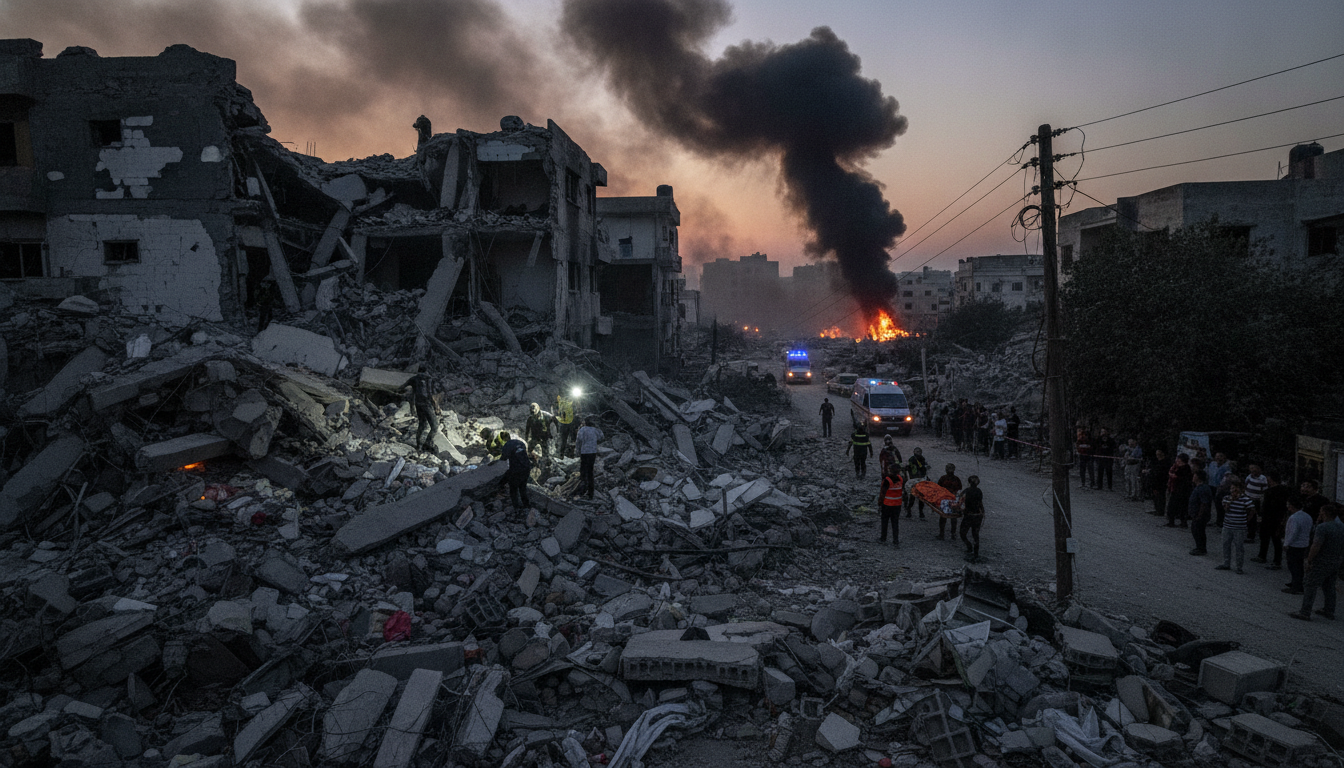
ANI identified three people killed in Arab Salim, one in Deir Zahrani, and another who died after a drone strike hit a motorcycle at the entrance to Dweir. The agency described the toll as five fatalities from the overnight strikes, while hospitals in the south reported multiple wounded being treated for shrapnel and blast injuries. Images circulating from the area showed collapsed buildings and damaged storefronts, with at least one home and business in Qlaileh reduced to rubble in footage attributed to Reuters from June 19.
Ceasefire announcement by US and Qatari mediators
A U.S. official told AFP that American and Qatari mediators had secured an immediate ceasefire between Israel and the Iran-backed Hezbollah following talks with both Israel and Iran. The announcement described a halt to hostilities across relevant fronts, including along the Lebanon border, but the strikes after the declaration raised immediate questions about whether the agreement had taken effect on the ground. Israeli officials later said they would respect a ceasefire only if Hezbollah did the same, underscoring conditional commitments that have undermined past truces.
Statements from Israel and Lebanese authorities
Israel’s ambassador to the United States, Yechiel Leiter, said his country would abide by the ceasefire provided Hezbollah did so as well, a position that mirrors repeated caveats from Jerusalem in previous pauses. The Israeli military reported the deaths of four soldiers in the recent fighting, including a senior officer, and has said its forces will remain in the south as long as necessary to secure Israeli communities. Lebanese authorities and local officials characterized the latest strikes as violations of the ceasefire announcement and renewed calls for international pressure to halt cross-border attacks.
Context of recent escalation and earlier tolls
The weekend strikes came after a particularly deadly night earlier in the week that Lebanese authorities said left 47 people dead and nearly 100 wounded, marking the highest single-night toll since a separate Iran-U.S. protocol was announced this week. That protocol, reached between Tehran and Washington, reportedly called for a halt to hostilities “on all fronts, including in Lebanon,” a point Tehran emphasized during negotiations. The current flare-up traces back to early March, when Hezbollah launched rockets into Israel in response to the killing of Iran’s supreme leader in strikes that both Tehran and its regional allies blamed on U.S. and Israeli action.
Diplomatic talks and the next round of negotiations
Under U.S. pressure, Lebanon opened direct talks with Israel in Washington in April aimed at ending the hostilities along the frontier, and the State Department has said a fifth cycle of those negotiations is scheduled to begin on Tuesday. Diplomats hope that a negotiated settlement on security arrangements and maritime boundaries could reduce the likelihood of cross-border escalation, but progress so far has been slow and punctuated by bursts of violence. Regional actors, including Qatar and the United States, have sought to lock in local understandings that can be enforced on the ground, yet the latest strikes demonstrate the fragile nature of agreements brokered under high tension.
Relations between Beirut and Jerusalem remain strained by the involvement of Hezbollah, whose leadership says its actions are tied to broader regional dynamics involving Iran. Israeli leaders insist on maintaining a military posture near the border to deter future attacks, while Lebanese officials and humanitarian groups warn that continuing strikes risk further civilian casualties and displacement in already damaged communities.
The unfolding violence along the Israel-Lebanon frontier underscores the delicate balance between diplomatic progress and military reality, with mediators racing to convert verbal commitments into verifiable and enforceable pauses in fighting.
