
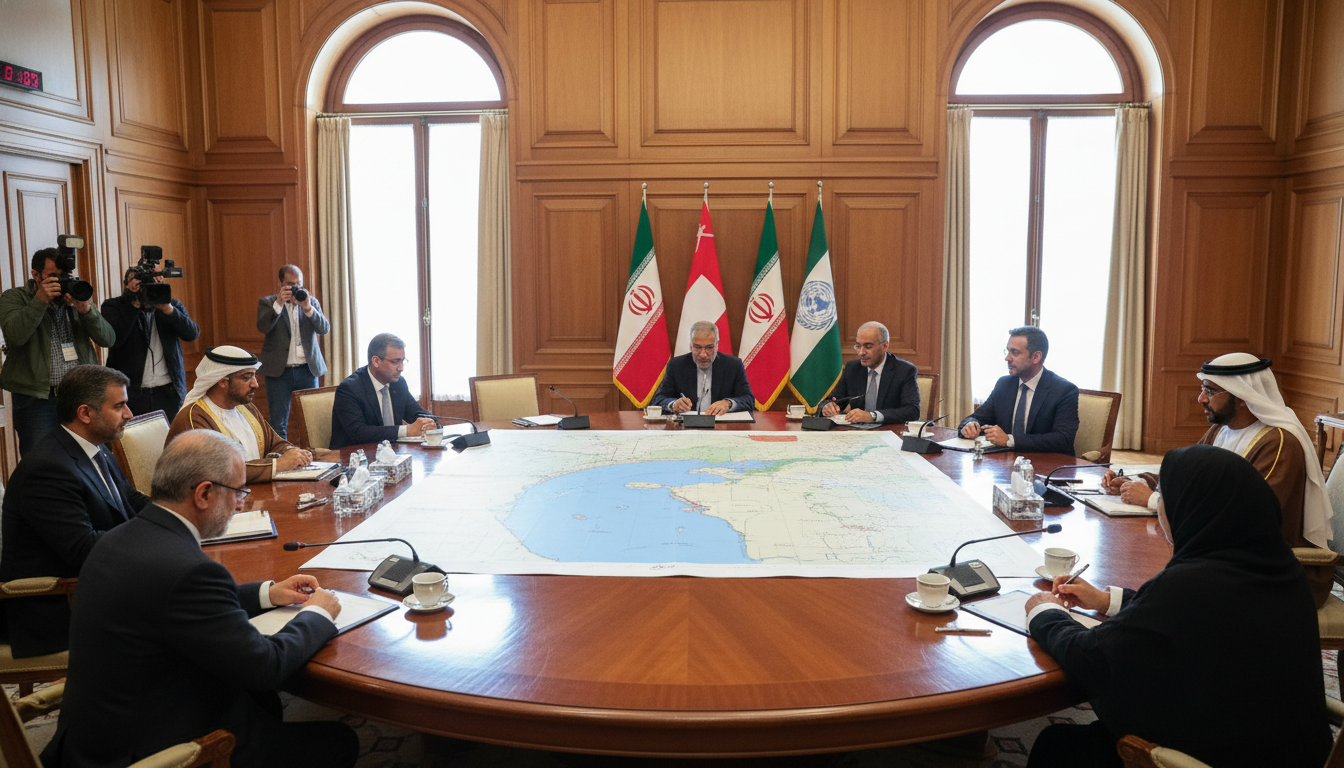
Diplomacy Edges Out Fighting as U.S. and Iran Near Cease-Fire Agreement Reopening Strait of Hormuz
Iran cease-fire agreement appears close after Tehran signals willingness to lift restrictions on shipping in exchange for U.S. rollback of naval blockade.
A tentative Iran cease-fire agreement appeared to gain momentum over the weekend as officials in Tehran signalled they had accepted terms that would halt fighting and reopen the Strait of Hormuz. The potential deal, announced by U.S. social media posts and described by several Iranian officials, would see both sides pause hostilities and lift measures that have disrupted maritime traffic. Negotiators say the arrangement would leave nuclear issues to a later phase while immediately addressing the intense military standoff.
Tentative Deal Would Reopen Strait of Hormuz
Several senior Iranian officials told international media they had agreed to a memorandum that would allow ships to transit the Strait of Hormuz without interdiction or new fees. The waterway is vital to global oil and gas exports, and reopening it has been a central demand of international shipping firms and regional states.
Iran reportedly expected the United States to reciprocate by ending a naval blockade that had restricted Iranian movements at sea. Officials described the arrangement as a first step toward broader de-escalation rather than a final settlement of all outstanding disputes.
Key Terms Include Asset Release and Delayed Nuclear Talks
According to the officials, the draft pact would release approximately $25 billion in Iranian assets frozen overseas, providing an immediate economic relief valve. The proposal also calls for a timetable — within 30 to 60 days — to negotiate the fate of Iran’s stockpile of highly enriched uranium, a point of sharp contention with Washington.
Those negotiators presented the phased approach as a way to separate urgent humanitarian and commercial issues from longer-term security disagreements. Tehran’s team emphasized that technical and legal details on the nuclear question would be handled in follow-up talks rather than as conditions for the initial cease-fire.
U.S. Announcement and Questions Over the Draft
The United States indicated an agreement was near after President Donald Trump posted that an accord with Tehran was “almost finalized,” a comment that preceded public confirmation by Iranian negotiators. It remained unclear whether the draft Iran officials discussed matched the version the White House was considering.
Iran’s foreign ministry offered no immediate formal response to the president’s post, but Deputy Foreign Minister Kazem Gharibabadi framed Tehran’s approach as “seeking peace with strength.” Diplomats from multiple countries said the apparent convergence reflected months of shuttle diplomacy and pressure from regional mediators.
Iran Balances Diplomacy with Military Readiness
Despite the diplomatic moves, Iranian commanders retained a robust military posture and continued to prepare for possible renewed combat operations. Parliament speaker and negotiation leader Gen. Mohammad Bagher Ghalibaf stated that Iran had used the cease-fire interval to restore and strengthen its forces.
State television and social media showed volunteer militias training with weapons, and hardline demonstrations included provocative broadcasts and symbolic acts directed at regional adversaries. Those displays underlined a balance inside Iran between negotiating concessions and projecting deterrence.
Regional Mediators Intensified Shuttle Diplomacy
Regional and international figures played an active role in pressing Tehran to accept a diplomatic path, with documented meetings involving Pakistan’s prime minister and military leadership. Foreign Minister Abbas Araghchi and other Iranian officials also engaged European counterparts and the United Nations secretary-general to secure support for a negotiated settlement.
Analysts noted that sustained pressure from neighbours and the cost of prolonged conflict made talks increasingly attractive to both sides. Observers from Washington-based policy groups warned that neither capital could afford an extended war, bolstering incentives to convert battlefield pauses into formal arrangements.
Public Reaction and Economic Strain Across Iran
News of a possible Iran cease-fire agreement provoked palpable relief among many ordinary Iranians still grappling with wartime economic hardships. Citizens reported buying essentials and preparing for strikes earlier in the week, and the prospect of de-escalation eased those anxieties for people facing inflation, job losses and shortages of medicines and fuel.
Iran’s infrastructure has suffered extensive damage during the conflict, and officials estimate reconstruction needs in the hundreds of billions of dollars. For many families, the immediate attraction of a deal lies in restored trade, unblocked assets and the hope of a more stable environment for commerce and daily life.
The coming days will test whether the momentum observed over the weekend can be translated into a formal, verifiable agreement that both sides will implement in full.
