
Parsdorf Rocket Factory Aims for Mass Production of Up to 40 Rockets a Year
German start-up builds 40,000 m² Parsdorf rocket factory to produce up to 40 rockets annually, raising Europe launch production cadence and supply-chain questions.
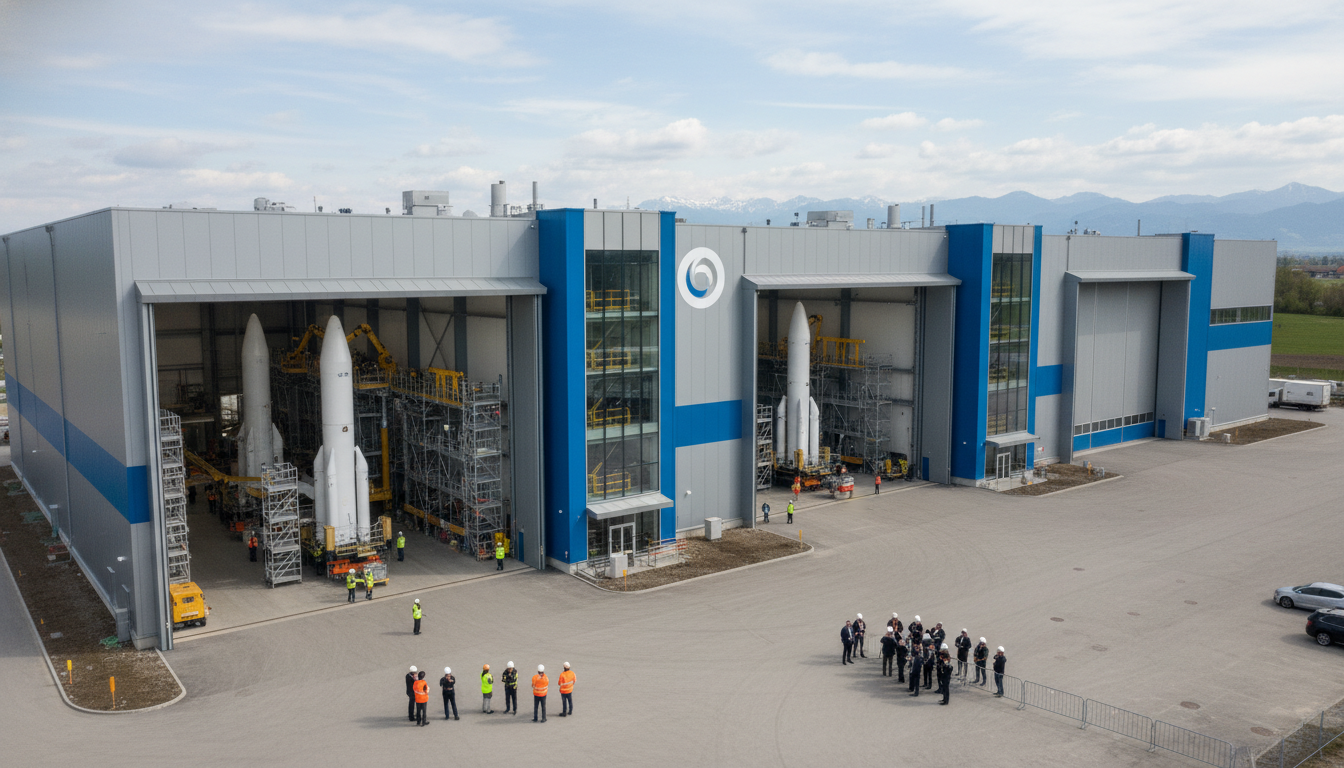
The Parsdorf rocket factory is set to become a major production hub for a German start-up, which is constructing a 40,000 square metre plant in a northern Munich suburb to support serial rocket manufacturing. The company intends to reach an annual output of up to 40 rockets, a production cadence that industry observers describe as ambitious for the European market. The announcement highlights a strategic push to industrialize launcher production while underscoring contrasts with established players such as Ariane Group, which has only partially adopted assembly-line methods.
Parsdorf site and factory footprint
The new facility occupies 40,000 square metres in Parsdorf, a suburban area north of Munich, and has been designed for high-throughput production of launch vehicles. The size and layout are intended to permit repeated, streamlined assembly processes rather than bespoke, one-off builds. Company officials have positioned the site as a response to rising demand for routine access to space and the operational efficiencies required to meet it.
Production goals and operational cadence
The plant’s target of up to 40 rockets per year represents a significant ramp-up compared with traditional European output models. Achieving that cadence will require tightly choreographed production lines, standardized components and robust quality control protocols. The start-up frames the target as a way to offer more frequent and reliable launch windows for small and medium payload customers.
Contrast with established European producers
Industry observers note that established manufacturers in Europe, including the Ariane Group, have only partially shifted toward continuous flow production techniques. That difference highlights a broader industrial transition in which newer entrants are pursuing manufacturing paradigms borrowed from other high-volume sectors. The Parsdorf project is thus being watched as a test case for whether European launch systems can move from artisanal builds to true series production.
Supply chain and component sourcing challenges
Meeting an annual output in the dozens will place intense demands on component suppliers, propellant infrastructure and specialized tooling providers. The plant will need secure access to materials such as aerospace-grade alloys, engines or propulsion modules, and avionics, all while maintaining certification and traceability. Securing a resilient European supply chain or reliable international partners will be critical to avoid production bottlenecks and to sustain the planned cadence.
Workforce and skills development
Scaling to mass production requires an experienced workforce for both manufacturing and quality assurance, alongside technicians for propulsion testing and final integration. The company will need to recruit and train staff locally, while also drawing on specialist suppliers and subcontractors across the continent. Apprenticeship schemes, partnerships with technical schools, and targeted hiring of aerospace engineers are likely to form part of the workforce strategy.
Market implications for satellite operators and launch cadence
If the Parsdorf rocket factory reaches its stated output, satellite operators and constellation developers could gain access to more predictable and frequent launches. That shift would benefit customers seeking rapid deployment, responsive replenishment, or dedicated rides for time-sensitive missions. At the same time, increased supply will exert pressure on launch pricing, manifest scheduling and insurance arrangements across the European market.
The start-up’s effort to industrialize rocket manufacture in Parsdorf signals a broader trend toward treating launches as repeatable commercial services rather than bespoke engineering projects. Success will hinge on the firm’s ability to synchronize manufacturing, testing, certification and supply chains while maintaining launch reliability. The outcome will be closely watched by European competitors, satellite customers and policymakers assessing the continent’s ability to compete in a global launch market.
