
Ceasefire in Gaza serving as cover for continued strikes, rights groups and UN say
Gaza ceasefire has been used, officials and rights monitors allege, to mask persistent Israeli military operations that have killed hundreds and driven mass displacement.
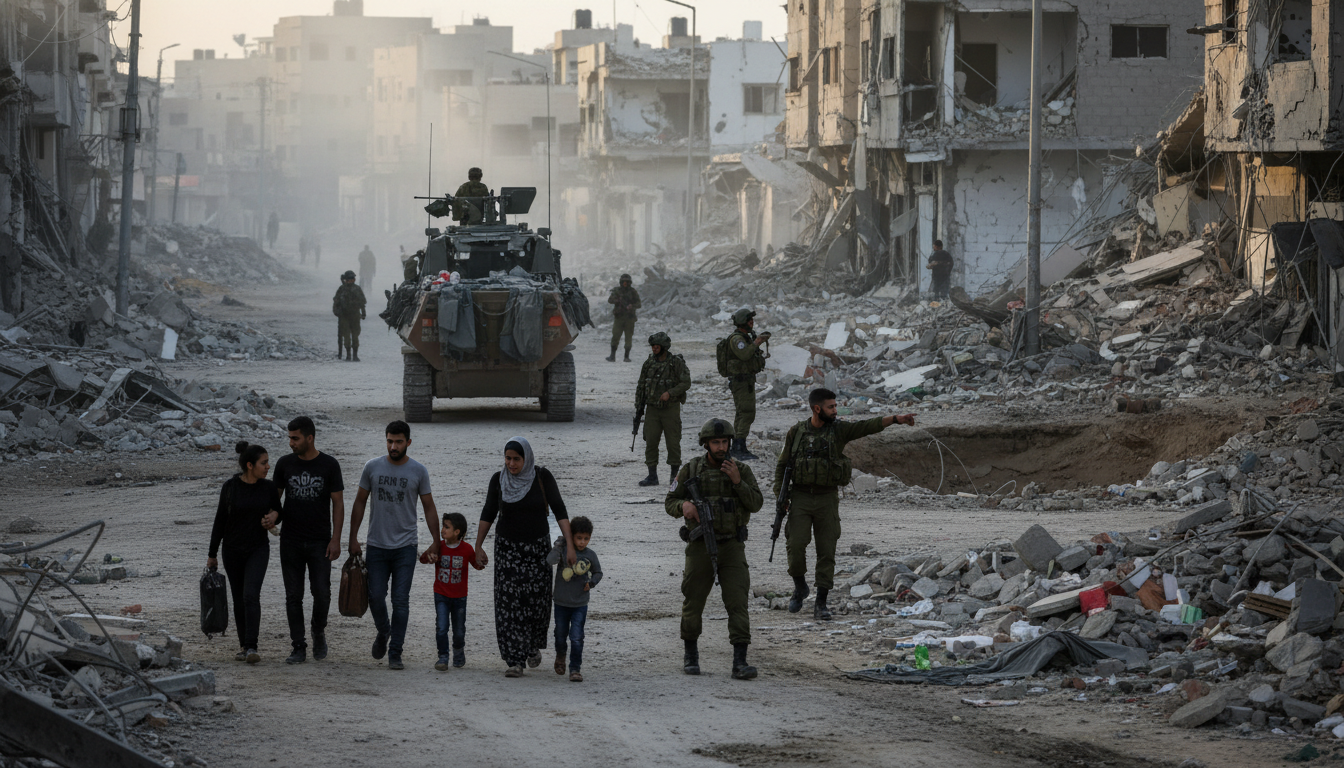
Seven months after a ceasefire was brokered to halt widespread fighting in Gaza, the truce has effectively become, officials say, cover for continued Israeli operations that have cost additional civilian lives and intensified displacement. Gaza’s health ministry reports at least 880 Palestinians killed since the agreement, raising the territory’s war death toll to 72,797. United Nations and local rights monitors warn that restrictions on aid and targeted demolitions are deepening a humanitarian emergency across the densely populated enclave.
Ceasefire in Gaza Serving as Cover for Continued Strikes
Mai El‑Sheikh, spokesperson for the United Nations Human Rights Office in Palestine, told international media the pause has been repurposed as a tactical shield for operations that continue to endanger civilians. She and other UN officials say patterns of targeting and access restrictions are inconsistent with a genuine cessation of hostilities.
Humanitarian agencies have reported persistent limits on the delivery of food, medicine and fuel into Gaza, measures the UN warns are producing acute shortages and widespread fear among displaced families. Rights groups argue these constraints have the effect of coercing movement and exacerbating civilian suffering.
Clearance Orders and Mass Demolitions Reported
Local monitors documented a series of phone warnings ordering evacuations shortly before residential blocks were demolished in central refugee camps, including Nuseirat, Bureij and Maghazi. The Gaza Rights Center said those notices often give residents little time to remove possessions and may precede the complete razing of structures.
Rights monitors contend the demolitions extend beyond clear military objectives and form part of a systematic campaign that leaves larger areas uninhabitable. With extensive destruction across the territory, they say advance warnings do not remove the occupying power’s responsibility to protect civilians.
Rising Civilian Toll and Shrinking Safe Zones
Health authorities and humanitarian organizations report that the death toll and the scale of destruction have pushed survivors into ever smaller pockets of relative safety. Displacement has become nearly universal, with families repeatedly uprooted as new areas are affected by strikes or demolition orders.
Humanitarian responders warn that the cumulative impact of casualties, infrastructure loss and blockaded supplies is creating long‑term risks for public health, water and shelter that will complicate recovery even if large‑scale fighting subsides.
Political Calculations Ahead of Israel’s Election
Analysts link tactical decisions around the ceasefire to Israel’s domestic political context, noting Prime Minister Benjamin Netanyahu faces pressure from right‑wing coalition partners and voters as national elections approach. Commentators say political considerations are shaping the pace and scope of negotiations and reconstruction planning.
Mohannad Mustafa, an academic who studies Israeli politics, says the leadership’s failure to meet wartime objectives has deepened a strategic crisis that influences operational choices. The intersection of electoral politics and military strategy, analysts warn, can prolong uncertainty for civilians and obstruct durable cessation mechanisms.
Disarmament Clause Invoked as Pretext, Local Analysts Say
Palestinian political analysts argue that demands for disarmament of armed factions have been used to justify continued operations despite the ceasefire terms. Eyad al‑Qarra and other commentators say stipulations on weapons surrender are being applied selectively and may provide cover for other objectives.
Residents and local leaders express alarm that the focus on disarmament could be transformed into an open‑ended rationale for restrictions, heightening the risk of renewed large‑scale offensives if political aims are unmet. That fear is compounded by the visible fragility of enforcement structures charged with overseeing the agreement.
International Oversight and Reconstruction Mechanism Struggling
The U.S.‑led Board of Peace, created to oversee Gaza’s administration and the ceasefire, has faced difficulties enforcing terms amid divisions among member states. Observers say a lack of consensus has weakened the board’s ability to guarantee compliance or to marshal reconstruction funds.
U.S. researcher Kenneth Katzman noted regional diplomatic dynamics have left gaps that other actors have struggled to fill, while Nickolay Mladenov, a Board of Peace member, warned the United Nations Security Council that without an agreed reconstruction plan Gaza will remain exposed. International officials emphasize that effective oversight and a credible rebuilding strategy are essential to prevent further collapse of the truce.
Humanitarian organizations, UN officials and local rights groups caution that unless access is expanded, demolitions are halted where they target civilian infrastructure, and a binding reconstruction and protection framework is implemented, Gaza’s population will face ongoing danger and deprivation.
