
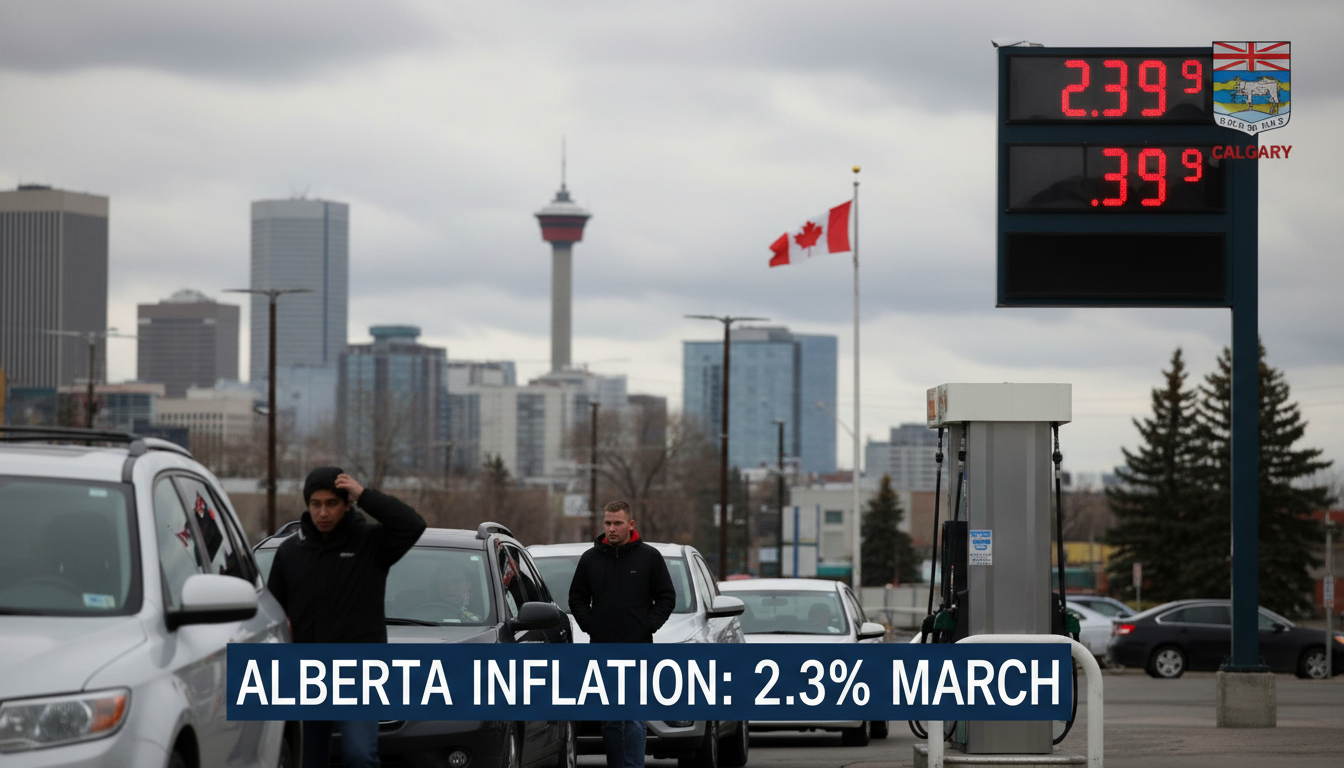
Inflation in Alberta Climbs 2.3% in March as Gasoline Prices Bite
Inflation in Alberta rose 2.3% in March 2026 as higher gasoline prices pushed overall costs upward, squeezing households and reverberating through businesses across the province.
Alberta inflation rises 2.3% in March 2026
Inflation in Alberta was 2.3 per cent in March 2026 compared with the same month a year earlier. The increase represents a notable acceleration driven in large part by energy and transportation costs.
Statistics released for March show the headline rate moving higher after several months of relative stability, with analysts pointing to recent fuel-price movements as the principal driver. Policymakers and consumer advocates say the change is already influencing purchasing decisions across the province.
Gasoline price surge behind higher consumer costs
Higher gasoline prices are being blamed for much of the rise in Alberta’s inflation this month. The jump at the pumps has fed through to the transportation component of the consumer price index and lifted costs for services that rely on fuel.
Leslie Preston, managing director and senior economist at Toronto-Dominion Bank, noted that while oil prices have eased over the past week, they remain roughly 40 per cent higher than a year ago. That sustained lift in crude values has translated into higher retail fuel prices in many Alberta communities.
Household budgets and businesses feel the squeeze
Rising gasoline costs are affecting both household budgets and commercial operating expenses. Commuters face larger weekly fuel bills, and businesses that depend on road transport are reporting higher delivery and input costs.
Those pressures can reduce discretionary spending at restaurants and retailers, particularly for lower-income households that spend a larger share of income on energy. Small businesses have limited ability to absorb added costs and may pass them to consumers, further feeding price growth.
Alberta’s trend within the national picture
The upward pressure from fuel prices is not unique to Alberta; similar dynamics are evident across Canada. However, Alberta’s energy-intensive economy can amplify the local impact when crude and retail gasoline prices move sharply.
Provincial differences in consumption patterns, regional fuel taxes and distribution logistics also shape how quickly pump-price increases translate into broader inflation. Observers say Calgary and Edmonton consumers may feel changes more immediately than those in remote communities where price adjustments lag.
Economists point to oil-market volatility and seasonal factors
Analysts attribute the recent movement in gasoline costs to a mix of oil-market volatility and seasonal demand patterns. Geopolitical developments and production decisions by major oil exporters have tightened supplies at times, while spring driving season tends to increase refined fuel demand.
Economists caution that short-term swings in oil and gasoline prices can produce transitory spikes in inflation even when core measures remain more stable. The persistence of price increases will hinge on whether crude prices retreat further and whether refining and distribution capacity can keep pace with demand.
Monetary and fiscal implications for policymakers
Rising gasoline prices complicate the task of returning inflation to the Bank of Canada’s 2 per cent target. Transitory energy shocks can push headline inflation above that goal even as core inflation indicators move differently, creating tension for monetary policy decisions.
Provincial officials are monitoring the economic effects on households and businesses, and some municipal leaders are examining targeted supports for vulnerable residents. Any policy response will balance the need to shield incomes with the risk of entrenching inflation expectations.
Looking ahead, analysts say much will depend on oil-market developments and consumer behaviour through the spring and summer months. If gasoline prices moderate, inflationary pressures could ease, but a sustained elevation in energy costs would prolong the strain on Alberta households and the provincial economy.
