
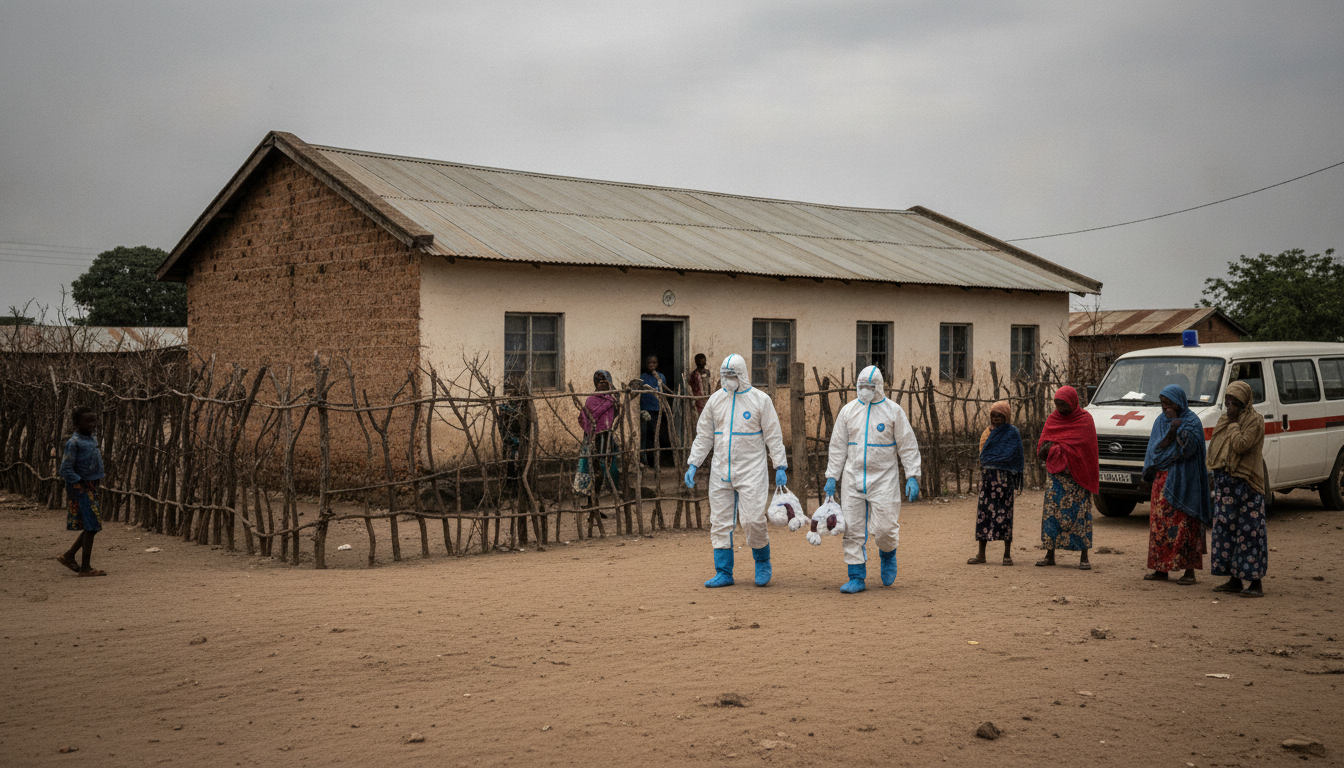
Ebola outbreak in Congo orphanage sickens infants, prompts quarantine and urgent monitoring
A newborn’s illness has triggered an Ebola outbreak in a Congo orphanage, raising alarm about the virus’s threat to the most vulnerable children and prompting an immediate quarantine and intensified monitoring. The Ebola outbreak in Congo orphanage Saint Nicholas in eastern Democratic Republic of Congo was identified after a nine-day-old infant arrived sick and later tested positive, health officials said. Local teams are tracing contacts, isolating symptomatic children and staff, and racing to prevent further transmission after at least two babies died.
Newborn case sparks outbreak
Health workers say the chain of events began in late May when a newborn known as Patience developed a fever shortly after being brought to Saint Nicholas children’s home. Medical staff later linked the infant’s condition to a relative who had died and was confirmed to have had Ebola, prompting tests and heightened concern across the facility. The confirmation of an Ebola case in such a young child immediately changed the response posture for local health authorities and humanitarian partners.
Officials report that by the time the orphanage understood the risk, several staff members and children had already been exposed through routine care and handling. Three caretakers, including a nurse identified as Sister Cecile Nube, subsequently tested positive, underscoring how quickly caregivers can become infected in close-contact settings. The situation illustrates the particular danger Ebola presents in residential child-care environments where children and staff live and interact in close quarters.
Spread among infants and caregivers
After the initial case, additional infants began showing symptoms consistent with Ebola, forcing rapid triage and isolation of suspected cases to an Ebola treatment ward. One ten-month-old infant named Elisée was reported to have been cared for by a sick staff member and later died, highlighting the disease’s speed and severity in young children. Health teams emphasized that infants can deteriorate rapidly, making early detection and transfer to specialized care essential.
Caretakers and children at Saint Nicholas live together in group settings, increasing the likelihood that a single infected person could transmit the virus to many others. Contact tracing teams have focused on household-style interactions inside the orphanage, attempting to identify all recent close contacts for daily monitoring. Those contacts are being assessed for fever and other early signs of infection, with symptomatic individuals moved to treatment facilities when necessary.
Quarantine and contact tracing measures
Local health authorities placed Saint Nicholas under quarantine in mid-June to limit movement in and out of the home and to control potential spread into surrounding communities. Daily visits by contact tracers continue, with temperature checks and symptom screening for nearly 70 children and multiple caregivers living at the site. The quarantine aims to reduce transmission while teams complete tests and follow-up and ensure that asymptomatic children are monitored closely.
Response teams are also prioritizing safe isolation practices and training for caretakers who remain at the facility, balancing infection-control measures with the need to preserve child welfare. Officials say they are working to avoid separating infants from essential caregivers unless clinically necessary, while also ensuring those caregivers follow strict protective protocols. Supplies such as personal protective equipment, disinfectants and testing kits have been mobilized to the site as part of the containment effort.
Clinical outcomes and fatalities
At least two infants linked to the orphanage outbreak have died, according to health sources working with local teams, a reminder of Ebola’s disproportionate lethality among neonates and young children. Medical staff describe rapid clinical decline in affected babies, who are particularly vulnerable due to immature immune systems and the close physical care they require. Health officials have noted that even a single late diagnosis in a neonatal case can have cascading consequences for others in a group-care setting.
Treatment capacity remains stretched in many parts of eastern Democratic Republic of Congo, and transferring infants to specialized Ebola care units poses logistical and clinical challenges. Where beds are available, children receive supportive care aimed at maintaining hydration, treating secondary infections and managing complications while antiviral therapies are considered based on protocols. Authorities stress that testing and early referral remain the most effective immediate tools to reduce mortality in such outbreaks.
Public health warnings and transmission risks
Epidemiologists warn that communal living settings, such as orphanages, schools and refugee centers, can amplify Ebola transmission if cases are not detected and isolated swiftly. Children’s play patterns, shared sleeping areas and close-contact caregiving create environments where one case can quickly become many. Public health teams are therefore emphasizing rigorous contact tracing, vigilance for fever and gastrointestinal symptoms, and community engagement to reduce stigma and encourage prompt reporting.
Officials are also reminding relatives and community members about safe practices around deceased patients and the importance of reporting suspected infections without delay. Misunderstandings about transmission and resistance to public health measures can undermine containment work, so outreach aims to build trust while delivering clear guidance. International health partners have reiterated support for laboratory testing, treatment access and protective equipment to reinforce local efforts.
Humanitarian response and next steps
Humanitarian agencies working in the region are coordinating with local health authorities to ensure the orphanage and nearby health facilities have the supplies and staffing needed to manage the outbreak. Psychosocial support and child protection services are being arranged to care for siblings and other children affected by isolation measures and the loss of caregivers. Aid groups say they will also assist with safe feeding, hygiene provision and continuity of essential services while quarantine measures are in place.
Officials expect contact tracing and monitoring to continue for the standard 21-day observation period from the last known exposure, with daily health checks and testing as needed. The priority remains preventing onward spread into the wider community while providing appropriate care for infected children and protecting uninfected residents. Response teams have called for sustained surveillance and additional resources to manage what they describe as a “high-risk” situation for young children.
The situation at Saint Nicholas remains fluid as teams carry out testing, treatment and monitoring, and health authorities caution that new cases could emerge while the orphanage is under quarantine. Communities and responders are working to balance urgent infection control with the need to protect and care for children who depend on the shelter for their safety and wellbeing.
