
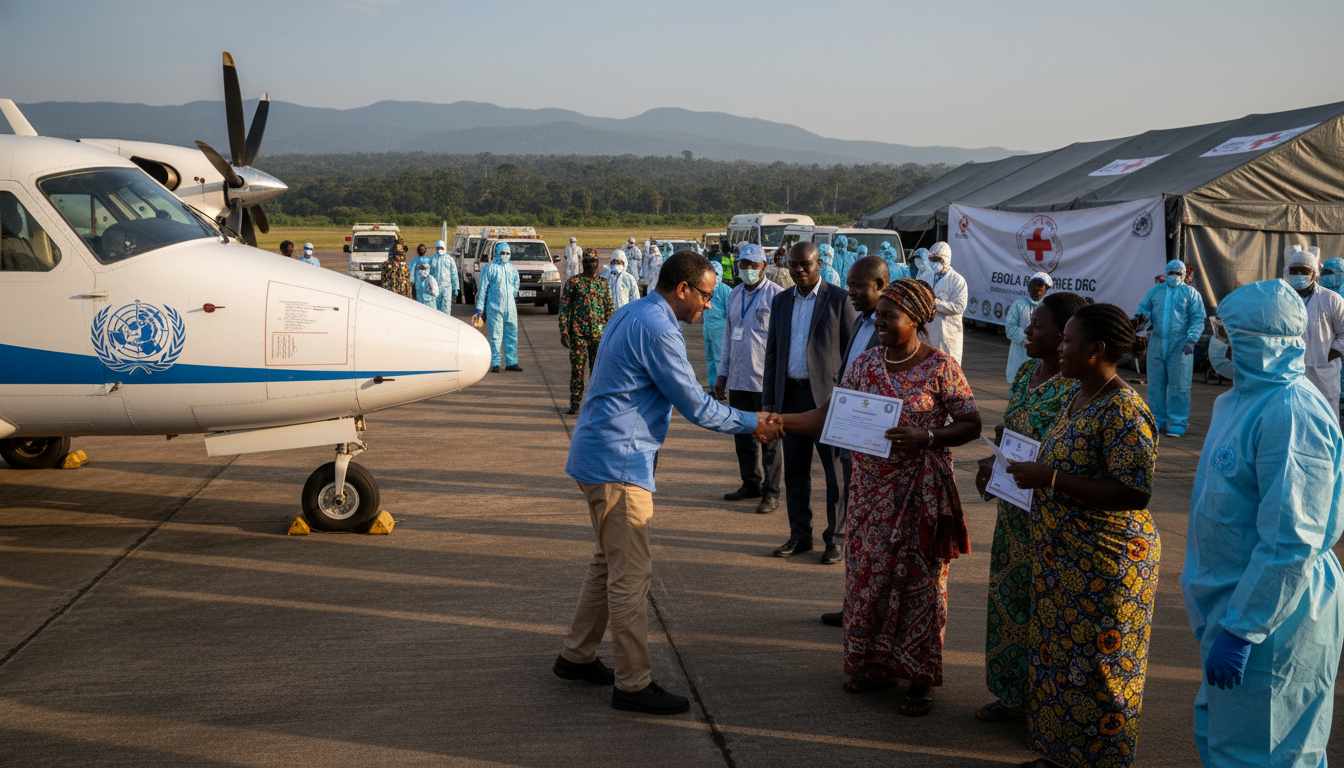
WHO chief visits Kinshasa as Ebola outbreak in DR Congo spreads to Ituri and Uganda
WHO director-general Tedros travels to Kinshasa and Ituri amid Bundibugyo outbreak; first patient released from treatment center confirmed while testing and conflict complicate response.
WHO chief lands in Kinshasa and pledges support
World Health Organization Director-General Tedros Adhanom Ghebreyesus arrived in Kinshasa this week to assess the response to the Ebola outbreak in DR Congo and to reassure authorities and communities.
Tedros said the international health body stands with Congolese health workers and officials, adding that "we can stop this thing" while urging coordinated action across affected provinces.
He is scheduled to visit the northeastern Ituri province, the epicentre of the current 17th Ebola event in DR Congo, as teams work to ramp up surveillance and care.
The WHO has not recommended travel bans, arguing that restrictions would do little to curb transmission and could hinder the delivery of aid and supplies.
First patient discharged from a treatment centre
On Wednesday the WHO confirmed that the first patient admitted to a treatment centre during this outbreak has been discharged after two negative tests.
This marks the first known recovery to result in a patient returning home since health authorities declared the new epidemic on May 15.
WHO technical staff said the discharge offers a milestone for response teams and a morale boost for clinicians operating under difficult conditions.
Officials stressed that isolated recoveries do not yet change the broader picture of sustained transmission and that continued vigilance is required.
Scope of infections and official tallies
Health agencies report the virus is present in at least three provinces of DR Congo and has crossed into neighbouring Uganda, where seven confirmed infections and one death were registered.
Africa CDC data cited by authorities indicated 246 deaths among more than 1,000 suspected cases, figures that responders caution are likely underestimates.
International and national epidemiologists point to limited laboratory capacity and gaps in surveillance as key reasons official counts may lag behind true transmission.
Minister of Health Samuel Roger Kamba said 105 people are currently in treatment centres and urged calm, while also contesting some international alarmist characterizations.
Conflict, displacement and access challenges in Ituri
Response teams face severe operational obstacles in Ituri, where armed groups and militia activity have left state services thin and access for health workers perilous.
Thousands of internally displaced people live in overcrowded camps on Bunia’s outskirts, creating conditions that could accelerate spread if the virus reaches those settlements.
Residents interviewed by aid workers described extreme overcrowding and poor sanitation, raising fears that a single introduction could trigger rapid transmission in camp settings.
Humanitarian agencies warn that insecurity and population movements complicate contact tracing, safe patient transport, and the establishment of secure treatment sites.
Bundibugyo strain complicates prevention and treatment
This outbreak is driven by the Bundibugyo strain of Ebola, a variant for which there is currently no approved vaccine or targeted treatment.
Most recent major outbreaks in DR Congo were caused by the Zaire strain, for which a licensed vaccine exists and has been used in ring-vaccination campaigns.
The WHO said its advisory groups have recommended clinical trials for several vaccines and therapeutics that could be effective against Bundibugyo.
Africa CDC director Jean Kaseya pledged efforts to secure a vaccine and a treatment for Bundibugyo by the end of 2026, a timeline that would require accelerated development and testing.
Regional risk assessment and international coordination
The WHO has described the public health risk to countries near DR Congo as high while maintaining that the global risk remains low at this stage.
Cross-border cases in Uganda underscore the need for coordinated surveillance, sample sharing, and joint response planning among neighbouring states.
Health officials have emphasized that laboratory strengthening, faster sample transport, and expanded community engagement are critical to improving case detection.
Donors and international agencies are being called on to scale up funding to support testing capacity, deploy trained personnel, and provide protective equipment to front-line teams.
Ebola has killed more than 15,000 people across Africa over the past five decades, with past DR Congo outbreaks demonstrating both the lethality of the disease and the impact of rapid, well-resourced responses.
Local leaders and responders say stopping the current outbreak will hinge on layered interventions: timely detection, safe care for patients, community trust, and parallel efforts to address insecurity that hampers access.
The coming days will see intensified surveillance and an increased presence of international technical teams in the field, while authorities work to expand laboratory testing and patient-care capacity.
Health officials in Kinshasa, Bunia and at the WHO say they are focused on limiting transmission, protecting displaced populations, and speeding trials that could yield tools against Bundibugyo.
