
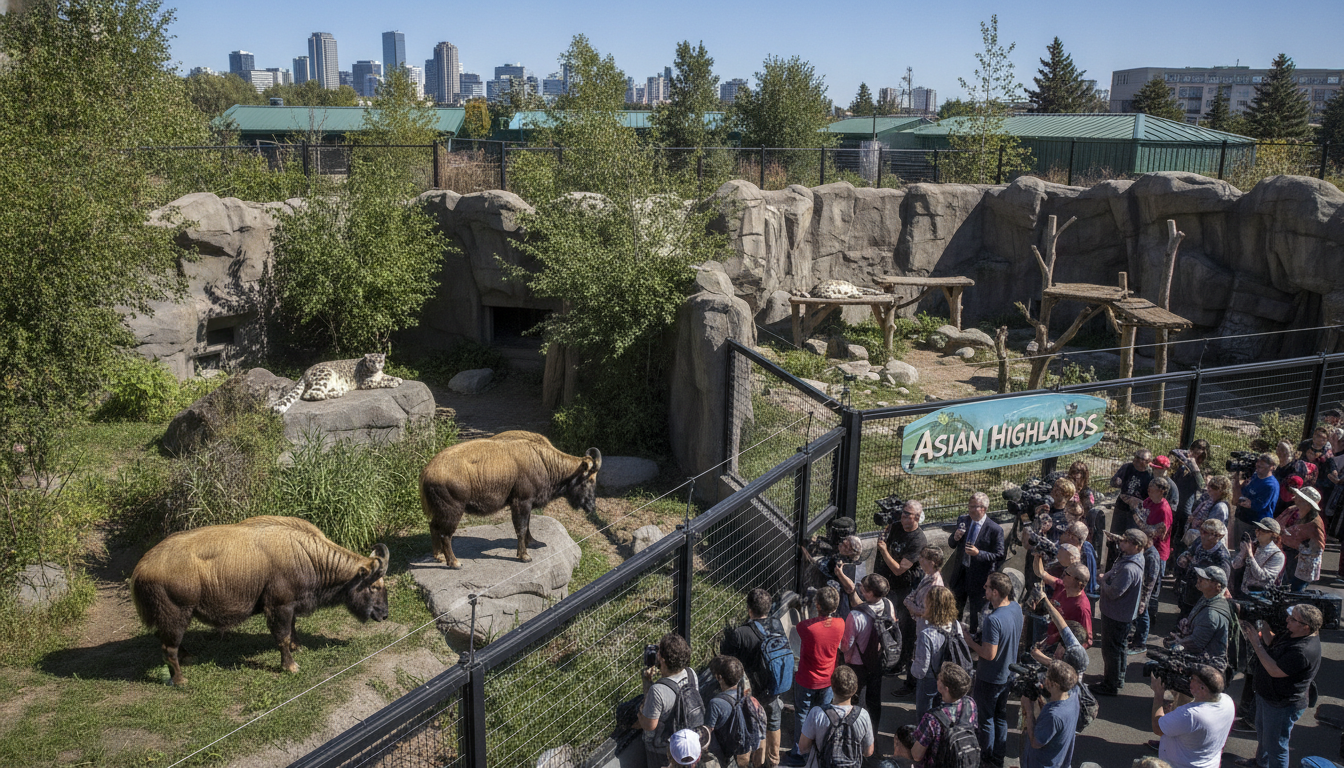
Calgary Zoo opens Asian Highlands, unveiling Sichuan takin and expanded snow leopard and red panda habitats
Calgary Zoo’s new Asian Highlands opens July 15, 2026, introducing Sichuan takin while expanding snow leopard and red panda homes in immersive Himalayan-inspired habitats.
The Wilder Institute’s Calgary Zoo officially opened Asian Highlands on July 15, 2026, unveiling three Himalayan-inspired habitats that bring back snow leopards and red pandas while introducing two Sichuan takin to the public.
The new precinct is the first phase of the zoo’s broader Imagine Asia redevelopment and is designed to recreate alpine slopes, subalpine meadows and forest canopies for both animals and visitors.
Asian Highlands debuts at Calgary Zoo
The grand opening of Asian Highlands took place on Wednesday morning, with zoo staff and donors on hand to mark the completion of the first phase.
Zoo president and CEO Dr. Kyle Burks said the precinct was conceived to offer animals greater choice and control over their environments while giving visitors an immersive route through Himalayan ecosystems.
The multi-habitat complex replaces the former Exploration Asia area and is billed as a long-term investment in animal care and conservation messaging.
Officials stressed that the design blends public accessibility with veterinary and behavioural needs, enabling natural behaviours and closer, safer viewing opportunities.
Sichuan takin introduced to Calgary visitors
The Calgary Zoo introduced two Sichuan takin, a robust mountain mammal native to the eastern Himalayas, as the star arrivals in Asian Highlands.
Often likened to a cross between a goat and an antelope, takin possess a dense, water-resistant coat that protects them in cold, high-altitude environments.
Zoo staff said the takin habitat mimics rocky slopes and alpine vegetation, providing varied terrain, ledges and shelter that encourage the animals to climb and forage.
The exhibit includes visual barriers and retreat spaces to reduce stress, allowing the takin to move freely between exposed and sheltered areas according to their needs.
Kingdon Snow Leopard Ridge expands feline ranges
Snow leopards returned to the zoo with an expanded, interconnected space now named the Kingdon Snow Leopard Ridge.
The redesigned ridge gives the rare cats more vertical range for climbing and stalking, along with new viewing platforms that bring guests closer without compromising the animals’ privacy.
Donor David Kingdon, whose support helped realize the snow leopard component, said the project reflects a commitment to animal-first design and long-term species care.
Zoo officials added that the larger, varied terrain will facilitate enrichment activities and seasonal rotations to keep the cats engaged and physically fit.
Red pandas settle into elevated forest canopy habitat
Adjacent to the takin enclosure, the zoo’s red pandas have moved into an enlarged habitat constructed to simulate their native forest canopies.
The new space features overhead log pathways, climbing structures and dense plantings intended to emulate the arboreal routes red pandas take in the wild.
Deputy Mayor and Ward 4 Coun. DJ Kelly noted the return of the red pandas is an attraction for Calgarians and tourists alike and an opportunity to educate visitors about habitat protection.
Zoo staff said the habitat improvements give the small mammals more vertical territory and safer escape routes, important for species that rely on trees for shelter and foraging.
Design, welfare and conservation storytelling
Dr. Burks emphasized that Asian Highlands was created with a dual mandate: exceptional animal care and meaningful public engagement on conservation.
Exhibit elements are paired with interpretive signage and programming that explain the ecological roles of each species and the threats they face in the wild.
Zoo spokespeople described staging that takes guests on a journey from alpine peaks down to forested canopies, allowing immersive learning about temperature, vegetation zones and human impacts.
The redesign also incorporates behind-the-scenes spaces for veterinary access and staff-led enrichment to support long-term health and breeding objectives.
Imagine Asia redevelopment and centennial outlook
Asian Highlands represents phase one of the broader Imagine Asia redevelopment, which the Wilder Institute plans to roll out in stages ahead of the zoo’s 100th anniversary in 2029.
Dr. Burks declined to disclose detailed timelines for future phases but indicated more capital projects and interpretive expansions are planned as funds and approvals align.
Officials said future work will be informed by early observations of animal adaptation in Asian Highlands and by continued fundraising partnerships.
The ongoing redevelopment aims to modernize exhibits, improve animal welfare infrastructure and expand the zoo’s role in species conservation and research.
The new Asian Highlands at the Calgary Zoo aims to blend public access with species-focused design, offering visitors a chance to see Sichuan takin alongside expanded snow leopard and red panda habitats.
As the Wilder Institute moves forward with Imagine Asia, the project sets a precedent for immersive, welfare-first exhibits that pair visitor experience with conservation education.
