
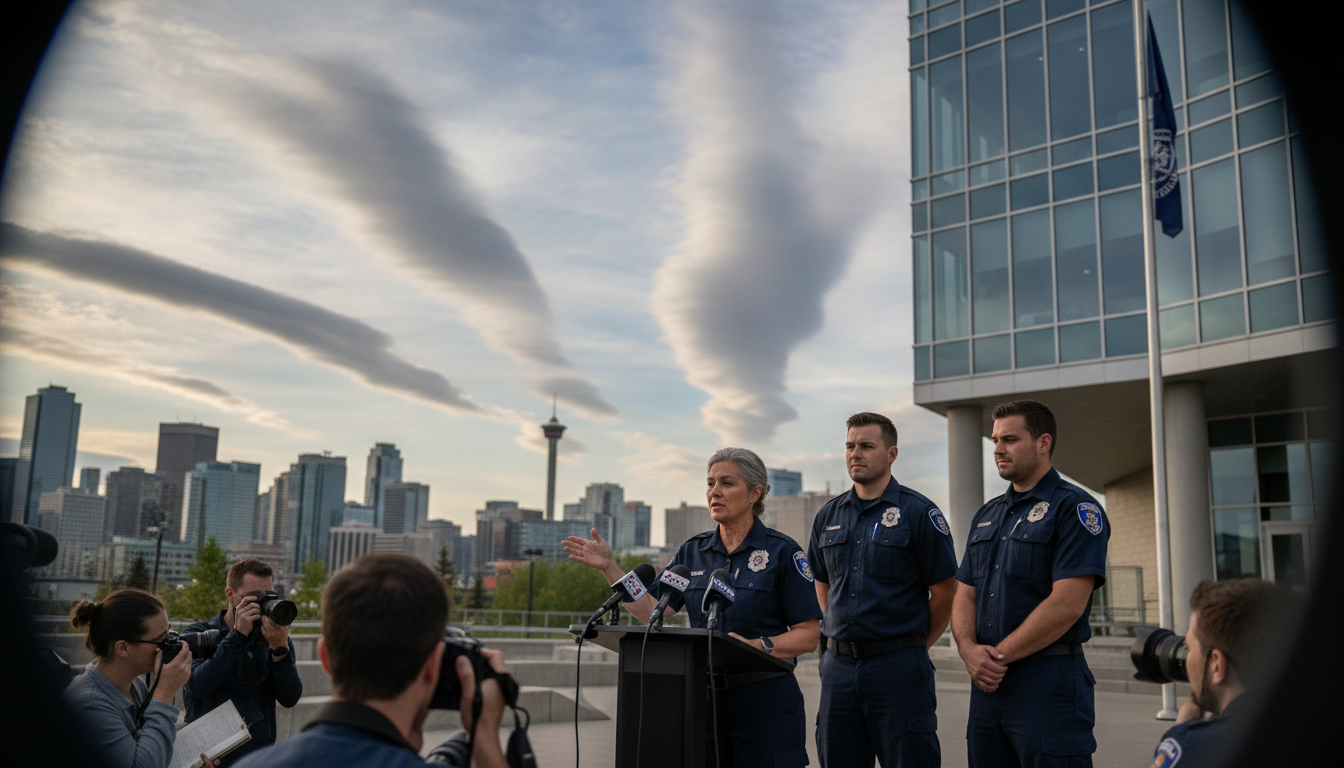
Calgary funnel clouds investigated; city says footage shows no tornadic activity
Calgary funnel clouds were reported in parts of the city, prompting officials to review photos and traffic-camera footage, which they say show the formations were harmless and not tornadic.
City officials responded after several residents posted images and video of low-hanging, funnel-like clouds over neighbourhoods. The reports triggered a review of photographic evidence and live traffic-camera feeds to determine whether any rotation reached the ground. Officials concluded the features resembled funnel clouds but did not display the hallmarks of a tornado.
Eyewitness reports and social media images
Residents across multiple neighbourhoods contacted local media and municipal hotlines after seeing narrow, rotating columns of cloud. Many posted stills and short clips online that captured the striking formations against an otherwise typical summer sky.
The volume of submissions led city crews to pull traffic-camera recordings to corroborate the time and location of the sightings. That combined visual record formed the basis for the city’s initial assessment of the event.
Official assessment and Van Lochem’s statement
Van Lochem, speaking for the reviewing team, described the cloud features as funnel-like but largely benign. He said the team found nothing in the photos or traffic-camera footage that suggested tornadic activity or damage consistent with a tornado.
City officials emphasized that the assessment was driven by visual evidence rather than reports of damage. The preliminary conclusion was that the phenomena were small-scale, localized circulations that did not meet criteria for a tornado.
Meteorological distinction between funnels and tornadoes
Meteorologists distinguish funnel clouds from tornadoes by whether the rotation reaches the ground. Funnel clouds are rotating columns of cloud that do not make contact with the surface, while tornadoes do and can produce concentrated, severe damage.
Small funnels can appear suddenly beneath storm bases and often dissipate before touching down. While visually alarming, many such features remain aloft and pose limited risk compared with confirmed tornadoes.
Public safety and official guidance
Officials reminded residents to treat any unusual weather reports seriously and to monitor local alerts for updates. They advised people to avoid speculating on social media and instead rely on verified notices from municipal or meteorological authorities.
Basic safety steps include moving indoors if a storm appears to be intensifying, staying away from windows, and seeking a basement or interior room on the lowest floor if severe weather warnings are issued. For drivers, officials recommended pulling over safely rather than attempting to film rapidly changing conditions.
Monitoring and the city’s next steps
The city said it will continue to monitor weather conditions and review any additional footage or credible reports that come in. If new evidence suggests an escalation or confirmed touchdown, authorities indicated they would update the public without delay.
Officials also plan to coordinate with regional weather services where appropriate to ensure assessments are consistent with standard storm-evaluation procedures. The emphasis was on using multiple visual sources—resident images, traffic cameras, and radar when available—to reach a conclusive determination.
Calgary residents were encouraged to submit clear photos, timestamps, and location details to help officials assess future incidents accurately.
Authorities stressed that while the recent formations were judged non-tornadic, residents should remain alert during storm season and be prepared to act on official warnings.
