
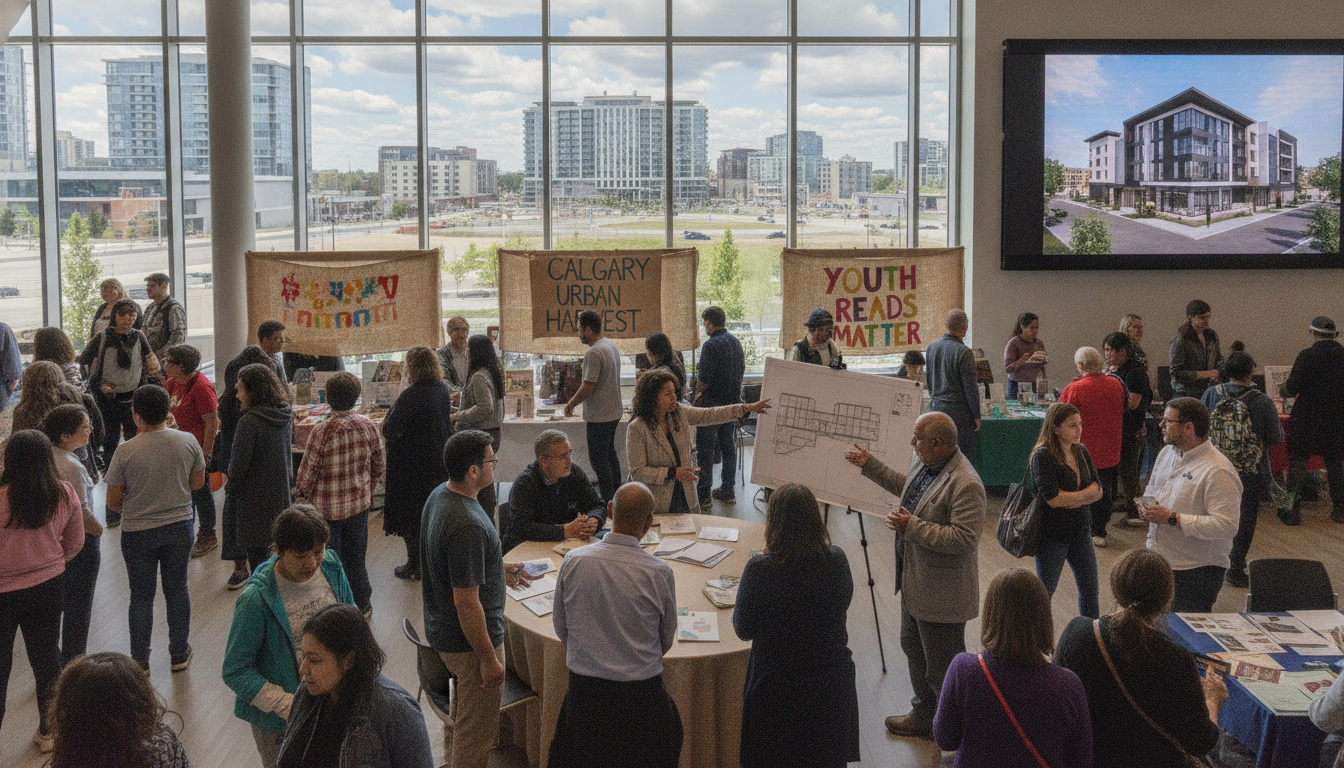
Calgary community hub opens shared space for local service groups
Calgary community hub hosts Calgary Outlink, La Cité des Rocheuses and other nonprofits in a collaborative facility, expanding services for newcomers, seniors and LGBTQ2S+ communities.
A new Calgary community hub is bringing a cluster of local organizations together under one roof to coordinate services and strengthen neighbourhood supports. The shared space already houses Calgary Outlink, La Cité des Rocheuses, Rainbow Elders Calgary, the Centre Edge, the Centre for Newcomers and the Calgary Men’s Chorus. Organizers say the arrangement is designed to foster collaboration between groups serving newcomers, older adults, LGBTQ2S+ residents and arts communities. Rasmussen indicated the hub may welcome additional tenants as funding and community needs evolve.
Tenants named and mission aligned
The roster of tenants reflects a mix of settlement services, cultural programming, seniors supports and LGBTQ2S+ advocacy and arts activity. Each organization uses the shared facility to run programs, host meetings and stage events that would be harder to deliver from isolated locations. By colocating, groups are able to share meeting rooms, reception space and back-office resources, reducing overhead and increasing service hours. The proximity also creates opportunities for cross-referrals and joint programming targeted at overlapping client groups.
Shared programming and user benefits
Combining service providers in one building allows for more integrated programming, from newcomer orientation sessions to senior social groups and inclusive arts workshops. Staff from different organizations can coordinate schedules to avoid duplication and design complementary offerings for clients who need multiple types of support. For residents, the hub provides a single, recognizable place to seek help, attend activities and connect with volunteers. Community leaders say that kind of convenience often improves uptake of services and helps people build social networks faster.
Operations, scheduling and volunteer involvement
Day-to-day operations at the hub depend on coordinated scheduling and volunteer contributions to keep programs running smoothly. Shared calendars and joint intake processes have helped participating groups maximize room use during peak and off-peak hours. Volunteers and peer leaders are being mobilized to assist with events and front-desk duties, which reduces labour costs and strengthens community ownership of the space. Administrators note that clear governance agreements are essential to prevent conflicts over bookings and to ensure equitable access among tenants.
Funding constraints and expansion plans
Financial sustainability is central to plans for growth at the hub, and leaders say expansion will hinge on securing steady funding streams. Rasmussen said the hub hopes to broaden access to more community groups as grants, donations or municipal support become available. Until longer-term funding is established, managers are prioritizing partnerships that create revenue-neutral programming and cost-sharing arrangements. Fundraising and applications for public and private support are under way to enable longer hours, outreach initiatives and additional tenant space.
Community response and demand
Early response from neighbourhood residents and service users has been positive, with many praising the convenience and sense of welcome the hub provides. Stakeholders report higher drop-in attendance at combined events and an increase in people accessing multiple services in a single visit. Local volunteers and community advocates have also stepped forward to run workshops and cultural activities, further diversifying what the hub can offer. Organizers are using intake data and participant feedback to fine-tune programming and identify gaps that new tenants could fill.
Next steps for outreach and partnerships
Managers plan to expand outreach to smaller grassroots groups, local businesses and funders to build a broader support network for the hub. Prospective tenants and partners are being evaluated based on service fit, community demand and the ability to contribute to shared operational costs. Organizers are also developing measurement tools to track outcomes such as service uptake, volunteer hours and client satisfaction. Those tools are intended to strengthen applications for funding and to demonstrate the hub’s value to municipal and philanthropic backers.
The Calgary community hub model aims to provide efficient, person-centred services by bringing complementary organizations together in one accessible location. As the hub evolves, leaders say coordination, sustainable financing and continued community input will determine how widely the space can be opened to additional groups. The collaborative approach has already produced practical benefits for newcomers, seniors and arts and LGBTQ2S+ communities, and organizers hope to scale those gains with new partners and resources.
