
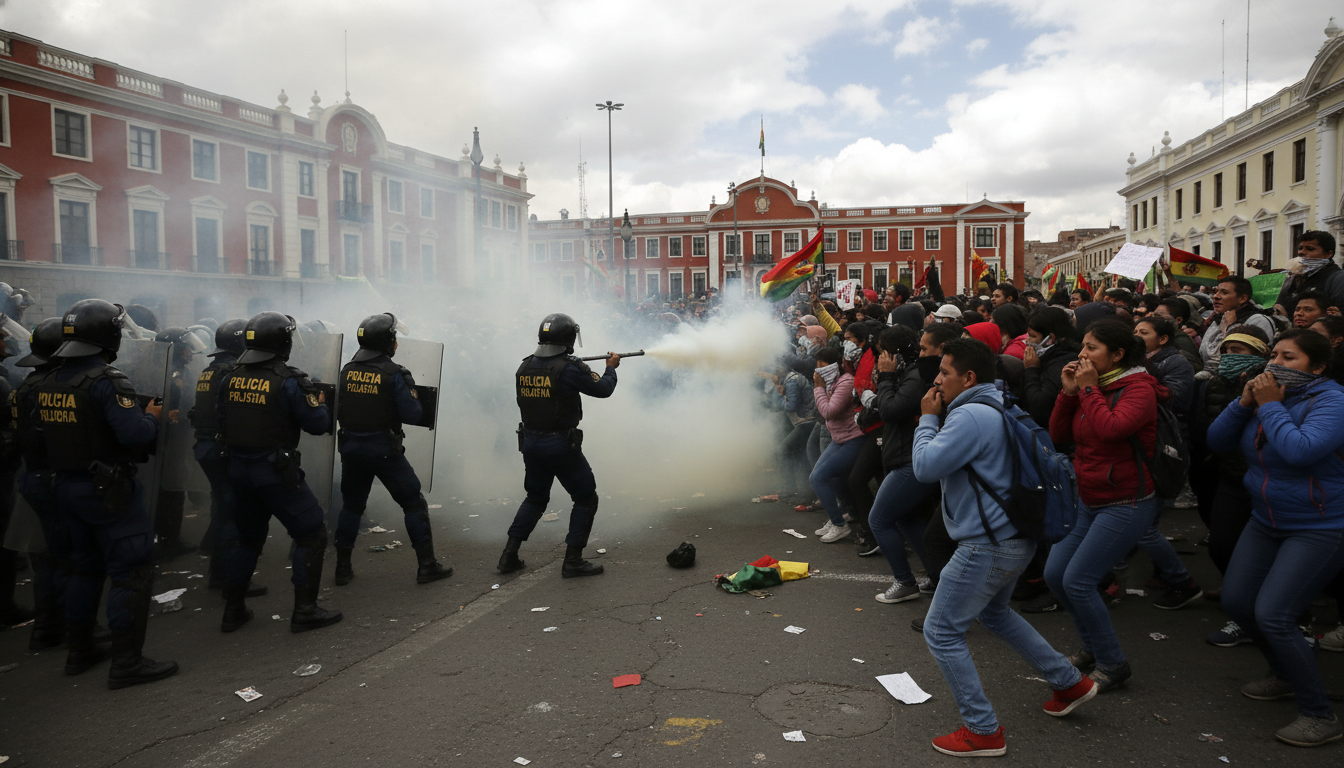
Bolivia protests: Police fire tear gas as demonstrators demand President Rodrigo Paz resign
Bolivia protests in La Paz saw police use tear gas at demonstrators demanding President Rodrigo Paz’s resignation, deepening political divisions nationwide.
Police Use Tear Gas in La Paz
On May 19, 2026, clashes erupted in central La Paz as police fired tear gas to disperse crowds of anti-government demonstrators during the Bolivia protests. Video and photographs from the scene showed thick smoke and people covering their faces as security forces pushed into areas where protesters had gathered.
Witnesses described a tense atmosphere as officers advanced to clear makeshift barricades and groups of demonstrators, some of whom responded with chants and thrown projectiles. Authorities did not immediately release a full casualty count or confirm arrests when contacted, and local hospitals reported only that they were treating people for respiratory irritation.
Protesters Demand Resignation of President Rodrigo Paz
Protesters at the demonstrations called for the immediate resignation of President Rodrigo Paz, saying his policies and recent decisions have betrayed campaign promises. The crowds included labour groups, students, and community organizations who said they were compelled to return to the streets after months of mounting dissatisfaction.
Several protest organizers framed the action as a response to perceived government overreach and unfulfilled commitments, while banners and speeches cited corruption, rising costs, and concerns about democratic governance. Organizers signalled that the demonstrations could continue until political demands are addressed.
Former Supporters Voice Alienation
Many voters who originally backed President Paz told reporters they now feel alienated by his administration’s direction, describing a sense of political disillusionment. Those former supporters said they were prompted into joining the protests by policy changes they view as favoring elites or by a lack of meaningful dialogue from the presidency.
Social media posts and small interviews at the protest sites reflected a mix of anger and disappointment, with people recounting broken promises and a belief that the government has drifted from its campaign rhetoric. Analysts warn that erosion among a leader’s base can widen fractures and prolong unrest unless concrete reconciliation steps are taken.
Government Response and Security Measures
Government spokespeople acknowledged the demonstrations and reiterated a commitment to maintaining public order, while urging restraint from both security forces and protesters. Officials said they were monitoring the situation and assessing damage to public infrastructure, but they stopped short of announcing new measures or negotiations with demonstrators.
Security sources said units were deployed to prevent the escalation of violence and to keep key government buildings and major thoroughfares open, though those sources declined to be named. Human rights advocates called for independent oversight of the police response and urged authorities to avoid excessive force.
City Life and Economic Disruption
The Bolivia protests disrupted traffic and commerce in parts of La Paz as streets were blocked and public transit routes were altered during peak hours. Market vendors and small businesses near protest routes reported lower foot traffic and temporary closures, citing safety concerns and the presence of tear gas.
Transportation officials warned of potential delays at major hubs if demonstrations spread to other cities, and analysts cautioned that prolonged unrest could deter investment and slow economic activity. Residents expressed frustration over interrupted daily routines, with some workers unable to reach jobs and schools operating on modified schedules.
Calls for Restraint from Regional Observers
Regional diplomats and international observers urged restraint from all sides and encouraged dialogue to resolve the underlying political grievances driving the Bolivia protests. Human rights organizations emphasized the need for proportionate responses by security forces and for authorities to investigate any alleged abuses.
Observers noted that swift political engagement — including mediated talks and transparent inquiry into the causes of public anger — would be critical to prevent further escalation. The diplomatic community also warned that prolonged instability could have broader repercussions for trade and cooperation in the region.
As the unrest continued into the evening, demonstrators and security forces remained in a standoff in several neighbourhoods, and many residents braced for further demonstrations in the coming days. The unfolding situation in La Paz underscores the depth of public discontent and the challenge facing President Rodrigo Paz in reconciling a divided electorate.
