
Blue Jays trade deadline decisions loom as Toronto chases wild-card spot
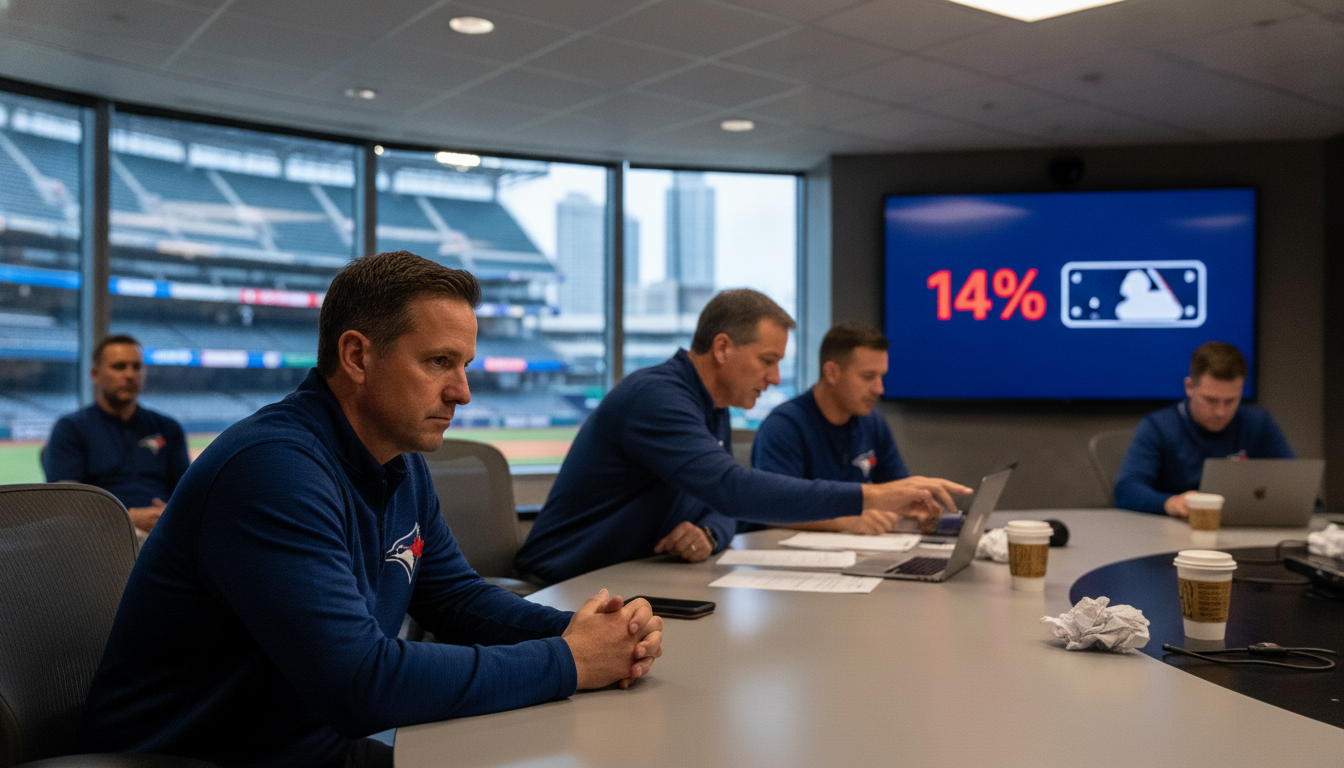
Blue Jays trade deadline update: Toronto sits 4.5 games back with a 14% playoff chance as GM Ross Atkins weighs buying pitching, trading surplus or absorbing salary.
Toronto’s July slide has left the Blue Jays trade deadline calculus in sharp focus as the club sits 4.5 games behind the final American League wild-card position. With FanGraphs putting Toronto’s playoff probability near 14 percent, the front office faces a familiar choice: buy, sell or stand pat before the Aug. 3 deadline. General manager Ross Atkins, who has reshaped the roster multiple times since arriving after the 2015 season, must weigh present contention against the club’s long-term depth.
Stand-pat option carries risk for playoff hopes
Standing pat would keep the current roster intact and preserve depth in both the majors and the system. That route trusts internal recoveries from slumps and the bounceback of underperforming players without sacrificing future assets.
However, sitting idle when rivals are strengthening can amount to a strategic retreat in a tight wild-card race. Given Atkins’ track record of active trading, a zero-move approach would be a notable departure and is widely seen as the least likely outcome.
Controllable starting pitching remains the top target
A clear priority for Toronto would be adding controllable starting pitching to cover both the immediate stretch run and the seasons ahead. The Blue Jays enter the deadline with several high-leverage rotation spots subject to free agency, and a younger arm with multiple years of team control would be particularly valuable.
Past Blue Jays deadline additions that paid dividends include midseason deals for arms such as Francisco Liriano, Ross Stripling and Mitch White. The cost to acquire such pitching is typically steep, requiring a mix of big-league talent and prized prospects, but the payoff can extend beyond a single postseason chase.
Swapping surplus pieces for roster balance
Another plausible path is executing need-for-need trades that convert positional depth into pitching or right-handed power. Toronto’s outfield mix and bench options provide potential trade chips for clubs seeking left-handed hitting or depth, creating leverage for the Blue Jays to shore up pitching or late-inning relief.
Need-driven trades demand careful personnel evaluation to avoid misjudging future value. Historical trades around the league show how quickly a so-called surplus player can blossom elsewhere, so Toronto’s evaluators will need precise scouting to avoid trading away a productive piece for short-term gain.
Willingness to absorb salary to land an impact player
Toronto’s financial position gives it the option to take on undesirable contracts as a means to acquire talent it otherwise could not. In the past, the Blue Jays accepted payroll baggage to secure players who later became meaningful contributors, illustrating how such deals can be structured to produce long-term value.
That approach is not cost-free. League rules tied to competitive-balance tax thresholds and draft penalties make heavy spending consequential, and FanGraphs’ payroll estimates place the Blue Jays near levels that could affect draft positioning. Executives must balance immediate upgrades against roster flexibility and the prospect costs of carrying non-productive salary.
Balancing present ambitions with farm system health
Every trade decision will be evaluated through the twin lenses of 2026 contention and organizational sustainability. Acquiring controlled arms or impact hitters can improve playoff odds now while preserving future upside, but the price is often top prospects. Conversely, selling at the deadline would replenish the farm but concede the current season.
Toronto’s decision-making will be shaped by short-term performance trends, medical evaluations and the market for the types of players the club covets. Teams that move decisively and smartly can convert a marginal playoff chance into a postseason berth, but missteps can set a rebuilding timeline back years.
As the calendar pushes toward Aug. 3, the Blue Jays trade deadline discussion will intensify inside the front office and across rival clubs. Fans can expect a mix of targeted scouting, trade talks and careful weighing of payroll consequences before Atkins and his advisers make a move that balances urgency with prudence.
