
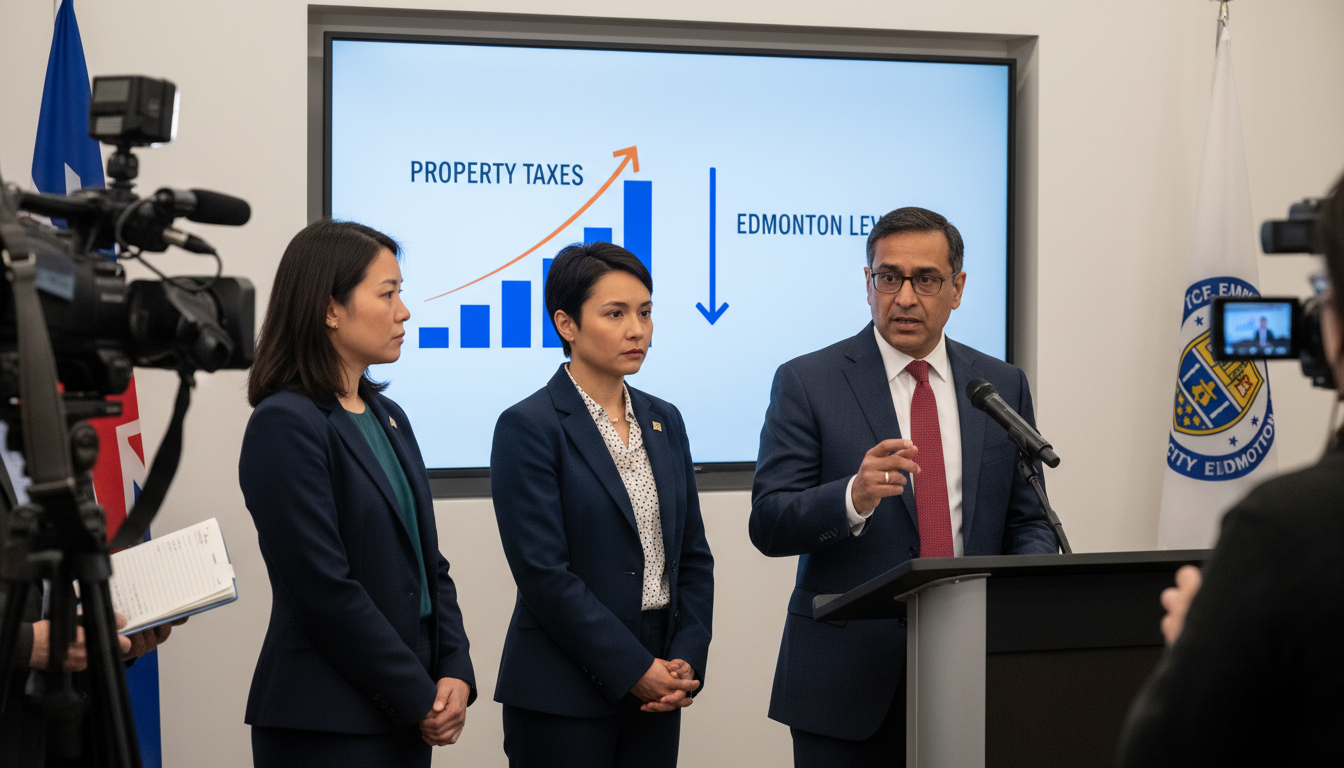
Bill 28 could raise property taxes by limiting municipal levy powers, Agrawal warns
Bill 28 could curb municipal levying authority and block tools like a vacant home tax, potentially pushing property taxes higher, Agrawal told city officials.
Edmonton councillor Agrawal warned that Bill 28 — proposed provincial legislation — would restrict local governments’ ability to create certain levies and targeted taxes. He said the constraints could ban measures such as a vacant home tax and force cities to shift costs onto broader property tax bases. City finance officers are now assessing how the measures could change municipal revenue strategies if the bill becomes law.
Bill 28’s limits on municipal levies
Bill 28, as described by Agrawal, would remove or tightly limit the power of municipalities to impose levies tied to specific land uses. That change would narrow the tools cities use to target particular problems, like long-term vacancies or derelict properties. Municipal leaders argue such targeted levies allow cities to address local priorities without increasing the general property tax burden on homeowners.
Effect on Edmonton’s vacant home tax proposal
A vacant home tax is one example officials say could be rendered impossible under Bill 28. Edmonton has explored targeted approaches to discourage long-term property vacancy and to raise revenue for housing and enforcement programs. Without the ability to apply a levy to a narrow category of properties, city councils may lose a mechanism that both discourages vacancy and generates funding dedicated to housing initiatives.
Municipal revenue mix and pressure points
Municipalities rely on a mix of revenue tools — property taxes, utility rates, development levies, and targeted charges — to fund services and capital projects. Restricting any class of levies reduces flexibility and can create shortfalls when existing revenues don’t cover service needs. If targeted levies are curtailed, cities often must consider raising general property tax rates, cutting services, or finding other fees that apply to a broader taxpayer base.
City officials warn of higher property taxes
Agrawal and other municipal figures have cautioned that limiting levy authority could result in higher property taxes for homeowners and businesses alike. When a city cannot tax a specific subset of properties, the lost revenue still has to be recouped from somewhere, municipal officials say, and the most direct option is often the municipal property tax. That shift would spread costs more widely, reducing the policy precision local councils seek when addressing discrete issues.
Jurisdictional debate over provincial authority
The proposal highlights a recurring tension in Canadian governance: provinces set the legal framework for municipalities, but cities manage local services and bear the fiscal consequences. Changes like Bill 28 raise questions about balance of power and local autonomy. Municipal leaders contend that decisions about levy design and targeted taxation are best made close to the communities they affect, while provincial lawmakers may argue for standardized rules across jurisdictions.
Implications for homeowners, renters and developers
If Bill 28 leads to higher property tax rates, homeowners could face increased annual bills and developers might see changes to project economics. Renters could indirectly be affected if landlords pass on higher property tax costs through increased rents. Conversely, proponents of limiting levies argue that some targeted charges can distort market choices, but opponents say those charges are a key tool for achieving public policy goals like reducing vacancy and encouraging active use of housing stock.
Options available to municipal councils
Faced with potential restrictions, councils may explore alternatives such as reallocating existing budgets, increasing user fees for specific services, lobbying the provincial government for exemptions, or pursuing legal challenges. Some municipalities might redesign programs to fit within the narrower framework, while others could prioritize core services and delay less urgent capital projects. The choices will depend on a city’s fiscal position and political appetite for tax increases or service reductions.
Agrawal’s warning has prompted municipal staff and council members to model several scenarios to understand how Bill 28 could affect budgets, housing strategies and local taxation in the months ahead.
