
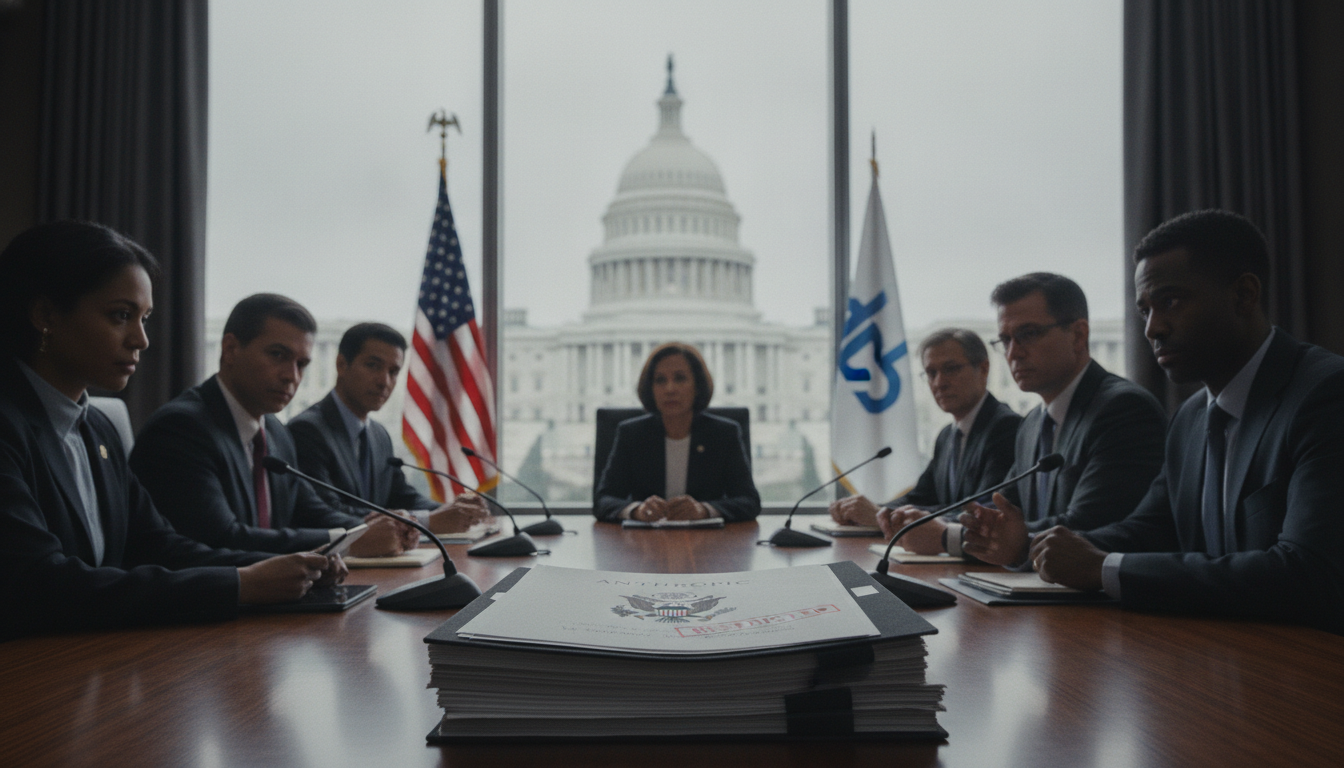
U.S. Blacklists Anthropic as Fable 5 Approval Is Delayed Amid Military-Use Dispute
U.S. places Anthropic on a security blacklist as regulators delay approval of Fable 5 over military-use concerns, while future clearance remains under review.
Anthropic, the AI developer behind the Fable series of models, was added to a U.S. national security blacklist even as regulators stopped short of permanently barring the company’s next-generation model, Fable 5, from release. The move follows Anthropic’s refusal to permit its models to be used for domestic surveillance and fully autonomous weapons systems, a stance that has strained relations with U.S. authorities. An official decision on when or whether Fable 5 will be cleared for broader use was not included in the notice, though sources indicate the government is still considering a potential approval under conditions.
Government Action and the Blacklist
The U.S. designation places Anthropic on a list maintained for national security reasons, restricting certain government interactions and potentially limiting access to federal contracts and classified projects. Officials framed the step as a response to the company’s policies governing military application, particularly its refusal to authorize domestic surveillance or development of autonomous weaponry, which has raised concerns among some national security officials. While the blacklist does not automatically ban Anthropic from private-sector work, it signals a heightened regulatory scrutiny that could affect partnerships, export controls, and investor confidence.
Regulatory Review Keeps Fable 5 in Limbo
Regulators have paused Fable 5’s wider rollout pending further review, and the recent blacklist did not include a timetable for lifting the hold or for formal clearance. Government sources told journalists that authorities are weighing narrower approvals, conditional access, or additional guardrails that could permit limited deployment while addressing perceived risks. For Anthropic, which has positioned Fable 5 as a commercially pivotal model, the uncertainty complicates product plans and customer outreach in markets where regulatory endorsement matters.
Anthropic’s Policy Against Military Use
Anthropic publicly and privately resisted requests to allow its technology to be used for domestic surveillance and fully autonomous weapons systems, citing ethical limits and safety commitments. Company leadership has argued that such uses would contradict its stated principles and expose the firm to reputational and legal risks, even as it seeks to cooperate on defensive or non-lethal research in some contexts. That stance, while applauded by some civil society groups, put Anthropic at odds with parts of the government seeking broader access to advanced AI capabilities for national defense and security operations.
Impact on Anthropic’s IPO and Business Prospects
The blacklist and the unresolved status of Fable 5 could complicate Anthropic’s plans for an initial public offering and other capital-raising activities, investors and analysts warn. Market appetite for an IPO often depends on clear regulatory access to major customers and predictable revenue streams, and a designation tied to national security questions can introduce perceived legal and operational risks. Beyond capital markets, corporate clients and international partners may reassess contracts or delay procurement decisions while they evaluate the implications of the U.S. action and any potential export restrictions.
Wider Implications for AI Governance
The dispute highlights a broader policy fault line between U.S. authorities seeking to secure national interests and segments of the AI industry pushing ethical limits on military application. Regulators are increasingly focused on how advanced AI systems might be repurposed for surveillance or lethal autonomy, prompting new scrutiny, licensing debates, and potential regulatory frameworks. At the same time, technology firms are navigating trade-offs between commercial expansion, ethical commitments, and compliance with evolving government expectations, a balancing act that will shape the sector’s regulatory landscape in coming months.
Paths Forward and Possible Conditional Approvals
Officials are reportedly considering a range of responses that could include conditional approval of Fable 5 under strict usage constraints, enhanced auditing and monitoring requirements, or negotiated waivers for specific defensive research projects. Industry observers say a negotiated settlement, including clear legal safeguards and oversight mechanisms, could resolve immediate tensions while setting precedents for oversight of other advanced models. Any path to resolution is likely to involve technical guarantees, contractual prohibitions on certain uses, and continued dialogue between Anthropic, regulators, and oversight bodies.
The situation leaves Anthropic facing both reputational support from advocates of ethical AI limits and practical obstacles that could reshape its commercial trajectory, with key decisions now in the hands of regulators and national security officials as they weigh the company’s commitments against perceived risks.
