
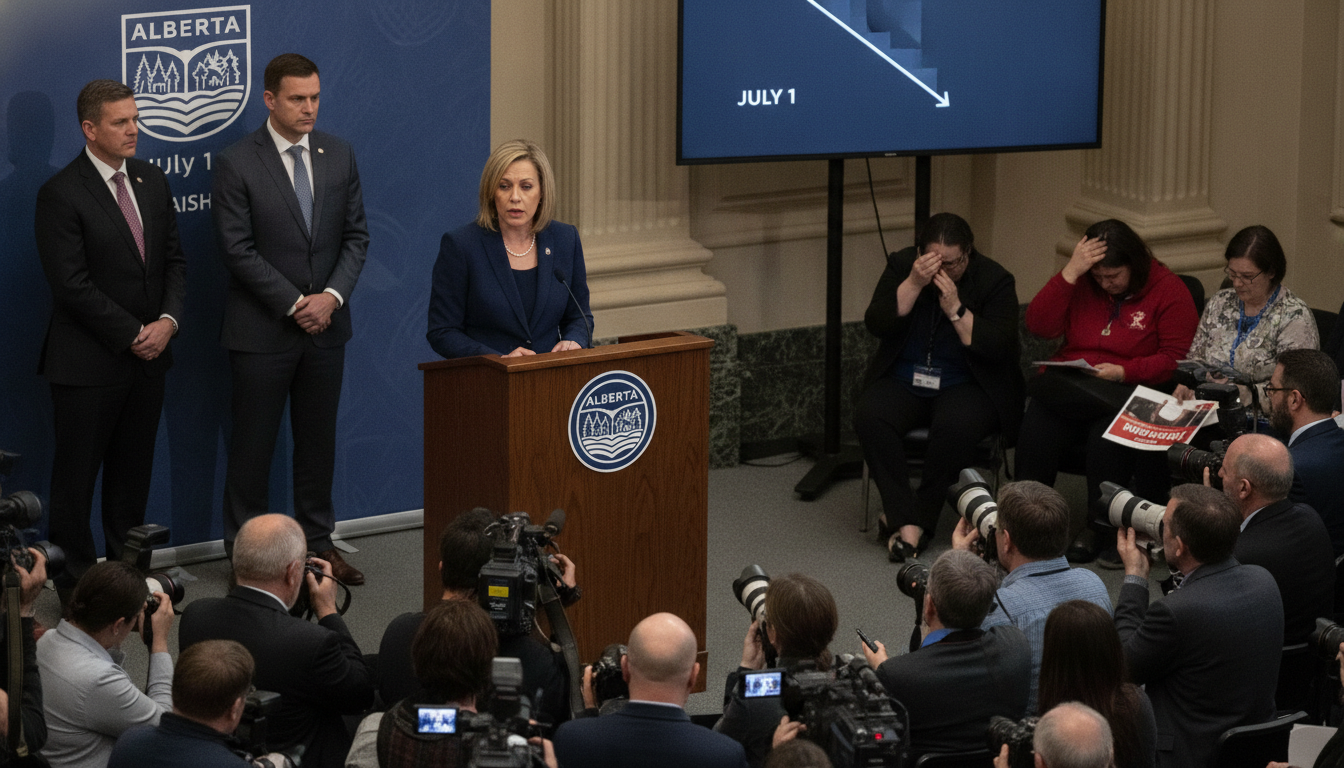
Alberta begins rolling out Alberta Disability Assistance Program as AISH transitions spark warnings
Alberta begins moving some AISH recipients to the Alberta Disability Assistance Program (ADAP) on July 1, raising concerns from advocates and a government reply.
The provincial government will start transitioning some recipients of the Assured Income for the Severely Handicapped (AISH) to the new Alberta Disability Assistance Program (ADAP) on July 1, a change the government says targets working-age people with disabilities who can still earn income.
The announcement and implementation plan have drawn urgent warnings from disability advocates, who say the shift and associated income thresholds are pushing already vulnerable people into despair.
Transition plan and who is excluded
The government has said ADAP will operate alongside AISH rather than replacing it, and that most existing AISH clients will either stay in AISH or be moved to ADAP depending on eligibility criteria.
Those explicitly excluded from transition to ADAP include people with severe and profound developmental disabilities, individuals receiving palliative or terminal care, residents of continuing care homes, and recipients aged 60 and older, the province has stated.
New income thresholds and benefit amounts
Under ADAP the maximum monthly basic benefit is $1,740, which the province has described as a restructured payment relative to AISH’s current $1,940 maximum.
Single recipients on ADAP may earn up to $700 per month without any reduction to their benefit, while those with dependents can earn up to $1,100 before clawbacks begin; the province also notes that ADAP clients may still receive benefits while earning up to $45,240 annually under the new structure.
Changes affecting couples and household payments
The government says partners living together who receive AISH or ADAP will continue to have shared income allowances, with cohabitating partners allowed to earn up to $1,500 before impacts to benefits.
Beginning in August, households where two adults each receive income assistance will see each adult receive 88 per cent of the individual maximum benefit, a change the province says reflects shared household expenses and joint financial responsibility.
Notifications, reassessments and transitional payments
Officials notified individuals in mid-May whether they would move to ADAP, and the province says those selected to transition will receive a $200 monthly top-up until Dec. 31 to offset the change.
The government has also committed to covering the cost of one medical assessment for current AISH clients who are transitioned to ADAP in July and who wish to be reassessed for continued AISH eligibility.
Advocates report severe distress among recipients
Disability advocates and people with lived experience warn the program changes are producing profound anxiety and, in some cases, suicidal ideation among recipients.
Advocates report private messages and group discussions in which individuals say they have exhausted supports such as therapy and medications and are fearful of losing the stability AISH provided, an emotional toll that those advocates say the province should address urgently.
Government response and public remarks
On a weekend radio call-in program, Premier Danielle Smith acknowledged reports that someone died by suicide amid fears over the changes, calling any such outcome deeply sad and troubling.
A government spokesperson for the ministry responsible for assisted living and social services said the province views any loss of life as tragic and pointed to available supports for people in crisis, while noting the transformation to ADAP is intended to create a pathway for those who can work to increase earnings.
Advocates counter that practical supports and clear communications have not been sufficient, and that recipients require stronger protections and financial certainty.
They have urged the province to pause transitions, expand exemptions, or increase benefit levels to reduce immediate harm while longer-term policy adjustments are considered.
The timeline for transition will see active moves beginning July 1, with the household payment change to 88 per cent for dual-adult households effective in August, and transitional top-ups running through the end of December.
Recipients who believe they meet the criteria to remain on AISH are being encouraged to request reassessment, and the province has said it will fund the initial medical review for those who choose it.
Observers say the shift to ADAP represents both a policy redesign and a political flashpoint as Alberta balances fiscal and social-service priorities.
Stakeholders from advocacy organizations, clinicians and service providers have called for ongoing monitoring of health outcomes and clear, expedited channels for people experiencing mental-health crises as the transition unfolds.
The province’s stated goal is to provide a specified disability program tailored to people who can participate in work while preserving AISH for those with the most severe and enduring needs, but critics argue the practical effect may be to reduce income for many and increase instability.
Watch groups and legal advocates say they will continue to track individual cases, support reassessments where warranted and press for policy adjustments if data show the transition is harming recipients.
For now, affected Albertans are advised to check official notices they received, explore reassessment options, and reach out to local supports if they are experiencing distress.
