
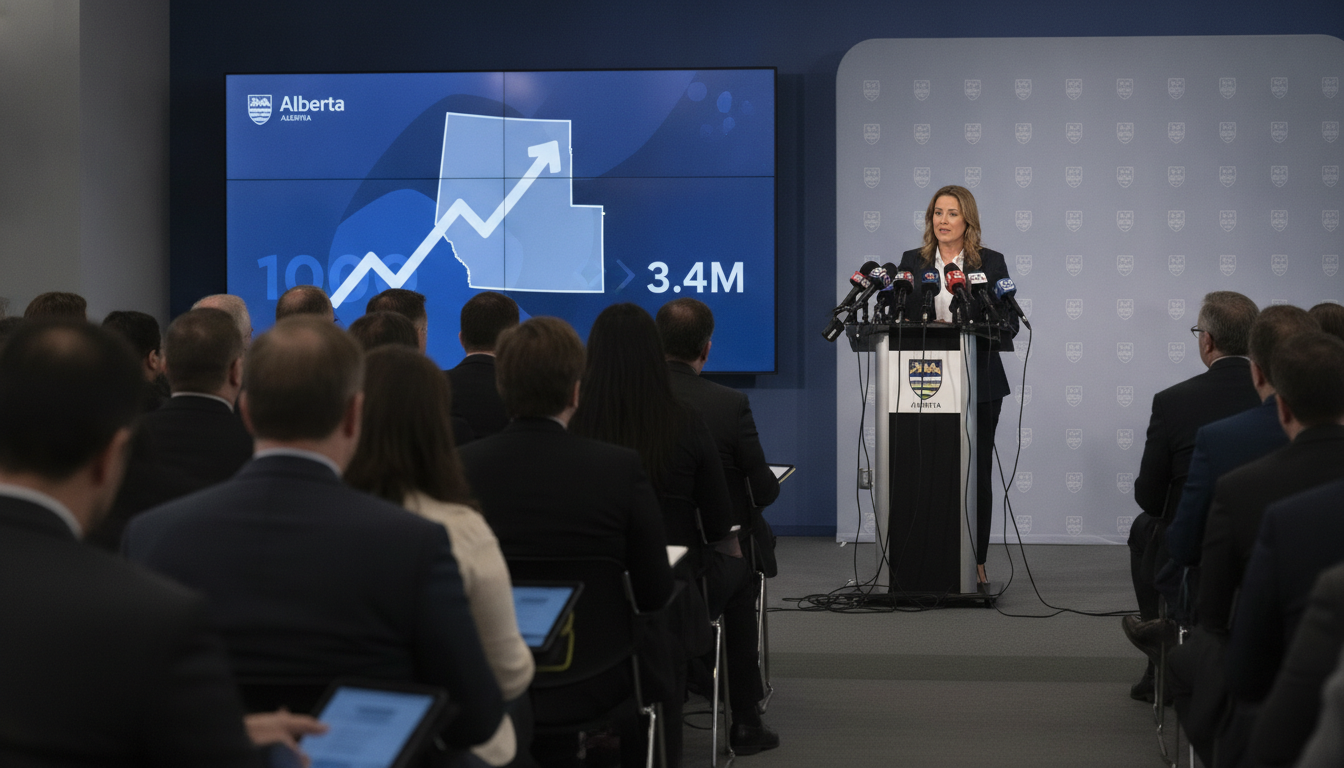
Alberta $100 rebate applications open July 1 as province shifts away from pump tax cut
Alberta $100 rebate applications open July 1–Sept. 30 for nearly 3.4 million adults; province says payments will be deposited within two weeks of an approved application.
Alberta has launched an application program allowing eligible residents to claim a one-time $100 payment intended to ease pressures from rising living costs. The Alberta $100 rebate replaces a previously signalled reduction in the provincial fuel tax at the pumps and is available to all qualifying adults regardless of whether they drive. The provincial government says the payment is designed to direct assistance to households that need it most while ensuring funds are usable for a range of household needs. Applications will be accepted from July 1 through Sept. 30, with the government estimating deposits will arrive within about two weeks of a completed application.
Alberta opens application window for $100 rebate
Applications for the Alberta $100 rebate begin on July 1 and will remain open until Sept. 30, the province announced. The government has set an eligibility period for this summer to allow residents several months to apply before the program closes at the end of September.
Officials said that nearly 3.4 million adults in the province are expected to qualify for the payment. The province also noted it has adjusted the regulatory framework for fuel tax relief to permit the direct payments to be made instead of pursuing a pump-price tax reduction.
Eligibility and how many adults qualify
The province has indicated the rebate is broadly accessible and does not require recipients to be drivers or vehicle owners. The criteria released by officials aim to include adults who meet residency and tax-status requirements, and the government has framed the payment as support for general cost-of-living pressures rather than a fuel-specific subsidy.
Nearly 3.4 million adults are named as eligible in the government’s outline, a figure that reflects the province’s adult population rather than households or vehicles. The application window running from July 1 to Sept. 30 is intended to give residents time to submit claims and to allow the government to process the expected volume of applications.
Government decision to favour direct payments over fuel tax cut
Provincial leaders said their decision to offer a direct $100 payment followed a review of policy options by the finance ministry. The premier and finance officials concluded that a one-time payment would better target household needs than a fuel-tax reduction at the pumps, which they said would provide an uneven benefit depending on driving patterns.
Government officials presented the rebate as a more flexible form of relief that can be used for a variety of household expenses. They argued that the targeted payment better reaches lower-income residents and non-drivers who also face rising costs but would receive little to no help from a fuel-tax reduction.
Payment logistics and expected timing
The province says it will process applications and aim to deposit funds into bank accounts within approximately two weeks of receiving a completed application. Officials have committed to a relatively quick turnaround for payments, noting the streamlined nature of a one-time transfer compared with ongoing tax changes or phased relief measures.
To accommodate the payment schedule, the provincial government updated the regulations that govern fuel tax relief, formally enabling cash distribution as an alternative. Administrative guidance issued by officials emphasizes prompt processing and clear communication to applicants about timelines and documentation requirements.
Fiscal backdrop: oil revenue and geopolitical factors
Provincial treasury officials pointed to recent favourable energy revenues when outlining the fiscal context for the rebate program. Alberta’s budgetary position has been influenced by higher oil prices over recent months, a development the government linked to supply pressures stemming from geopolitical tensions in the Middle East and other international market factors.
The province characterized the rebate as fiscally manageable within the current revenue environment, noting that elevated energy receipts have helped create room for one-time targeted measures. At the same time, officials cautioned that revenue swings remain possible and that ongoing fiscal planning would consider longer-term pressures and program sustainability.
Implications for households and the provincial economy
For individual households, a one-time $100 payment provides modest relief but is broadly available and usable for essential expenses, advocates said. The government framed the rebate as a timely measure to address short-term cost pressures while leaving broader economic policy in place.
Economists and budget observers note that one-off payments can offer immediate but limited relief, and that sustained increases in living costs generally require longer-term policy responses. The rebate’s inclusivity — extending to non-drivers as well as vehicle owners — has been highlighted as a design feature meant to distribute relief more equitably across the adult population.
Some analysts will watch administration costs and the efficiency of delivery as the program unfolds, given the logistical challenge of processing millions of applications in a short window. The province has signalled it will monitor uptake and outcomes, information that may inform any future decisions on whether to repeat or expand similar targeted payments.
The Alberta $100 rebate marks a deliberate policy choice to prioritize direct household payments over a fuel tax reduction at the pump. The program’s implementation — application window, eligibility thresholds, and payment timing — will be closely watched by residents and stakeholders as the summer moves into the fall.
