
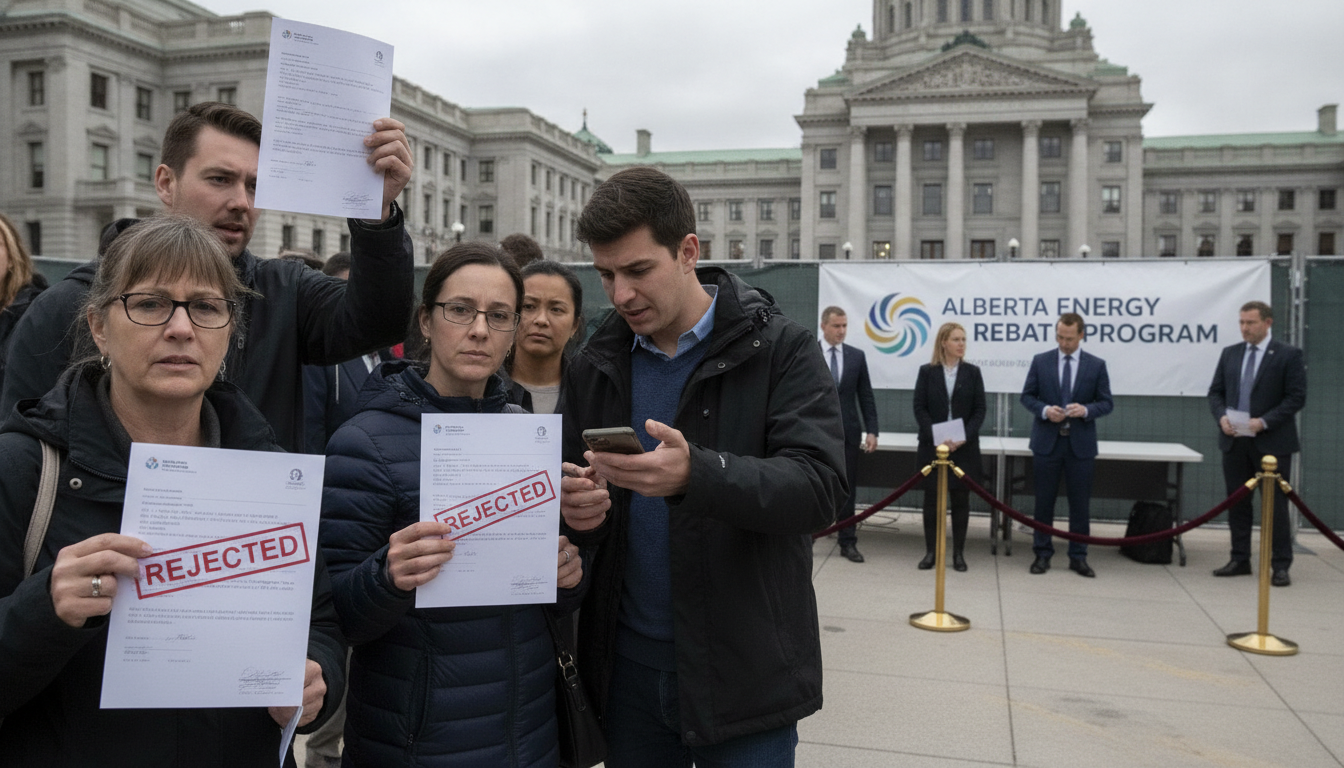
Alberta gas rebate application draws criticism as thousands abandon online process
Alberta gas rebate woes mount as Premier Danielle Smith concedes identity-verification hurdles have left many drivers unable to claim the $100 relief, prompting calls to cut pump prices instead.
Premier Acknowledges Rebate Application Issues
Premier Danielle Smith told listeners on her weekly radio program that the Alberta gas rebate rollout has encountered significant problems, acknowledging barriers that have prevented thousands from completing applications. The rebate, intended to deliver $100 to eligible drivers, required identity verification through bank Interac systems, a step Smith said raised privacy and access concerns.
Government sources say at least 20,000 Albertans began the online form but abandoned it before finishing, and some applicants who lack online banking options have been forced to wait for mailed cheques. The growing public frustration has focused attention on whether the rebate mechanism is the most effective way to ease fuel costs this summer.
Applicants Report Barriers With Interac Verification
Many potential recipients told officials they do not use online banking or prefer not to link personal financial credentials to a government portal, complicating the Interac-based verification step. One caller to Smith’s program told the premier that neither spouse used online banking, leaving them reliant on slower, paper-based alternatives.
Officials have acknowledged these concerns and indicated they are exploring simpler verification options, including the possibility of a tax-return based code tied to Line 30 that could be cross-checked with Canada Revenue Agency records. For now, however, the Interac requirement remains a central obstacle that critics say excludes older residents and those without ready internet access.
Government Cites Fraud, Says 35,000 Requests Blocked
The provincial government has defended the verification regime as necessary to prevent fraud, with Smith saying her office has identified and stopped some 35,000 fraudulent requests. That figure has been offered as justification for the more cumbersome approval process and for delaying broader changes to how payments are delivered.
Opponents of the current system say a direct pump-price reduction would have been far harder to exploit, arguing fraud is less likely when the benefit is applied at the point of sale. Government officials counter that online verification protects taxpayer dollars, but they face growing pressure to show the savings from fraud prevention exceed the delays and costs imposed on legitimate claimants.
Calls for Immediate Pump Price Cut Instead
Policy experts and some drivers have urged the government to suspend the provincial fuel excise tax until Oct. 1 under existing legislative provisions, a move that would immediately reduce posted pump prices by roughly 13.5 cents per litre. Advocates say a visible, province-wide price cut would relieve consumers without requiring individual applications and would avoid the administrative burden of processing tens of thousands of claims.
Critics of the rebate process argue that petrol retailers continuously update posted prices and motorists can easily choose lower-cost pumps, so there is limited risk of retailers retaining a tax cut. Supporters of the rebate plan, however, worry that a wholesale tax suspension could be absorbed unevenly across retailers and complicate accounting and enforcement.
Red Tape Reduction Minister Faces Questions
The rollout has prompted scrutiny of the government’s broader red-tape reduction agenda, with some observers asking why the minister responsible for that portfolio did not intervene in designing a simpler delivery mechanism. The rebate’s multi-step verification and the need for mailed cheques in some cases have been described by opponents as the opposite of the streamlined processes the government had promised.
Officials say the design prioritized fraud prevention while still aiming to deliver assistance quickly, and they have signalled an openness to refine verification procedures. Still, the political optics of thousands of abandoned applications and delayed payments have become a focal point for critics across the province.
Costs, Timing and Consumer Impact
Beyond consumer inconvenience, the rebate system raises questions about administrative costs and the time required to distribute funds by cheque or direct deposit. Observers estimate that running an online portal, verifying identities, and issuing paper cheques may consume significant public resources compared with a temporary cut to the fuel tax communicated to retailers.
Retailers themselves are able to change pump prices remotely and would likely implement a provincial tax holiday rapidly, proponents say. Conversely, opponents warn that a blunt tax suspension would reduce government revenue immediately and could complicate budget planning at a time of competing fiscal priorities.
The immediate consequence for many drivers has been delay and uncertainty as some wait weeks for mailed cheques or attempt unfamiliar digital verification steps. The perceived complexity of the current rebate process has sparked calls from consumer advocates and some political rivals for a simpler, more transparent approach to delivering relief.
The province now faces a choice between refining online verification to speed payments to eligible households or shifting to a pump-level price cut that would deliver an instant, visible discount to anyone filling a tank. As debate continues, many Alberta motorists are watching closely for any revisions that would provide clearer, faster relief at the pumps.
