
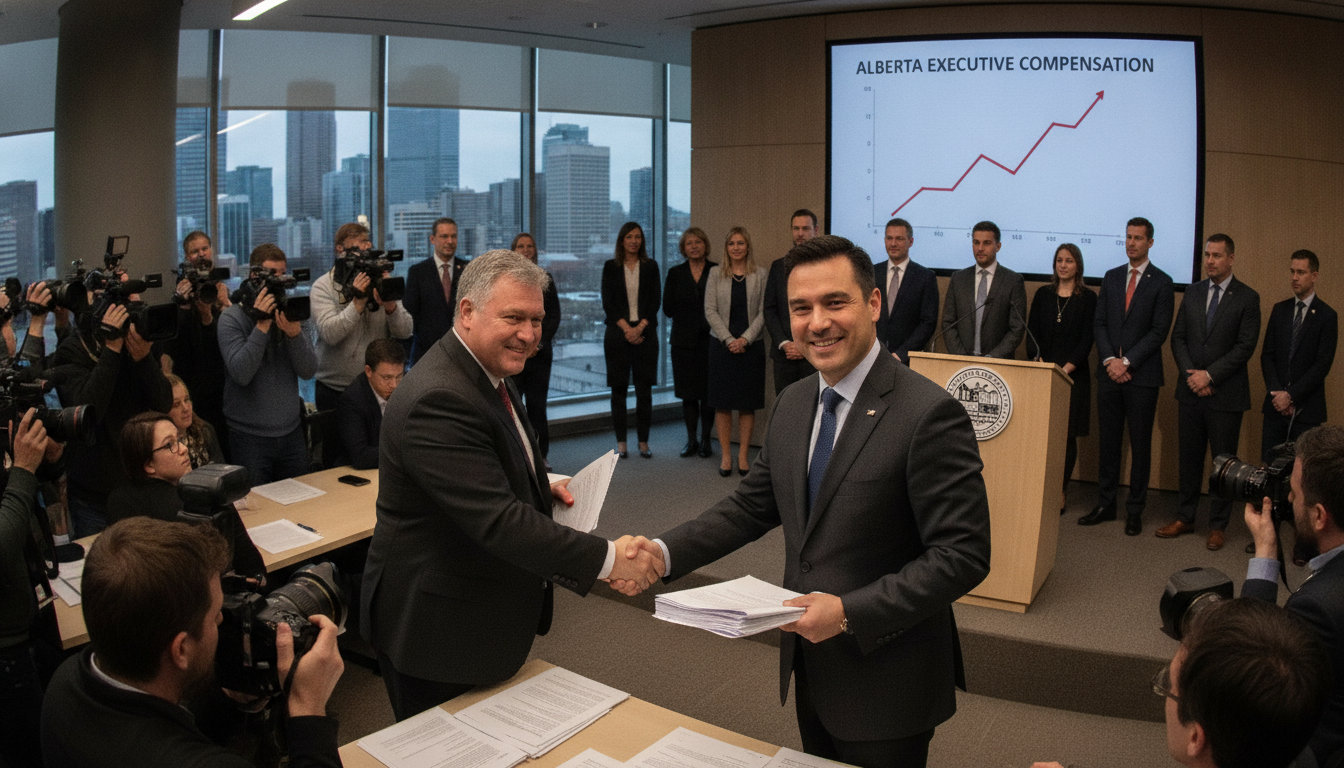
Alberta executive compensation climbs as energy sector leads 2025 gains
Alberta executive compensation climbed in 2025: median base pay +5.8% and total pay up nearly 19%, driven by energy-sector bonuses, LTIs and market gains.
Compensation rose across Alberta’s largest public firms
Alberta executive compensation increased notably in 2025 as the province’s 100 largest publicly traded companies reported stronger pay packages for named executives. Median base salaries rose 5.8 percent year over year while total reported compensation jumped almost 19 percent, reflecting wider cash and incentive payouts.
Annual bonuses were a significant factor, climbing 27 percent for all named executives, with chief executive officers seeing an aggregate increase of about eight percent. These trends were reported in an annual review compiled with consulting firm Global Governance Advisors, which tied pay outcomes to robust shareholder returns and overall corporate performance.
Energy sector concentrated top executive pay
Energy companies continued to dominate the list of top earners, reflecting the sector’s outsized performance in 2025. Of the 100 firms tracked, 52 were oil and gas companies and another 18 were energy equipment and services firms, and seven of the province’s 10 highest-paid executives came from the oil and gas industry.
Top individual payouts were heavily weighted toward long-term incentive realizations, with the leading payout near $44 million and other senior energy executives receiving multi‑million dollar packages. Non-energy leaders who broke into the top ranks included executives from Canadian Pacific Kansas City and Stantec, underscoring that strong returns in other sectors can also produce high pay outcomes.
Bonuses and long-term incentives drove gains
The rise in total compensation was driven largely by larger annual bonuses and payouts from long-term incentive plans (LTIPs). Across industries, 86 percent of CEOs and 92 percent of all named executive officers received annual incentive bonuses in 2025, indicating widespread use of short-term performance pay.
Long-term incentives often tied to multi-year performance cycles also contributed substantially to headline figures. Where bonuses signal strong operating performance in a given year, LTIP payouts reflect sustained share-price appreciation or the achievement of multi-year targets, making them a central factor behind the year’s pay increase.
Shift from stock options to RSUs and PSUs
Corporate pay structures in Alberta showed a continued decline in the use of traditional stock options and a corresponding rise in share-based awards designed to align executives with shareholder interests. A plurality of companies—42 percent—offered LTIPs in the form of shares only, while 31 companies used a combination of shares and options.
Only about 10 percent of firms relied solely on options, and eight percent granted no LTIP at all. Compensation advisers noted this shift reduces dilution risk and responds to shareholder concerns that options can be perceived as overly generous without clear alignment to long‑term value.
Market performance and 2026 outlook
The provincial economy and market conditions underpinned much of the pay story: Alberta’s GDP expanded by 2.8 percent in 2025, outpacing the national average, and roughly two‑thirds of the top firms posted positive market‑capital changes. The oil and gas sector recorded an 8.9 percent market‑cap increase and a 32.1 percent total shareholder return for the year, while energy equipment and services posted a 20.3 percent market‑cap gain.
Year‑to‑date through June 2026, the top 100 companies showed an average market‑cap rise of 23.3 percent, led by a near 25 percent increase in oil and gas. Market watchers pointed to geopolitical events and pipeline developments as contributing factors that have sustained commodity prices and investor interest so far this year.
Governance practices shaped pay structures
Governance reforms and shareholder engagement influenced how pay was structured more than the absolute level of compensation. The wider adoption of say‑on‑pay practices encouraged companies to refine performance metrics and to adopt performance share units and restricted stock units with clear vesting conditions.
Advisers observed that while these governance changes improved transparency and alignment, they did not materially depress overall pay levels. Boards increasingly calibrate target and maximum bonus thresholds annually to reflect evolving expectations and to ensure pay outcomes remain defensible to large and diversified investor bases.
The 2025 compensation picture for Alberta’s largest public companies reflects a combination of strong sector performance, especially in energy, and a governance environment that favors clearer performance linkage in pay plans. As 2026 unfolds, corporate boards and investors will be watching whether continued market gains translate into sustained incentive payouts or whether any new economic or political shocks recalibrate executive compensation outcomes.
