
Alberta independence referendum pushed forward as committee sets intersessional deadline
A draft report to be filed during the legislature’s adjournment aims to shape the Alberta independence referendum debate
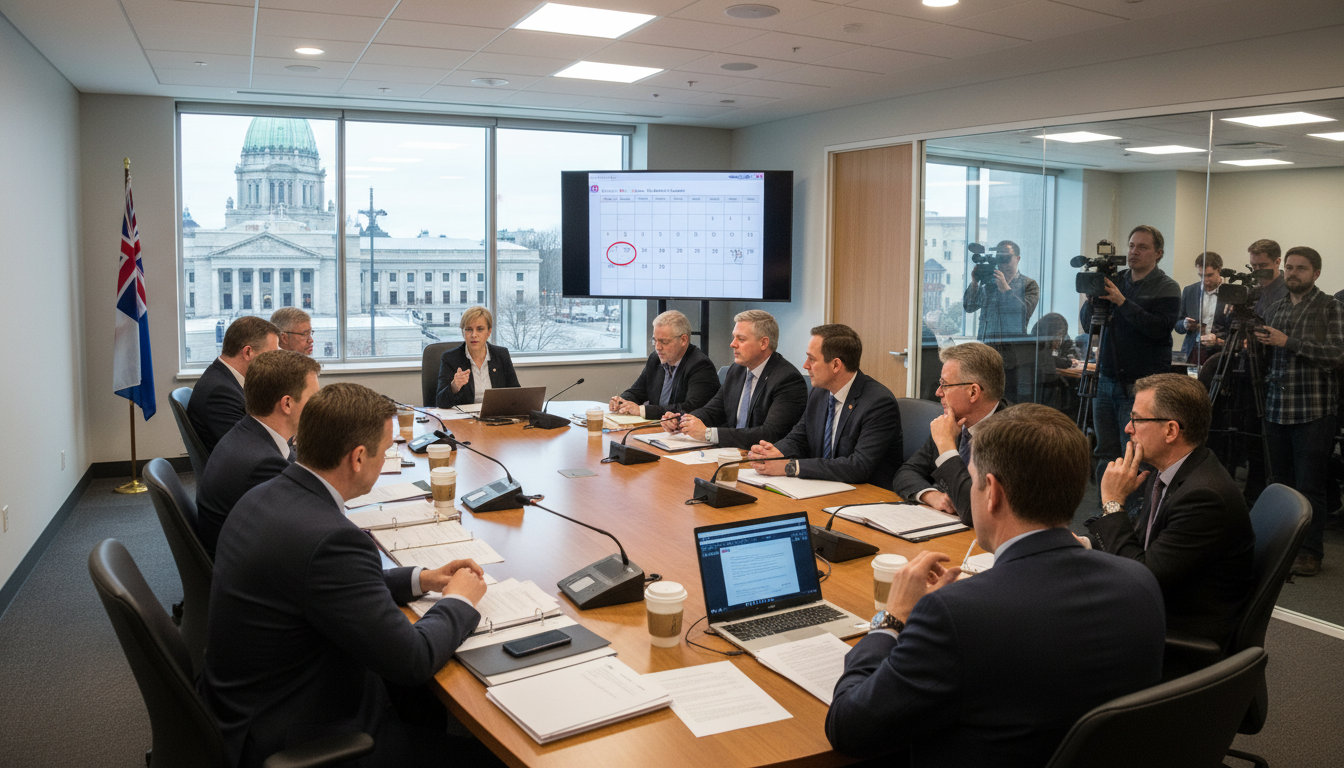
The all-party committee reviewing provincial options ordered a draft report to be ready for an intersessional deposit by Tuesday, accelerating the process around an Alberta independence referendum.
The committee chair, Brandon Lunty, told members the public interest in the matter warrants an early filing while the legislature is not sitting.
NDP members signalled they will deliver a minority report by Monday evening, and proponents of the Forever Canadian petition said they are shifting toward an organized federalist campaign.
Committee orders intersessional draft by Tuesday
The committee meeting concluded at roughly 3:30 p.m., with Chair Brandon Lunty pressing for an expedited internal timeline.
Lunty said the group should prepare a draft report that can be deposited with the legislature during the current adjournment so the assembly will have formal material on the record before it reconvenes.
An intersessional deposit is a procedural step that puts committee work before the legislature when the chamber itself is not conducting business, allowing members to signal findings and recommendations in the interim.
Timeline and legal framework for a referendum report
Provincial legislation gives the committee until the fall to complete a final report, so the Tuesday intersessional filing represents an accelerated interim step rather than the final product.
The early deposit will be treated as a preliminary record to inform lawmakers, the public, and any future debates should the government move toward a referendum on separation.
Filing an intersessional report does not itself trigger a referendum; it documents committee observations and can influence what comes next by shaping the political and administrative record.
NDP to file a minority report under a tight deadline
NDP members on the committee announced plans to prepare a minority report, a formal dissent that will accompany or respond to the committee’s draft.
The party indicated it will meet the chair’s expedited timetable and deliver its minority filing by Monday night, creating a structured dissenting perspective for the legislature to consider.
Minority reports are common in contentious inquiries and serve to lay out alternate findings, legal concerns, or recommended safeguards that the majority report may omit.
Uncertainty over referendum wording and political control
A central point of contention is that the committee—and the public—still does not know what exact question would appear on a potential Alberta independence referendum.
NDP members argued that if the provincial government or the premier crafts the ballot question, the contest effectively becomes the government’s separation referendum, raising concerns about partisan influence on the framing.
Opponents warned that control over wording can shape voter understanding and campaign dynamics, and that ambiguity now heightens political stakes as parties and advocacy groups prepare messaging.
Concerns about campaign tone and potential for divisive rhetoric
NDP critics warned the campaign could include divisive language and rhetoric targeting vulnerable groups, an outcome they said would risk inflaming social tensions during a referendum campaign.
Rakhi Pancholi, speaking to reporters after the meeting, expressed specific worry that debate could be accompanied by racist or polarizing commentary if not carefully regulated and publicly scrutinized.
Party members urged that any move toward a referendum include clear protections against hate speech and mechanisms to ensure an informed and respectful public debate.
Forever Canadian shifts strategy after petition controversy
Tomas Lukaszuk, associated with the Forever Canadian petition, said he does not regret filing the petition but accused the government of manipulating signature data to advance political aims.
Lukaszuk announced that Forever Canadian has transitioned from petition organizers into an advocacy group focused on national unity, indicating a pivot to campaigning in federalist terms.
The group says it will intensify efforts to argue for remaining within Canada and to counter moves toward separation with targeted public outreach and messaging.
Implications of a government-drafted question for legitimacy
Experts and opposition members told reporters that who writes the referendum question can determine public confidence in the process and the perceived legitimacy of any outcome.
If the premier’s office or cabinet drafts the question, critics contend that wording choices could be criticized as biased or engineered to elicit a particular response.
Neutral wording, clear legal framing, and independent review are commonly proposed safeguards to reduce the risk of disputes over ballot text.
Procedural tools and public engagement options under consideration
Committee members debated procedural options that could guide public consultation and engagement ahead of any referendum decision.
Options discussed included additional public hearings, an extended period for written submissions, and independent legal analysis of potential referendum wording.
The expedited intersessional deposit suggests the committee seeks to maintain momentum while leaving room for broader consultation before a final fall report.
Political fallout and the UCP’s positioning on separatism claims
Pancholi labelled the governing United Conservative Party as a separatist party in remarks following the meeting, a characterization the UCP rejects as partisan rhetoric.
The exchange reflects a wider political debate over the government’s objectives and whether advocacy for more provincial autonomy crosses into support for secession.
Party leaders will likely use the committee’s outputs to frame messages to voters, and the record established by the intersessional filing could be a focal point in that contest.
Legal and administrative steps that follow an intersessional deposit
An intersessional report creates a public record but does not by itself change law or initiate a referendum; subsequent steps would require further legislative or executive action.
If the government decides to pursue a referendum, it would likely need to outline the legal basis, the precise question, voting mechanics, and timelines, and may face legal challenges over process and wording.
Legal counsel and constitutional experts often play a role at that stage to advise on validity, enforceability, and potential federal-provincial implications.
Public reaction and grassroots mobilization expected
The committee’s accelerated timeline has already prompted reactions from community groups on both sides of the issue, who are preparing for an extended public debate.
Organizations that supported the Forever Canadian petition are reorganizing to contest separation and to promote federalist arguments in communities across Alberta.
Proponents of provincial sovereignty say they will continue to press for a clear pathway to a referendum and for voters to have a direct say on the province’s constitutional future.
Role of media coverage and information campaigns
Media outlets will play a central role in conveying the committee’s findings, the content of any minority report, and the details of subsequent government actions.
Accurate reporting on the proposed referendum wording, timelines, and legal interpretations will be critical to ensure voters receive a fact-based account of their options.
Public information campaigns led by government agencies, civil society groups, and advocacy organizations are also likely to influence perceptions well before any ballot is put to voters.
Potential federal response and national stakes
A provincial referendum on independence would carry national implications and would prompt scrutiny from federal officials and other provinces.
While the intersessional report itself does not trigger federal intervention, any formal referendum initiative or unilateral attempts toward separation would almost certainly draw Ottawa’s legal and political attention.
That broader context is one reason both proponents and opponents say clarity and careful procedure are essential before progressing further.
Budgetary and administrative considerations for a referendum
Organizing a referendum requires allocation of administrative resources, staffing, and funding to run a fair and accessible vote across the province.
Officials would have to decide on voter eligibility, ballot access, and measures to prevent disinformation and interference during a potentially heated campaign.
Questions about who pays for the vote, how advertising and campaign financing are regulated, and how to ensure compliance with provincial and federal law are all part of preparatory discussions.
International comparisons and precedents considered by committee members
Some committee members referenced international examples of sovereignty referendums when discussing procedure, wording, and post-referendum consequences.
Cases such as those in Scotland and Quebec are often cited for lessons on legal preparation, negotiation frameworks, and the importance of independent oversight.
Members noted, however, that contexts differ and that any Alberta process must be tailored to provincial and national constitutional realities.
What a minority report could change in the public record
A minority report filed by NDP members will offer a counter-narrative to the committee’s majority thinking and may raise legal or ethical objections to how the process is being managed.
Such a filing can shape media coverage, influence undecided lawmakers, and provide campaigners with material to highlight perceived shortcomings in the majority report.
The chair’s requirement to receive the minority report by Monday evening establishes a compressed window for opponents to crystallize their objections in writing.
Administrative timeline forward and key dates to watch
With the intersessional draft expected by Tuesday and the NDP minority report due Monday night, the committee has set immediate deadlines that will produce public documents within days.
Although the law allows time until the fall for a final committee report, the early filings will create an interim record that may influence government choices and media narratives.
Observers will be watching any subsequent announcements from the premier’s office about whether the government intends to table legislation or move toward a referendum timetable.
Strategic choices for advocacy groups and political parties
Both pro-union and pro-sovereignty groups must now decide how to allocate resources between legal challenges, public outreach, and media campaigns.
Advocacy strategies are likely to include targeted municipal outreach, digital campaigns, and alliances with stakeholder organizations to shape public opinion before any vote.
Political parties will also weigh the electoral consequences of either supporting a referendum drive or attempting to distance themselves from divisive rhetoric.
The committee’s accelerated schedule and disagreement over the wording and control of an Alberta independence referendum have set the stage for a contentious public debate in the weeks ahead.
Lawmakers, advocacy groups, and federal officials will all play roles in how the process evolves, and the intersessional report will be the first public document to mark this phase of the discussion.
