
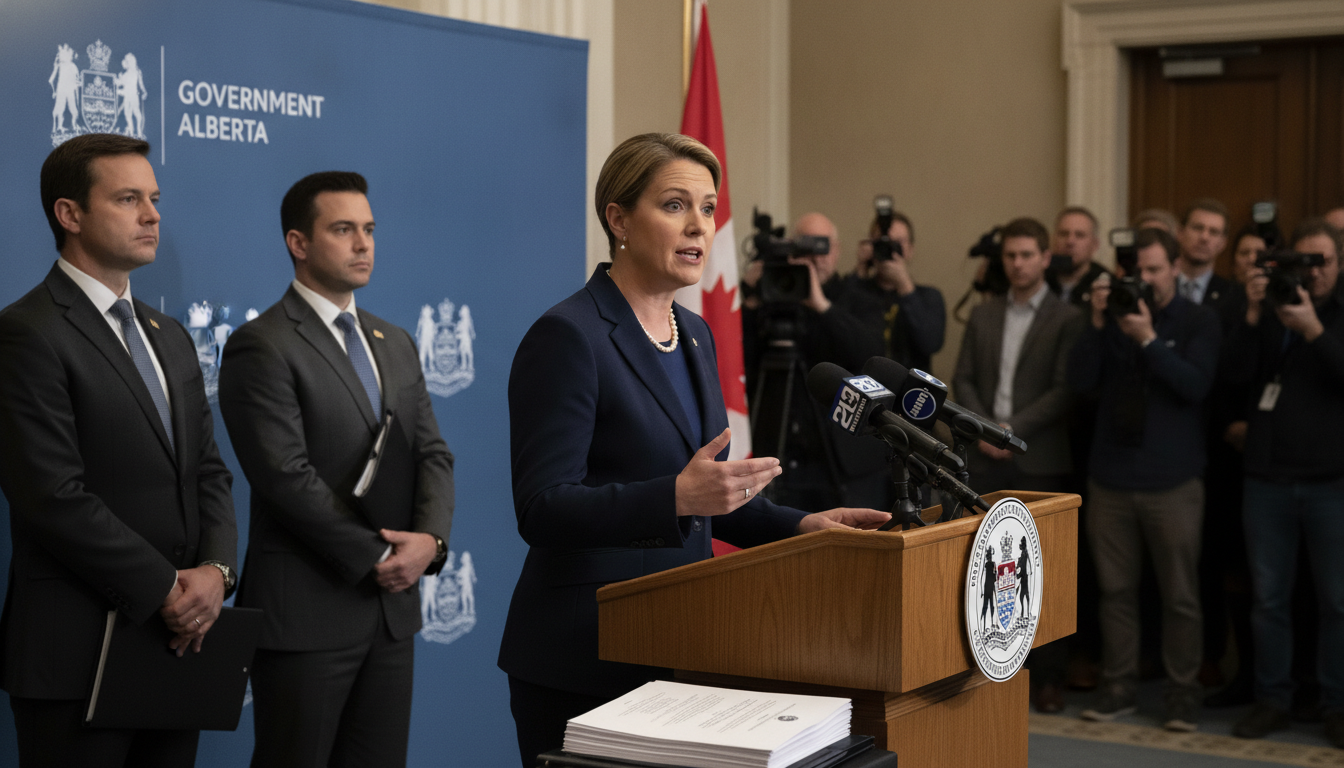
Alberta and Ottawa poised to unveil West Coast oil pipeline proposal in pivotal energy accord
Alberta and Ottawa to outline a proposed West Coast oil pipeline and Pathways carbon‑capture plan, as industry, Indigenous and coastal concerns shape next steps.
The federal and provincial governments are expected to announce detailed terms of a proposed West Coast oil pipeline on Thursday, July 2, 2026, advancing an energy accord that links a new export route with a major carbon‑capture initiative. Alberta had pledged to submit its pipeline proposal to the federal Major Projects Office by Canada Day (July 1, 2026), and officials say the coming announcement will clarify whether the project will proceed as a designated nationally significant development. The plan ties approval for a pipeline capable of transporting roughly one million barrels per day of bitumen to a parallel effort to build the Pathways carbon‑capture network in northern Alberta.
Federal-provincial memorandum and the timing of the announcement
The energy memorandum of understanding signed by Prime Minister Mark Carney and Alberta Premier Danielle Smith last year set the framework for renewed federal‑provincial cooperation on oil and gas development. That MOU removed several contentious measures from previous federal policy and committed both governments to work toward approvals for new projects under mechanisms such as Bill C‑5.
Alberta promised to file its application with Ottawa’s Major Projects Office by Canada Day, and a follow‑up agreement in May reiterated that timeline and set a federal objective to enable construction to begin by September 2027 if approvals proceed on schedule. Officials have described “best efforts” toward that target while acknowledging regulatory and commercial steps remain.
Route choices: northern corridor or Roberts Bank to Vancouver
A central unresolved issue is where the pipeline would land on the Pacific Coast, with two primary corridors under consideration: a northern route toward the Port of Prince Rupert area and a southern route to Roberts Bank, near Vancouver. Premier Smith has publicly voiced support for both options at different times, while the final route has significant implications for shipping logistics and coastal reception.
Industry and analysts say a southern route to Roberts Bank may face fewer barriers to market access but would confront dense opposition in Metro Vancouver and complex transport linkages. Conversely, the northern corridor could offer closer proximity to trans‑Pacific carriers but faces difficult terrain and opposition from some coastal First Nations.
Pathways carbon capture and the Oil Sands Alliance commitment
The pipeline proposal is linked closely to the Pathways carbon‑capture initiative, a multibillion‑dollar plan championed by the Oil Sands Alliance to sequester emissions from oilsands operations. Under the MOU, the federal and provincial governments signaled support for advancing Pathways as a means to decarbonize production and bolster the political case for expanded exports.
However, oilsands producers remain sensitive to Alberta’s industrial carbon pricing, which the agreement envisions rising to an effective rate of $130 per tonne by 2040. Officials and industry leaders are negotiating incentives and commitments that would encourage major producers to endorse Pathways while also scaling output to supply a new export pipeline.
Industry response, production forecasts and shipper interest
Energy services groups and former industry executives say investor decisions hinge on clarity from governments and concrete producer commitments. Gurpreet Lail, CEO of Enserva, has emphasized that investments and jobs depend on tangible policy movement and commercial certainty.
Analysts at BMO Capital Markets estimate oilsands production could rise by roughly 500,000 barrels per day by the end of the decade through optimization, with potential additional growth of a similar magnitude by 2035 if new projects are sanctioned. Those forecasts underline a gap between identified pipeline capacity and potential future output, and shippers will be essential to underwriting any new long‑term export line.
Indigenous rights and coastal opposition shape feasibility
Indigenous reconciliation and coastal community opposition remain among the most consequential political hurdles for any West Coast pipeline. Observers such as former Alberta Petroleum Marketing Commission CEO Richard Masson contend the northern route lacks the Indigenous support needed to advance, while other leaders warn social license must be secured before construction can be realistic.
The government accord and company negotiations will need to address Indigenous economic participation, environmental safeguards and spill response arrangements to reduce legal and political risks. These matters are likely to be determinative in route selection and the timeline for approvals.
Next steps: approvals, private partners and project risks
With the public announcement expected July 2, 2026, Ottawa and Alberta will face a compressed schedule of technical reviews, consultations and commercial negotiations if they aim to meet the September 2027 construction target. The Major Projects Office designation could accelerate federal permitting, but proponents must still secure rights‑of‑way, marine permits and financing commitments from private sector partners.
Former Suncor CEO Mark Little and others say every month without clarity increases political and commercial tension, while former energy minister Sonya Savage cautions that major projects of this scale require time to resolve complex details. The coming weeks will test whether the province, the federal government and oilsands companies can align regulatory expediency with the commercial incentives and Indigenous agreements that underpin feasibility.
The announcement will be scrutinized by investors, environmental groups and communities along potential routes as Alberta and Ottawa attempt to translate an energy accord into an executable plan for a West Coast oil pipeline and an allied carbon‑capture network.
