
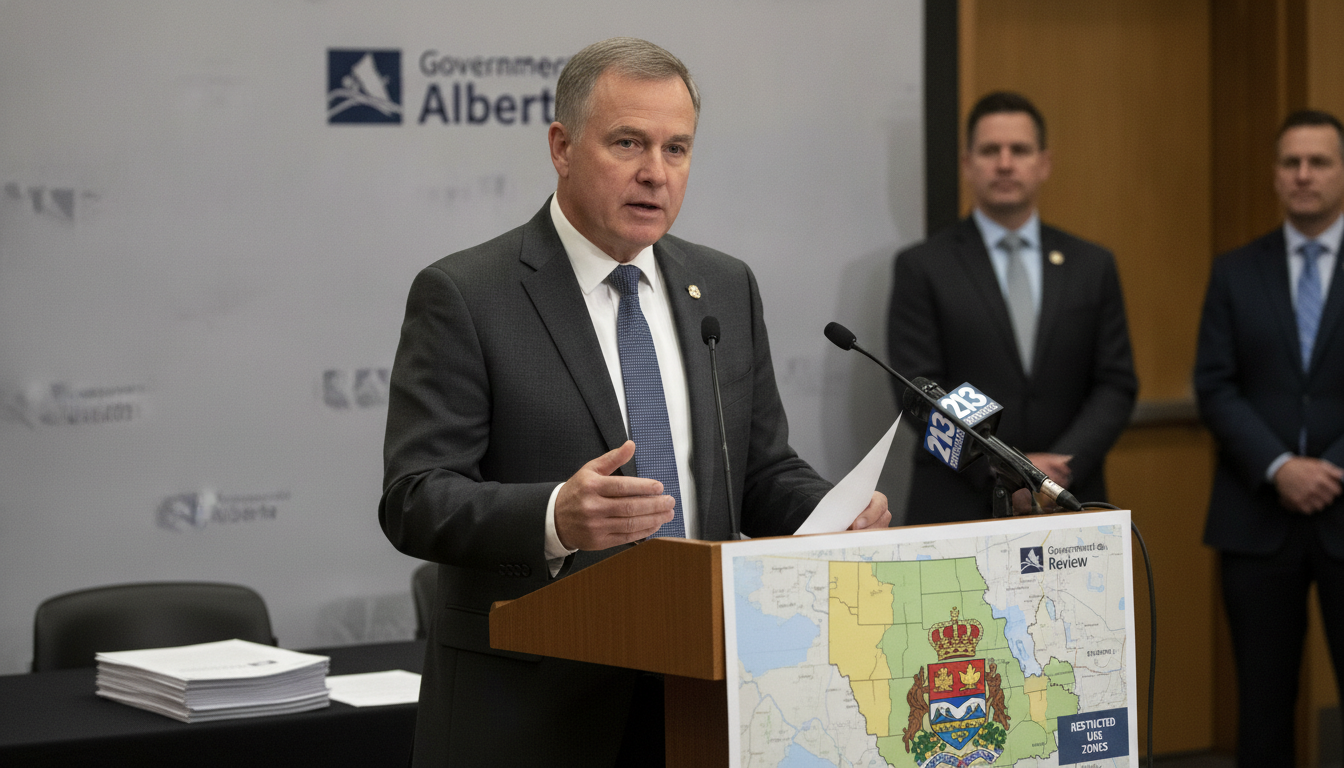
Dreeshen locks down photo radar in Alberta, limits use to school, playground and construction zones
Alberta narrows photo radar use to school zones, playgrounds and construction areas, requiring strict evidence for exceptions as Premier’s transport minister stands firm.
The Alberta government has sharply restricted the use of photo radar, limiting automatic speed enforcement to school zones, playground zones and active construction areas while instituting a high bar for any other installations.
Transport Minister Devin Dreeshen said the move is meant to curb what his office describes as the province’s prior overuse of automated enforcement and to require local authorities to demonstrate that engineering fixes cannot address safety problems before cameras are allowed elsewhere.
Scope of the new photo radar policy
The province’s policy now confines photo radar to three discrete zone types: school zones, playground zones and construction zones.
Any municipality seeking photo radar outside those categories must submit evidence showing that there is no traffic alignment or engineering solution that could make the location physically safer.
Dreeshen framed the approach as case-by-case, saying the government will permit targeted photo radar only where statistics and engineering justify an exception.
Exemptions granted so far in Calgary
Calgary has received just three exemptions under the tighter rules.
They apply to Highway 1A at Twelve Mile Coulee Road N.W., 16th Avenue at 10th Street N.W. (eastbound), and 16th Avenue at 68th Street N.E. (both directions).
Requests for enforcement on major routes such as Deerfoot Trail and the ring roads have been denied to date, and other municipal applications remain under review or have been turned down.
Province’s rationale and review process
The government says the review process will examine whether photo radar measurably improves safety at a given site and will not be a permanent green light.
Dreeshen’s office indicated that any approved camera would be monitored and could be removed if data do not show a safety benefit.
The minister emphasized the intent to reduce blanket deployments and to avoid making Alberta an outlier with widespread automated enforcement.
Municipal and police reactions
Calgary Police Service Chief Katie McLellan has urged broader deployment, describing driving conditions in the city as “atrocious” and calling for more automated enforcement to curb dangerous driving.
Calgary Mayor Jeromy Farkas has criticized the reductions as effectively a major cut to police revenue streams tied to photo radar, while some civic leaders warn of budgetary pressure on policing if enforcement tools remain restricted.
Municipal officials argue that certain arterial corridors and busy intersections continue to generate high speeds and collisions, and they say photo radar is a necessary deterrent in those contexts.
Political context and previous photo radar use
Alberta previously had one of the highest levels of photo radar deployment in Canada, with many jurisdictions relying on automated tickets to address speeding and to generate municipal revenue.
Dreeshen, a senior minister in Premier Danielle Smith’s government, has repeatedly framed the issue as one of restoring common-sense limits and cracking down on what he and supporters portrayed as the “photo radar cash cow.”
Opponents of the restrictions say the policy shifts enforcement away from proven tools, while supporters counter that it stops cameras from being used as broad revenue generators rather than targeted safety measures.
Technical and safety considerations
The province’s requirement that municipalities show engineering solutions are not feasible places emphasis on traffic studies, collision data and road design reviews.
Transportation officials say measures such as lane realignment, signage improvements, roadway lighting and physical traffic-calming infrastructure must be considered before cameras are approved.
If those engineering interventions cannot reasonably address a documented safety problem, photo radar may be considered as a temporary, data-driven countermeasure.
There are signs that the debate over photo radar will continue to play out in city halls and the legislature as officials on both sides marshal collision statistics, budget forecasts and public-safety arguments.
Supporters of broader camera use point to deterrence and rapid speed reductions following enforcement campaigns, while critics maintain that long-term safety gains are better achieved by permanent infrastructure improvements.
The Alberta decision to restrict photo radar to specific zone types and to demand rigorous justification for exceptions marks a significant shift in the province’s approach to automated speed enforcement.
How municipalities adapt — whether by investing in engineering fixes, pressing for targeted exemptions, or reallocating policing resources — will determine whether the tight leash on cameras translates into safer streets or renewed political friction.
