
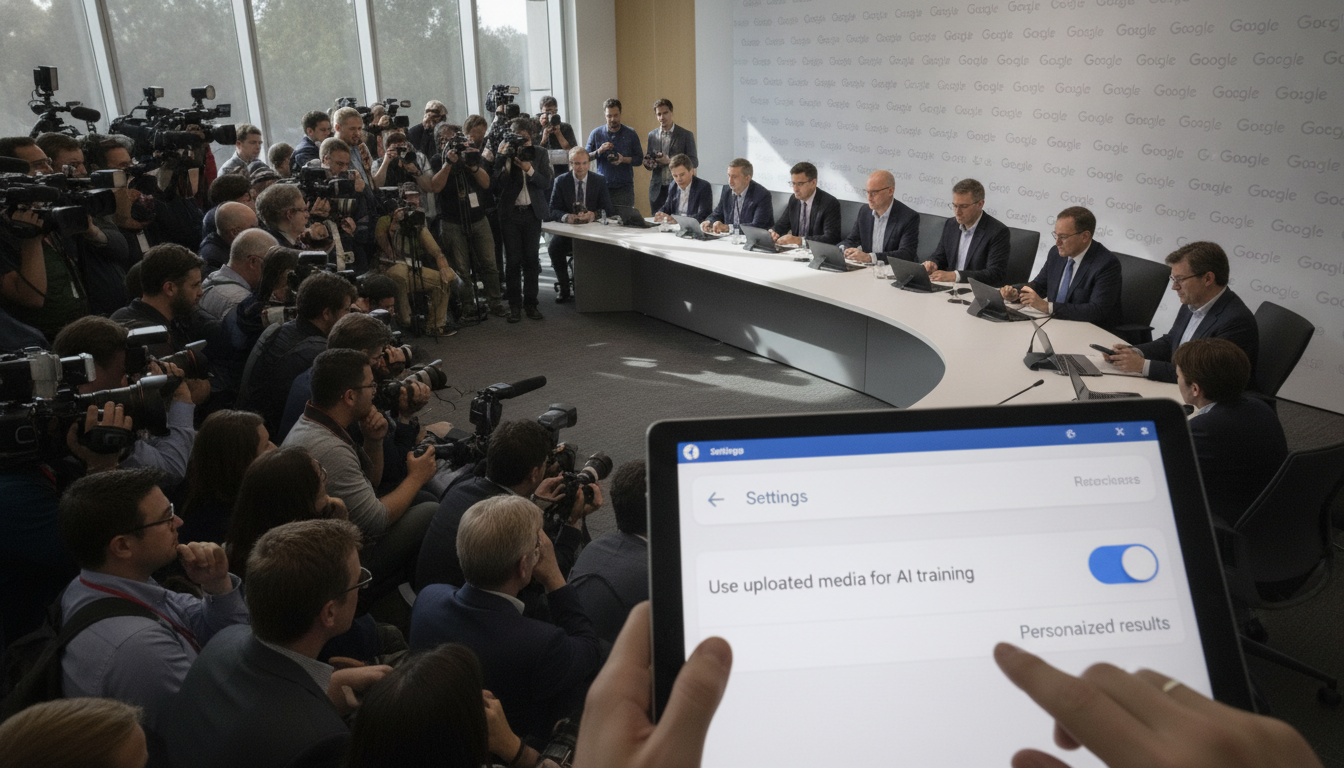
Google saves uploaded media for AI training unless users opt out
Google’s June update saves uploaded images, audio and video to train its AI by default; users must opt out in Search Services settings across Search services.
Google now saves uploaded media from Search-related services and may use that content to train its artificial intelligence models unless individual accounts are configured to opt out. The change, announced to users in a June account email and reflected in updated help documentation, added new Search Services controls that default to allowing media storage for model development. The update affects several Google products and shifts some previously consolidated history settings into separate Search-specific options. Users who wish to prevent their photos, voice clips or other media from being retained for AI training must change the new Search Services settings.
What changed in Google’s Search settings
Google introduced two distinct settings — Search Services History and Personalized Recommendations — that redefine how activity and media are saved and used. The company separated Search data from broader Web & App Activity controls and set the new Search options to on by default. In the customer email, Google said saved media “is also used to develop and improve Google services and technologies, including AI models and safety measures.” This adjustment effectively opts users into expanded data use unless they proactively opt out.
Scope of media and affected products
The updated settings extend beyond the classic Search webpage to include services such as Maps, Shopping, Flights, Hotels, Translate and News. Visual searches made with Google Lens, voice queries made via Search Live or standard voice search, and audio captured in Translate sessions are explicitly named as potential sources of saved media. Google’s change therefore moves a broad range of user-created content — images, files, audio and video recordings — into the pool of material that can be retained for service improvement.
How Google says the data will be used
Google states that saved media may be used to “develop and improve” its services and generative AI models, and that retention supports safety measures reviewed by humans. Some storage is described as temporary and tied to immediate product function, while other saved media may be retained specifically for training. The company’s help documentation also mentions the use of history to personalize experiences and protect users and the public, indicating multiple purposes for retained data beyond immediate personalization.
How users can opt out and manage retention
Account holders can adjust the new preferences through the Search Services History and Personalization pages in their Google account settings. On the Search Services History control, users can uncheck a separate “Save Media” option without disabling other history features, and they can set automatic deletion intervals of three, 18 or 36 months. Additional privacy controls remain available through the account’s broader activity and history pages, where Web & App Activity, Timeline and YouTube history settings can be reviewed and adjusted.
Industry context and comparable practices
The move mirrors a wider industry trend toward collecting user-generated media to improve AI systems rather than relying solely on public web data. Other large platforms have adopted similar practices, incorporating user images and recordings into model training under varying consent frameworks. That shift has intensified regulatory and public scrutiny as companies balance the technical needs of AI development with privacy expectations and existing data-protection laws.
Privacy concerns and expert reactions
Privacy advocates warn that default opt-in settings can erode informed consent, particularly when controls are separated across multiple pages or presented in account emails. Experts highlight risks including unintended sharing of sensitive content, prolonged retention windows and the potential for human review of media used to test safety systems. Legal observers also note that different jurisdictions may treat the processing of biometric or sensitive audio differently, creating compliance challenges for companies operating globally.
Users should review settings if they do not want personal media used for model development, and consider adjusting deletion schedules and disabling media saving where available. Companies that collect uploaded content argue that such data improves product quality, but they also face pressure to make privacy controls clearer and more accessible. The debate is likely to continue as regulators, consumer groups and technology firms negotiate how to govern data collection for AI.
Google’s new configuration underscores the practical steps users can take today: check Search Services History, uncheck Save Media if desired, and set automatic deletion intervals that match personal privacy preferences. Taking a few minutes to review account settings will stop newly uploaded images, audio and video from being retained for AI training in accounts where users choose to opt out.
