
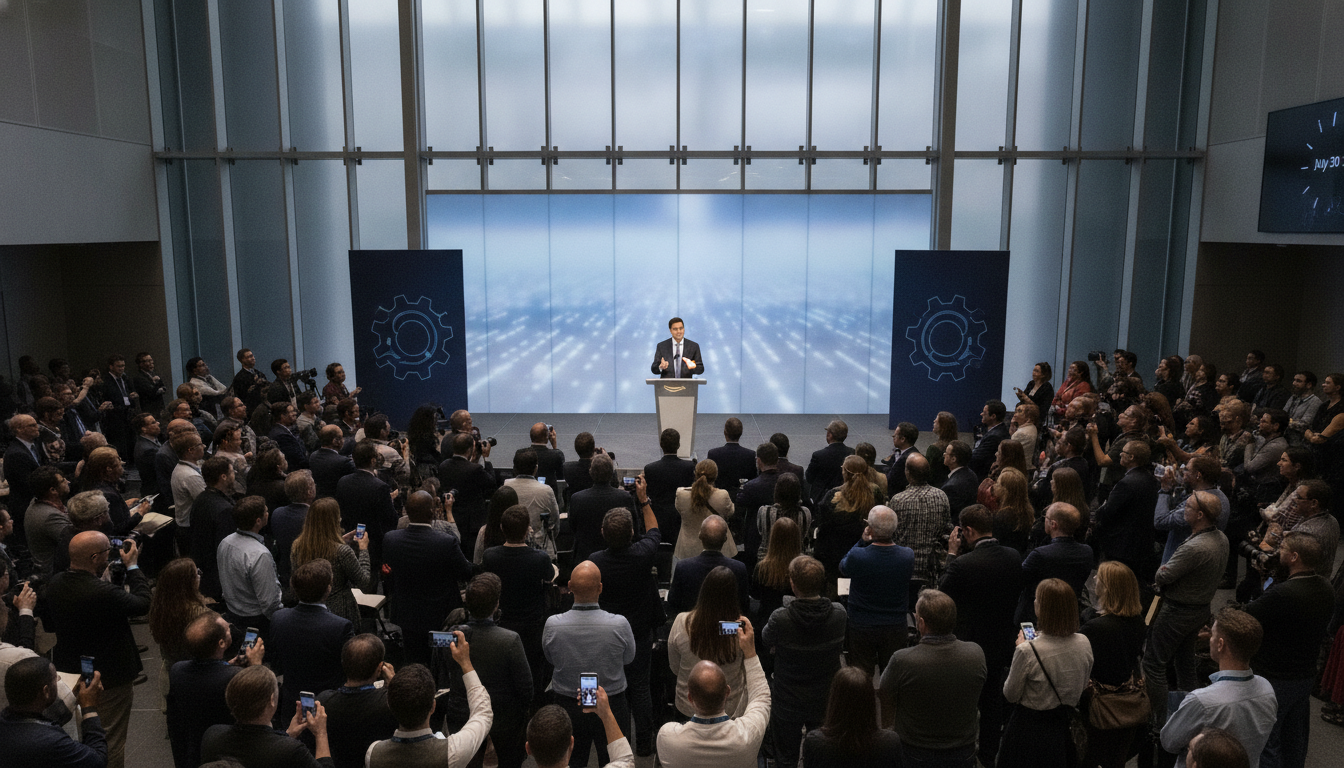
Amazon Mechanical Turk to Close to New Customers on July 30, 2026
Amazon Mechanical Turk will stop accepting new customers on July 30, 2026, as AWS moves the crowdsourcing platform into maintenance ahead of an eventual retirement.
Amazon Mechanical Turk will stop accepting new customers on July 30, 2026, a change announced on the service’s site that signals the long-running crowdsourcing marketplace is being placed into maintenance by Amazon Web Services. Existing requesters and workers will still be able to use the platform for now, but AWS said it does not plan to add new features as the service is wound down. (techcrunch.com)
AWS statement and maintenance designation
Amazon Web Services confirmed the change in status as part of a broader set of service availability updates, saying the decision followed “careful consideration” and that existing customers may continue to use Mechanical Turk for the time being. The company’s public materials make clear the platform is being moved into a maintenance or retirement track rather than being actively developed. (aws.amazon.com)
How the platform will operate after July 30
Under the new arrangement, accounts already approved on Mechanical Turk will retain access and posted Human Intelligence Tasks (HITs) should continue to run. However, AWS said it will not introduce new features and noted investments will focus on security and availability rather than product expansion. The move effectively closes the door to new requesters and could shrink the pool of future work available to the platform’s global workforce. (techcrunch.com)
Origins and the role in research and industry
Launched in late 2005, Amazon Mechanical Turk built a reputation as a convenient source of low-cost, distributed human labor for microtasks such as image tagging, sentiment labeling, and short surveys. Academics and businesses widely adopted MTurk for rapid data collection, while critics flagged persistent concerns about low pay and worker protections. Over two decades, the service became a fixture for both research sampling and commercial data annotation. (pewresearch.org)
Integration with SageMaker and the AI pipeline
Starting in 2018, Amazon positioned Mechanical Turk as an available workforce for Amazon SageMaker’s Ground Truth and other annotation tools, allowing customers to blend automated labeling with human review. That integration made MTurk a convenient source of labeled data for model training, linking the crowd platform more directly to AI development workflows across industry and academia. (aws.amazon.com)
Quality, automation and emerging integrity problems
Problems that dogged the platform for years have intensified in the age of large language models and automation. Academic analyses and reporting have shown that a significant share of crowd workers used LLMs and other tools to complete tasks, raising questions about the provenance and reliability of labels gathered on MTurk. Researchers have also documented bot-driven fraud, duplicate accounts, and schemes that undermined data quality and requester confidence. (arxiv.org)
Community reaction and account disruptions
The announcement drew immediate response from the Mechanical Turk community, where long-time requesters and workers reported frustration with account suspensions, slow customer support and dwindling task volumes in recent years. Forum posts and social platforms show many users regard the service as effectively diminished well before this formal change, and some researchers have already migrated to alternative labeling services. (techmeme.com)
Implications for researchers and AI teams
For academics and small teams that relied on MTurk for fast, low-cost annotation, the restriction on new customers means planning shifts and potential cost increases as projects move to commercial annotators or build in-house labeling pipelines. Large enterprises that integrated MTurk through SageMaker may face transitional choices about where to source workforce capacity for ongoing data-labeling needs. (aws.amazon.com)
The end of new customer access to Amazon Mechanical Turk marks a notable moment for the ecosystem of crowdsourced labor that helped train and validate many machine-learning systems. As MTurk slides into maintenance, the industry will be watching how AWS handles the platform’s remaining operations and how requesters, researchers and workers adapt to alternatives.
