
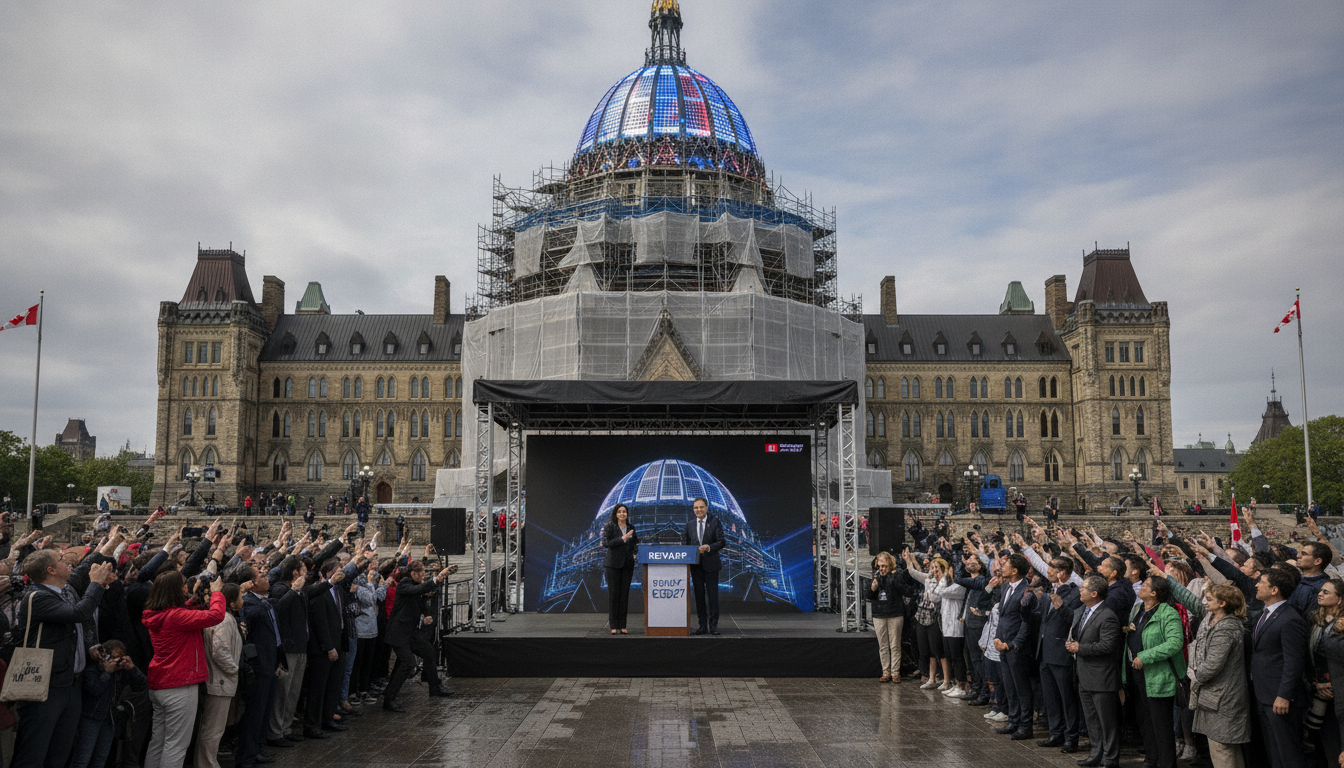
Final revamp phase to begin fall 2027 as iconic dome becomes Canada’s first LED dome
Final phase of major revamp begins fall 2027, converting the institution’s iconic dome into Canada’s first LED dome and adding galleries, a park and expanded event space.
The final phase of a multi-year revamp will start in the fall of 2027 and includes converting the building’s iconic dome into Canada’s first LED dome, project planners confirmed. The transformation is part of a larger package that also adds a new entrance pavilion, an education and gallery wing, expanded event spaces and a public park. Construction is scheduled to run through successive stages and the overall project is expected to be complete by the fall of 2030. The LED dome is highlighted as a centrepiece for both nighttime programming and environmental performance.
Final phase construction to start in fall 2027
The construction schedule places ground work for the last phase in autumn 2027, following earlier stages of interior renewal and site preparation. Project managers say the sequencing is intended to limit disruption to year-round programming and public access as much as possible. Temporary closures and reconfigured access routes are expected for portions of the site while heavy work proceeds, with advance notices to be issued to visitors.
Staging will focus on preserving the main building’s operations while crews mobilize for exterior upgrades. Early activities will include site fencing, utility tie-ins and preparatory works for the new entrance pavilion and landscape interventions. Officials plan to coordinate closely with local authorities on traffic management and noise restrictions during weekday construction hours.
Iconic dome to be transformed into Canada’s first LED dome
A signature element of the project is the conversion of the building’s dome into Canada’s first fully integrated LED dome, creating new opportunities for light-based displays and evening events. The retrofitted dome will use LED technology to allow programmable lighting schemes, potentially supporting public art, civic moments and seasonal programming. Planners say the upgrade aims to preserve the dome’s historic silhouette while adding a contemporary layer of visual and technical capability.
The LED dome will also be framed as a public-facing amenity, visible from surrounding streets and parkland, and intended to strengthen the institution’s role as a nighttime landmark. Technical work will require specialized scaffolding and phased removal of existing cladding elements to accommodate wiring, mounting systems and access hatches. The project team emphasizes that heritage considerations will guide interventions so that the dome’s original character remains identifiable.
New entrance pavilion and education wing planned
The revamp includes a new entrance pavilion designed to improve wayfinding and create a more welcoming threshold for visitors. The pavilion is intended to consolidate visitor services and ticketing, while providing accessible access and sheltered outdoor waiting spaces. Designers say the new entry will link more smoothly to the adjacent gallery and education facilities, improving flow for school groups and larger audiences.
An enlarged education and gallery wing will provide dedicated spaces for hands-on learning, rotating exhibitions and community programs. The wing is being planned with flexible gallery configurations to accommodate a range of displays and workshop setups. Program planners indicate that the expanded education capacity will enable more frequent partnerships with local schools and cultural organizations.
Expanded event spaces and a new public park
As part of the final phase, event facilities will be enlarged to host larger performances, lectures and community gatherings, supporting both ticketed and free public programming. The expanded event spaces will include adaptable seating and technical upgrades intended to meet the needs of contemporary presenters. Improvements aim to attract a broader slate of cultural activity and make the venue more competitive for touring exhibitions and performing artists.
A new public park will be created on-site to provide green space for visitors and passersby, enhancing the facility’s urban interface. The park design will incorporate seating, lighting and pedestrian pathways that connect the new entrance pavilion to adjacent streets. Landscape architects plan to prioritize durable plantings and layered seasonal interest to support year-round use.
Design priorities: accessibility, programming and sustainability
Project documentation indicates the final phase prioritizes accessibility improvements across entrances, circulation routes and restroom facilities. The goal is to make the entire campus easier to navigate for people with mobility needs, families and seniors. Accessibility upgrades will be integrated into new construction and retrofits rather than treated as add-ons.
Sustainability and programming flexibility are also cited as central design drivers, with the LED dome presented as a feature that can reduce energy consumption compared with legacy lighting systems. The design approach emphasizes long-term operational efficiency, adaptable gallery layouts and durable materials that limit maintenance. Planners say these priorities respond to community expectations for a publicly owned cultural asset.
Projected completion by fall 2030 and public access plans
The overall revamp is scheduled for completion by the fall of 2030, allowing for a phased reopening of facilities as each component finishes. Officials plan to stage public programming around milestone completions, with special events likely to mark the activation of the LED dome and the opening of the park. A calendar of partial reopenings and preview events will be shared in advance to help schools, community groups and tour operators plan visits.
Funding, final permits and contractor procurement are expected to be finalized ahead of the fall 2027 start, and the project team says it will provide regular progress updates. Community consultation and stakeholder briefings will continue during construction to keep residents informed about traffic, access changes and opportunities for public engagement.
The revamp’s final phase repositions the institution with new public amenities and a technology-forward LED dome, promising expanded cultural programming and a refreshed urban presence when work completes in the fall of 2030.
