
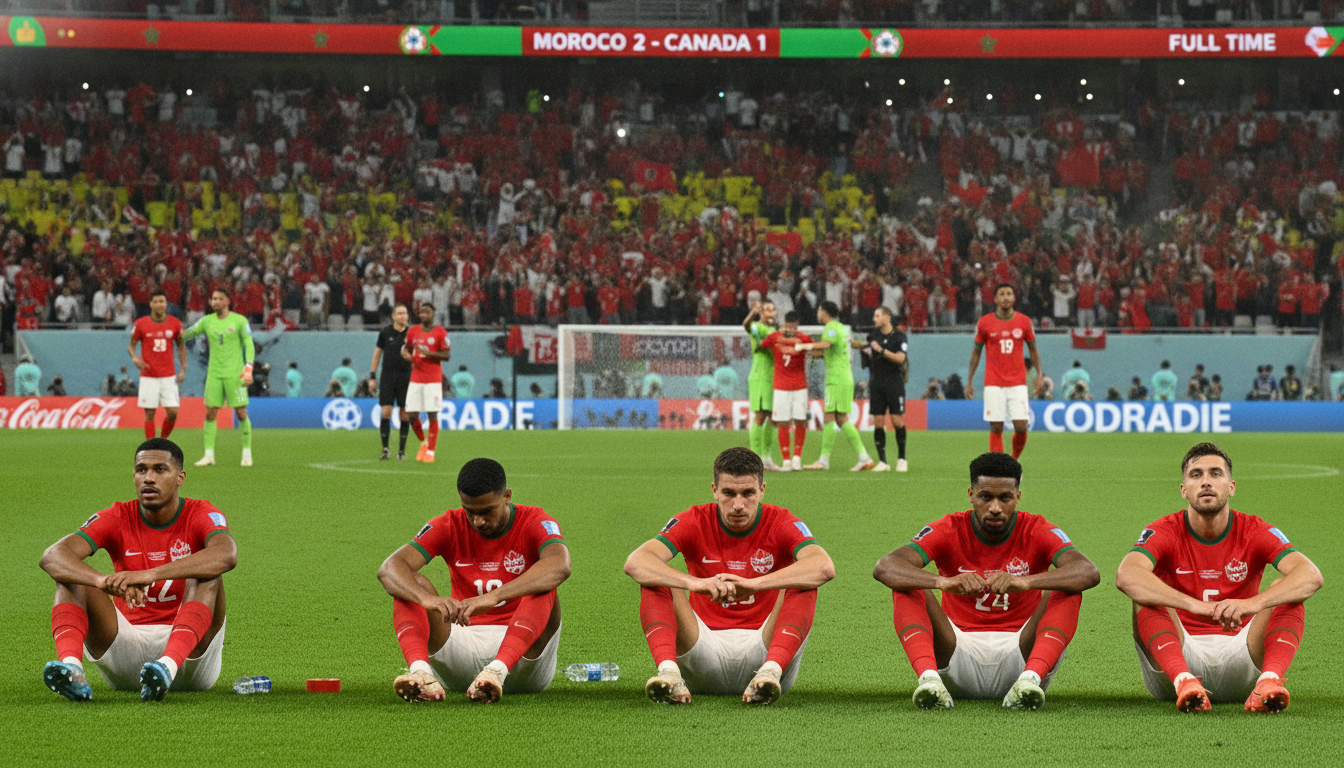
Canada eliminated by Morocco as Les Rouges fall 3-0 in World Cup round of 16
Canada eliminated by Morocco 3-0 in the World Cup round of 16 — analysis of the wasted first half, Ounahi set-piece, Davies’ absence, and Marsch’s reaction.
Canada were eliminated by Morocco 3-0 in the FIFA World Cup round of 16 at Houston’s NRG Stadium, bringing an end to a breakthrough tournament that had seen Les Rouges advance from the group and record their first-ever knockout victory. The loss underscored both the progress of the Canadian program and the narrow margins that separate a memorable run from an early exit. Coach Jesse Marsch praised his squad’s growth while acknowledging key moments and decisions that swung the match in Morocco’s favor.
Canada’s first-half pressure created chances but lacked finishing
Canada began the game with a high press and aggressive physicality that unsettled Morocco for long stretches, producing sustained attacking pressure in the opening 45 minutes. The Canadians recorded a lopsided 13–1 edge in touches inside the opposition box but managed only two shots on target before halftime, a reflection of composure and creativity issues in the final third. That inability to convert dominance into goals left Canada exposed once Morocco found a foothold after the break.
Set-piece precision from Morocco changed the game
The match’s decisive moment arrived in the 50th minute from a dead-ball sequence following a foul on Soufiane Rahimi outside Canada’s box. Achraf Hakimi’s quick-thinking free kick shifted the ball to Azzedine Ounahi at the top of the area, and Ounahi’s low strike threaded through a crowd to beat goalkeeper Maxime Crépeau. The play was Morocco’s second shot on target and demonstrated the craft and training-ground rehearsals that can undo an opponent despite earlier struggles.
Momentum swung as Morocco grew more assertive and clinical
Once the opener found the net, Morocco adjusted their approach and began to control transitions, exploiting spaces as Canada pushed forward in search of an equalizer. Ounahi added a second goal in the 82nd minute, and Soufiane Rahimi completed the scoring deep into stoppage time to make it 3-0. Those strikes underlined Morocco’s ability to capitalize on tactical openings and finish chances when the match opened up.
Alphonso Davies’ limited availability altered Canada’s attacking outlook
Canada’s captain and most dangerous wide threat featured for only a brief period in the tournament, and his absence on Saturday was felt at critical moments. Davies had shown the impact he can bring when introduced off the bench in the previous round by stretching defenses and creating space for teammates, but an MRI and ongoing hamstring discomfort kept him out of Houston’s lineup. Jesse Marsch said caution guided the decision, prioritizing the player’s long-term fitness even as his presence might have changed the complexion of the game.
Defensive lapse and game management highlighted areas for growth
Luc de Fougerolles was booked for the foul that led to the opening free kick, and defensive positioning in moments of transition exposed Canada to costly set-piece threats. Beyond individual actions, the match illuminated broader needs in game management — closing down key passing lanes, reacting faster to changing patterns, and maintaining discipline when the scoreboard shifts. Those are the fine margins that separate tournament progress from elimination at this stage.
Marsch lauded the team’s progress while setting a forward-looking tone
After the defeat Marsch emphasized the positives of a tournament that featured historic milestones for Canadian soccer, pointing to previous big wins and the group-stage success that earned the side this knockout chance. At the same time he was candid about the shortcomings in finishing and match management that ultimately decided the contest. His remarks framed the result as both a marker of advancement and a blueprint for the technical and tactical improvements the program must pursue.
Canada’s exit leaves a complex legacy: a national team that delivered its most accomplished World Cup showing to date, yet one that must address the small but decisive details that determine outcomes at the highest level. The players return home with valuable experience and a clearer set of priorities — finishing in the box, set-piece defense, and ensuring key personnel are fit for the biggest moments — as the federation and coaching staff plan the next phase of development.
