
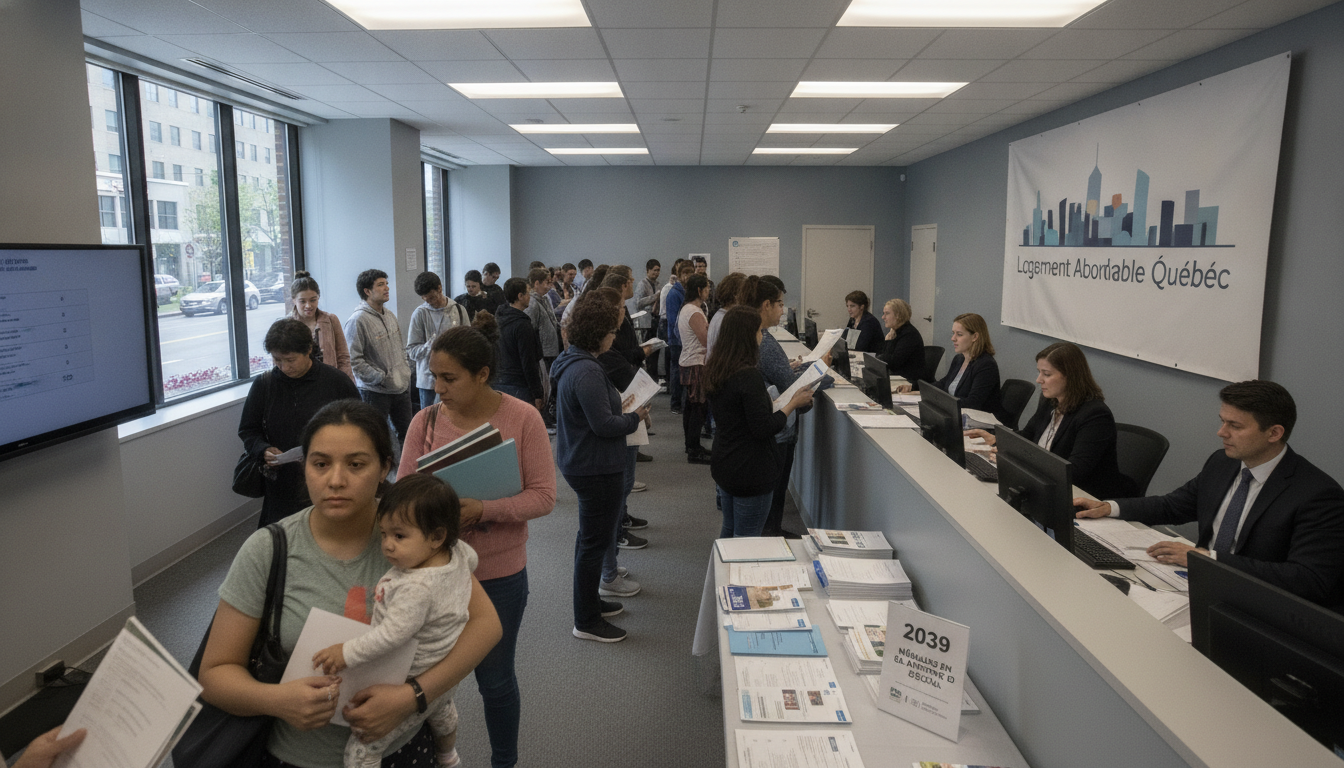
Quebec housing affordability under strain as 2,039 households still seek help after July 1
Quebec housing affordability remains strained despite record building and rising vacancy; 2,039 households still seeking housing help after July 1, groups warn.
Despite an unprecedented surge in purpose-built rental construction and higher vacancy rates across the province, the number of Quebecers unable to secure housing by July 1 has increased, exposing persistent affordability problems. Data from the Société d’habitation du Québec (SHQ) show 2,039 households remained supported by housing search services two days after the seasonal peak move-in date. That figure is higher than the 1,899 households recorded at the same point in 2025 and 1,688 in 2024, illustrating a growing reliance on assistance despite more units on the market.
2,039 households still seeking housing assistance after July 1
Two days after the province’s busy moving period, 2,039 households were registered with support programs assisting in the search for housing, according to SHQ statistics. The rise in cases year over year suggests the number of households facing urgent placement needs is growing even as developers put more units into service. Advocacy groups say these figures capture only a portion of people struggling to find stable, affordable homes.
The SHQ data provide a snapshot rather than a complete census of housing insecurity, and service providers report continued demand well into July. Front-line workers describe longer wait times and more complex client needs, including households priced out of units that become vacant. Those trends have prompted renewed scrutiny of provincial housing policy and funding priorities.
Record 43,506 new rental units put on site last year
In the past year Quebec recorded a historic level of rental starts, with 43,506 new units commencing construction, the highest total on record. At the same time the province-wide vacancy rate edged up to around 2.7 percent in 2025, close to the commonly cited 3 percent threshold for a balanced market. Economists and planners note that rising vacancy should, in theory, ease competition for units, but the effect on affordability has been uneven.
Market analysis indicates that many of the newly built units command rents above what low- and middle-income households can afford. Developers have targeted demand for higher-rent and market-rate units, while smaller and older rental stock continues to be unaffordable for many. As a result, an increase in supply has not translated into broad-based relief for renters at the lower end of the income scale.
FRAPRU says affordability, not supply, is the core issue
The Front d’action populaire en réaménagement urbain (FRAPRU) argues the central problem is affordability, not an overall shortage of units, and that building alone will not resolve the crisis for many tenants. FRAPRU spokesperson Véronique Laflamme told reporters that relying on private development to solve the problem amounts to a “supply-only” approach that misses the needs of low-income renters. The group says the data showing rising use of housing-search services, despite more units and a higher vacancy rate, underscore that many vacancies are out of reach financially.
FRAPRU and allied organizations emphasize that a vacancy rate near 3 percent does not guarantee access to affordable units for households on the cusp of homelessness. They point to persistent rent escalation, regional disparities in median incomes, and the conversion of older affordable units into higher-end offerings as drivers of displacement. The advocacy group urges policymakers to consider the composition of supply as carefully as its quantity.
Advocacy group calls for 10,000 non-market units annually
To confront what it calls a deep affordability crisis, FRAPRU is pressing the provincial government to fund 10,000 non-market units each year, including public housing (HLM), co-operatives and non-profit housing (OSBL). The organization says that pace of construction would double Quebec’s social housing stock within 15 years and provide long-term, genuinely affordable options for households priced out of the private market. FRAPRU also wants Quebec to stop subsidizing projects that produce only “intermediate” affordable units with rents tied to a percentage of regional medians.
Advocates argue that non-market supply delivers stability and predictable rent levels that market-based developments cannot match. They note that publicly funded social housing can be designed and managed to prioritize the most vulnerable households, while also helping to stabilize neighbourhood rental markets. Funding targets and timelines remain the subject of policy debate between civil-society groups and government officials.
Province allows funding for higher-rent ‘intermediate’ units, government defends policy
Since the previous year, Quebec’s housing program has permitted public funding for units with rents up to 150 percent of the regional median, a move that has allowed some projects to reach financial close. Under that policy, it is possible for publicly supported four-and-a-half-room apartments to carry asking rents of roughly $1,600 per month or more in some regions. The provincial government argues these “intermediate affordable” units are necessary to attract private financing and to get projects built that otherwise would not proceed.
Karine Boivin-Roy, the minister responsible for housing, has said the policy helps complete complex funding packages and increases the scale of construction activity. Critics counter that public subsidies should prioritize deeply affordable housing rather than top up projects that primarily serve moderate- and higher-income renters. The tension between rapid production and targeting the housing needs of low-income households remains a central fault line in Quebec policy discussions.
Pressure from advocacy groups and front-line agencies is likely to continue as the province moves beyond the seasonal rush of moves and into longer-term planning cycles. Policymakers face competing imperatives: sustain elevated construction levels while reshaping subsidies and land-use rules to ensure a portion of supply is permanently affordable. For many tenants and service providers, the urgency is clear — without a deliberate shift toward non-market solutions and targeted supports, rising vacancy and record construction will not solve Quebec’s affordability problem for those most at risk.
