
Venezuela earthquakes leave thousands missing as searches slow and families clamor for answers
After the June 24 Venezuela earthquakes, searches continue as deaths rise and thousands are injured; families press for faster rescue and proper identification.
Nine days after the powerful tremors that struck Venezuela on June 24, rescue efforts have slowed even as relatives and volunteers continue to comb through collapsed buildings in the hope of finding survivors. The Venezuela earthquakes — measured at magnitudes of 7.2 and 7.5 — devastated coastal towns near La Guaira and shook the capital, Caracas, leaving entire neighbourhoods in ruins. Authorities reported nearly 2,600 fatalities and more than 12,000 injured in the most severe seismic event the country has faced in over a century. Amid dwindling official updates, the United Nations has warned that the number of missing could be far higher, and social media is flooded with pleas from families seeking information.
Search operations entering a critical phase
Rescue teams from Venezuela and abroad intensified work in the immediate days after the quakes, but local witnesses and some international rescuers say the pace of searches has diminished. Specialists warn that the probability of finding survivors under rubble drops sharply after 72 hours, yet many relatives insist on continuing to probe the debris where they believe loved ones remain. In several coastal districts, private contractors, neighbours and family members have been the ones lifting concrete and steel when heavy equipment was delayed or unavailable.
Survivors and relatives plead at collapse sites
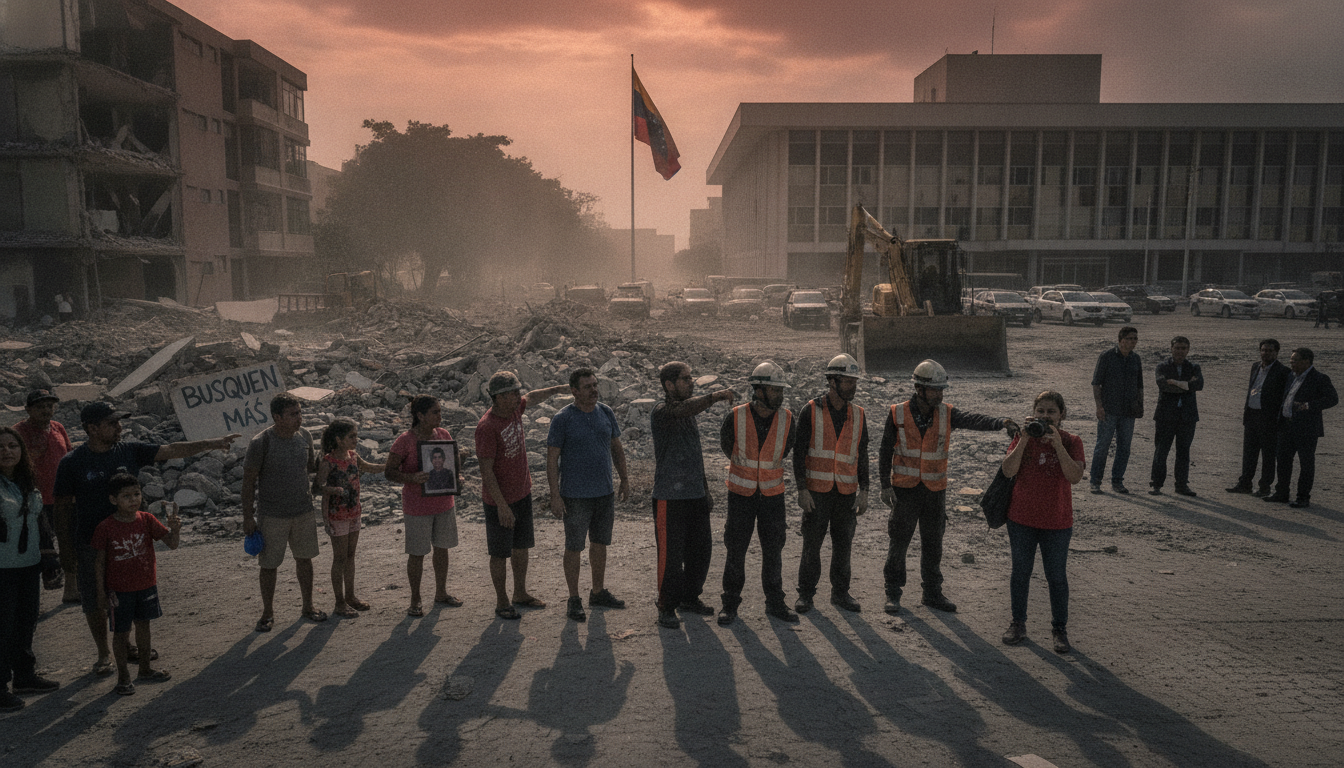
At a collapsed apartment block in Caraballeda, relatives gathered at the edge of a mounded pile of concrete and twisted rebar, pleading with authorities not to remove rubble before all possible victims are accounted for. José Francisco Liendo, a 50-year-old truck driver, stood over the site where he believes his father and sister lie and said his priority was to prevent machines from removing remains without checking for survivors. Others described hearing faint sounds or cries in the hours after the quakes and have clung to the hope that someone might still be found alive.
Official tolls, missing persons and international estimates
Government figures released late Thursday placed the confirmed death toll at nearly 2,600, with more than 12,000 people reported injured and hundreds of buildings collapsed. Authorities have been reluctant to provide a definitive number for the missing, while the United Nations suggested the figure could be as high as 50,000 when accounting for displaced and unaccounted-for residents. Photographs and lists circulated online show hundreds of names and descriptions posted by anxious relatives, reflecting the scale of disappearances and the desperate search for information.
Criticism grows over emergency response
Public anger has mounted in Caracas, La Guaira and other hard-hit areas over what many residents describe as a slow or inadequate initial government response. Neighbours and volunteers say they were the first to pull survivors from wreckage in the hours immediately after the tremors, while international rescue teams only arrived later. Interim President Delcy Rodríguez defended the government’s actions, saying thousands of personnel were deployed in the first 48 hours, but critics and opposition figures say logistical failures and delays worsened the humanitarian toll.
International aid, coordination and logistics
Foreign rescue brigades and specialised equipment arrived in several affected municipalities to assist local teams, and some governments have taken a coordinating role in delivering aid and technical support. Spanish and other international units were reported lifting heavy slabs with cranes in areas where local crews lacked machinery. Despite these reinforcements, moving large volumes of debris, setting up field morgues and establishing identification processes has remained a major logistical challenge in ports and neighbourhoods where infrastructure has been destroyed.
Displacement and urgent humanitarian needs
Millions of Venezuelans have been affected by the quakes, with many sleeping in the open or in improvised shelters after homes were rendered uninhabitable. A makeshift morgue has been erected in the La Guaira port area to process victims’ bodies, and long waits for death certificates and official documentation add to the distress of families seeking closure. Humanitarian agencies warn that immediate needs include shelter, medical care, water and sanitation, while temperatures and limited access to services threaten to compound the emergency.
The human cost of the Venezuela earthquakes is not only measured in confirmed deaths and injured, but in the tens of thousands who remain separated from loved ones and uncertain about their fate. As search operations move into a new, more technical phase, families and aid organisations are pressing for faster identifications, clearer public information and sustained international support to address the scale of destruction and displacement.
