
Alberta pipeline project unveiled with $35.2–$43.7B price tag, drawing industry support and environmental opposition
Alberta unveils a $35.2-$43.7 billion pipeline plan from Bruderheim to Roberts Bank, sparking industry praise and fierce criticism from environmental groups.
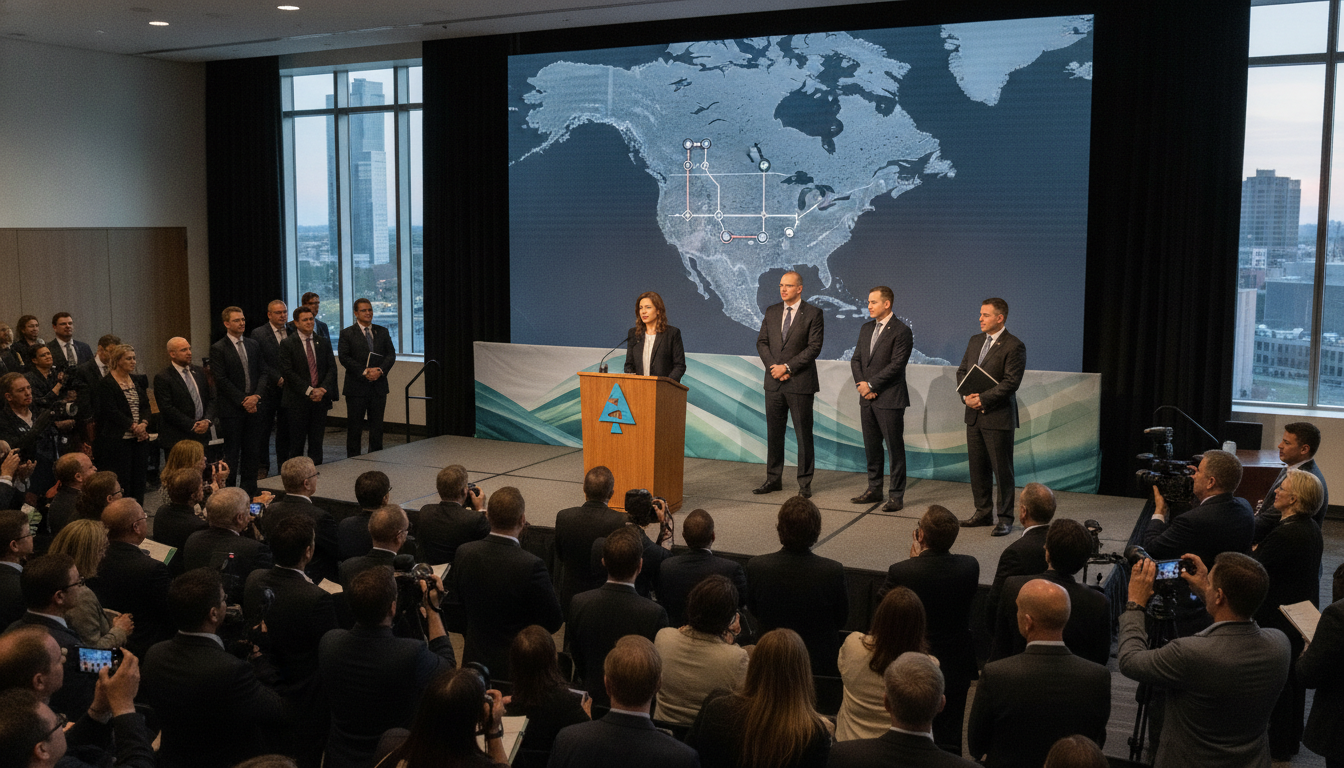
Alberta on July 2, 2026 announced details of a long‑anticipated pipeline proposal that the province says would move one million barrels per day to the coast. The Alberta pipeline project, championed by Premier Danielle Smith and presented in Calgary with former central banker Mark Carney in attendance, immediately prompted sharply divided reactions across industry, environmental groups and policy analysts.
Project scope, route and timeline
The proposed pipeline is described by Alberta officials as a new corridor linking Bruderheim, northeast of Edmonton, to the Roberts Bank terminal in Delta, British Columbia. The plan calls for a capacity of about one million barrels per day and follows a route broadly similar to the existing Trans Mountain corridor.
Government estimates place the capital cost between $35.2 billion and $43.7 billion, with construction projected to finish between 2032 and 2034 if the plan proceeds on schedule. Officials said the project would be developed by a public‑private mix, but many core commercial and regulatory details remain unresolved.
Financing, partners and outstanding commitments
Alberta has acknowledged that financing terms and any taxpayer exposure are still subject to negotiation, and the premier said cost allocations remain to be finalized. Pembina Pipeline has signalled it would initially hold a 10 percent economic stake once construction begins, with the possibility of another 10 percent when the line is operational.
Pembina also stated it would retain full discretion over any final investment decision, and no oil producers have publicly committed to ship product on the proposed line to date. Former TransCanada executive Dennis McConaghy warned that a project of this scale typically requires firm long‑term commitments from financially capable producers or refiners before moving forward.
Industry champions point to exports and price relief
Business advocates welcomed the announcement as an opportunity to expand access to Asian markets and reduce price discounts on Canadian heavy crude. Candace Laing, CEO of the Chamber of Commerce of Canada, described the plan as “good news,” arguing that additional pipeline capacity would help diversify export destinations and strengthen Canada’s trade ties.
Alberta officials and some energy economists say the new pipeline could narrow the differential between Western Canada Select and benchmark American crudes by roughly US$3 per barrel. Supporters contend that increased takeaway capacity would ease bottlenecks that, they say, have at times left Canadian producers dependent on a limited set of U.S. refineries.
Environmental groups denounce climate and social risks
Environmental organizations responded immediately with sharp criticism, arguing the proposal runs counter to Canada’s climate commitments and public spending priorities. Équiterre accused federal authorities of prioritizing projects that it says chiefly enrich a handful of oil companies rather than address pressing social and environmental needs.
Greenpeace Canada, the David Suzuki Foundation and Environmental Defence warned the project would lock in decades of fossil fuel infrastructure and expose Canadians to greater climate‑related harms. These groups urged the federal government and Mark Carney, who attended the announcement, to reject the plan and instead accelerate investment in renewable energy and adaptation measures.
Regulatory pathway and federal review
The pipeline was submitted to the federal Major Projects Management Office for consideration, triggering a regulatory clock under which the office has until October 1 to designate the proposal as a project of national interest. Designation could expedite some aspects of review but would not itself resolve outstanding commercial, Indigenous consultation or cross‑jurisdictional concerns.
Federal and provincial approvals, Indigenous consultations, environmental assessments and potential legal challenges all sit on the path ahead, meaning a designation would be only one of several milestones before construction could begin. Observers note the long timeline leaves room for market, political and climate policy shifts that could materially alter the project’s prospects.
Political calculus and national implications
The announcement underscores political tensions between resource‑producing provinces and federal policy goals on decarbonization and reconciliation. Premier Smith framed the pipeline as an economic necessity in a time of geopolitical uncertainty, while critics framed it as a retreat from global climate commitments and a risky fiscal bet.
Questions also linger about ownership patterns and foreign investment in Alberta’s oilpatch, with critics pointing to the concentration of bitumen production and refining interests as a strategic vulnerability. The debate is likely to shape provincial‑federal relations and national energy policy discussions in the months ahead.
The announcement has set in motion a complex sequence of negotiations, regulatory reviews and public debates that will determine whether the Alberta pipeline project advances beyond concept. With a federal designation decision due by October 1 and construction not expected until the early 2030s at the earliest, proponents and opponents now face a prolonged period of contestation over economics, climate policy and Canada’s role in global energy markets.
