
Canada and Alberta submit West Coast Pipeline proposal while B.C. secures northern tanker ban
Canada and Alberta formally submitted the West Coast Pipeline proposal to the federal Major Projects Office while B.C. protects its northern tanker ban.
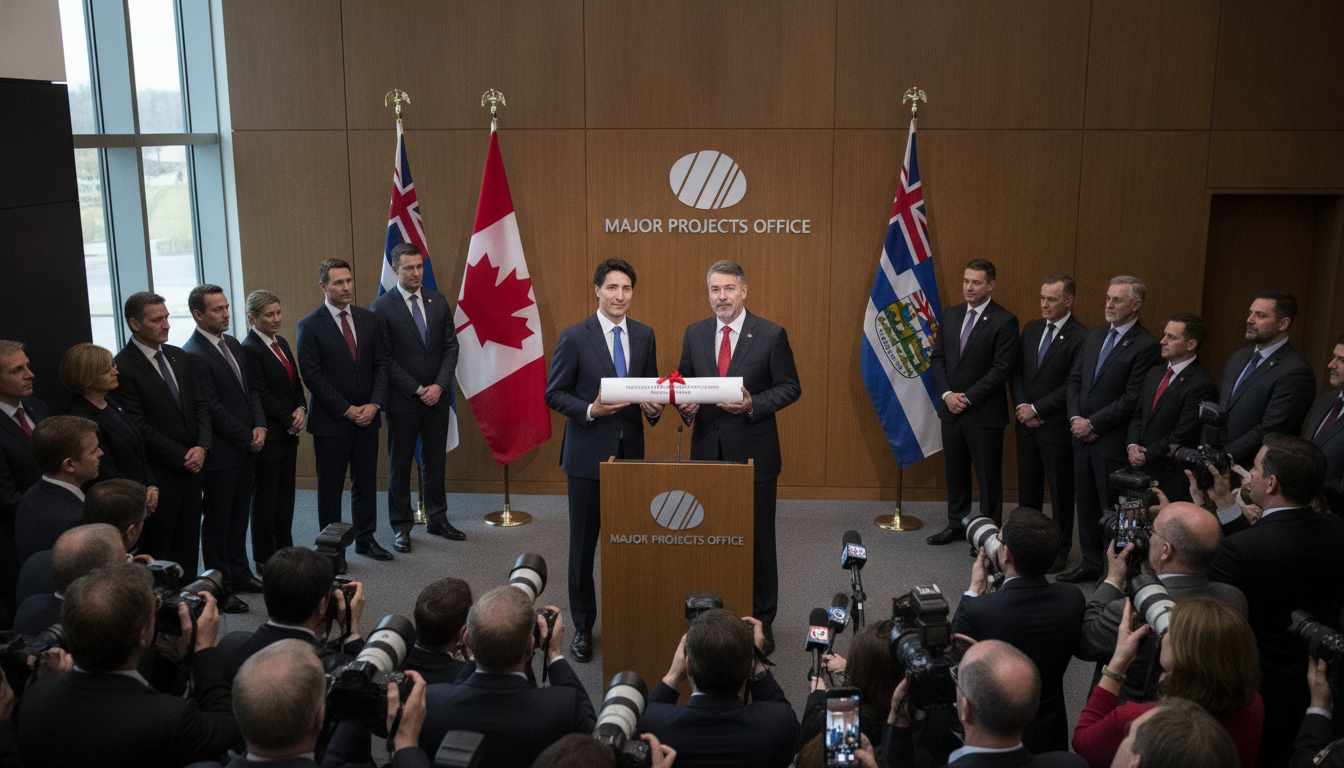
The federal government and Alberta announced Thursday that they have lodged a joint submission to the Major Projects Office seeking designation of the West Coast Pipeline as a project of national interest. The proposal, presented in Calgary, calls for a trans-provincial oil pipeline that would follow the existing Trans Mountain corridor from Bruderheim, Alberta, to British Columbia’s southwest coast. The move frames the West Coast Pipeline as a national-scale infrastructure priority intended to connect Alberta crude to global markets.
Federal and Alberta governments make joint submission
Prime Minister Mark Carney and Alberta Premier Danielle Smith stood together for the formal submission, describing the effort as a coordinated federal-provincial initiative. Officials characterize the project as a shared enterprise between Canada and Alberta, signaling tighter intergovernmental collaboration than past pipeline efforts. The bid into the Major Projects Office begins a process that could expedite federal review and regulatory coordination if the project receives the intended designation.
Route will follow Trans Mountain corridor, says government
The proposal selects a southern alignment that largely traces the existing Trans Mountain corridor, rather than a route through northern British Columbia that some Alberta officials had previously favoured. Government representatives argued the southern path offers key advantages, including existing infrastructure and established relationships with Indigenous partners along the corridor. They also asserted the southern route would allow the project to reach markets more quickly than a longer northern alternative.
Public-private partnership and corporate roles
The submission outlines a construction and planning role for Trans Mountain Corporation, with Pembina Pipeline Corp. positioned as a private-sector partner to provide operational expertise and capital discipline. Officials say the structure is intended to blend Crown corporation oversight with private-sector efficiency and financing capacity. Alberta and Ottawa framed the partnership as a way to move from lengthy negotiations to concrete project delivery while maintaining public interest oversight.
B.C. secures continued protection for northern coast
Separately, Ottawa reached a multibillion-dollar agreement with British Columbia that explicitly preserves the north coast oil tanker moratorium, provincial officials said. The moratorium bars vessels carrying large volumes of crude or persistent oil products from stopping, loading or unloading along the stretch of coast north of Vancouver Island. B.C. Premier David Eby described the preservation of the ban as a non-negotiable safeguard embedded in the bilateral arrangement with the federal government.
Indigenous leaders and coastal communities respond
Coastal First Nations and other northern communities welcomed the commitment to keep the tanker ban in place, stressing the cultural and ecological stakes of any potential spill. Representatives emphasized that decades of advocacy underlie the moratorium and warned that maritime oil transport would threaten fisheries, jobs and a biodiverse marine environment known as the Great Bear Sea. Indigenous leaders reiterated opposition to tanker expansion while signaling readiness to insist on robust environmental protections for any pipeline corridor on the southern route.
Political and legal implications for British Columbia
Under the agreement, B.C. will not be required to endorse a pipeline that transits the province, but provincial leaders said they would not mount a court challenge against a federally authorized project. The arrangement is framed by provincial officials as a pragmatic way to secure provincial interests — including financial compensation and climate and environmental safeguards — while accepting federal jurisdiction over interprovincial pipelines. Provincial ministers underscored that the deal guarantees explicit participation in project discussions and compensatory measures should the pipeline proceed.
Next steps, timeline and federal review
Designation as a project of national interest would trigger a streamlined Major Projects Office workflow, but several regulatory and consultation stages remain. The proposal now faces technical review, environmental assessment processes, and consultations with Indigenous nations and coastal stakeholders before any construction could begin. Government sources say the southern route was chosen in part to accelerate that pathway to regulatory clearances, but they did not provide a firm construction timetable.
The submission marks a significant pivot in the long-running debate over Canada’s pipeline strategy by coupling a major pipeline bid with a firm federal commitment to preserve a northern tanker moratorium. Proponents argue the West Coast Pipeline would open new export avenues for Alberta energy, while opponents and coastal communities continue to press for strong environmental protections and meaningful participation in decision-making. The proposal now moves into a period of intense scrutiny as regulators, Indigenous groups and provincial governments evaluate the technical, environmental and economic dimensions of the plan.
