
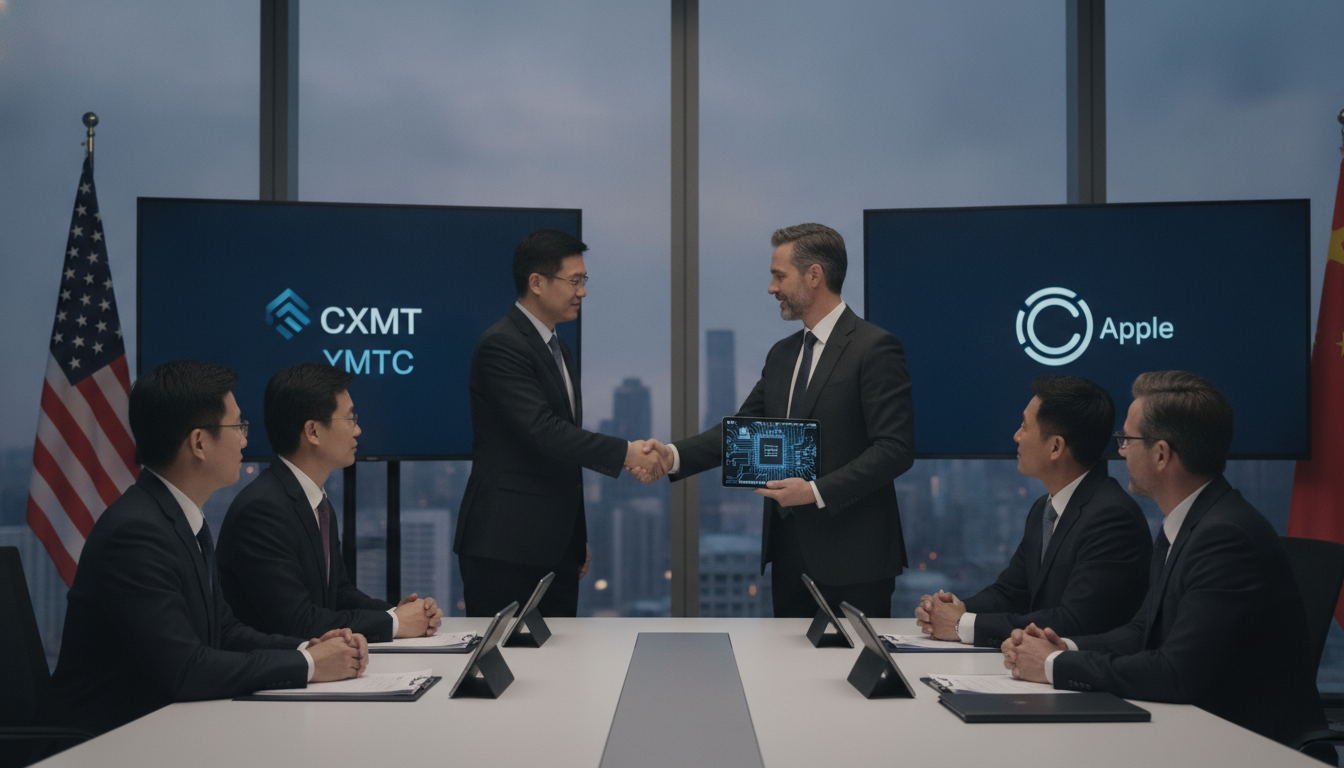
Apple memory chips China: iPhone maker said to seek CXMT and YMTC parts amid Pentagon concerns
Apple plans to source memory chips from CXMT and YMTC for devices sold in China, a move that places "Apple memory chips China" at the center of a new supply-chain controversy.
The company is reportedly considering purchases from Changxin Memory Technologies (CXMT) and Yangtze Memory Technologies (YMTC) to populate components destined for the Chinese market.
U.S. defense officials have warned that the two suppliers have alleged ties to China’s military, elevating questions about commercial risk, national security and regulatory exposure.
Apple plans purchases from CXMT and YMTC
Apple is said to be targeting DRAM and NAND components produced by CXMT and YMTC for use in iPhones and other devices sold within China.
Industry sources indicate the procurement would be limited to products that remain within the Chinese market rather than incorporated into globally distributed devices.
The apparent strategy reflects a broader trend of multinational firms seeking locally sourced components to meet market preferences and regulatory expectations in China.
Sourcing domestically can lower logistics costs and improve supplier relationships, but it also raises scrutiny when chosen suppliers are subject to national-security concerns.
Pentagon raises concerns about alleged military links
U.S. defense officials have flagged CXMT and YMTC over alleged connections to China’s military-industrial complex, cautioning American companies about collaboration.
Those warnings center on the risk that supplier relationships could expose sensitive data or technology and complicate compliance with export control regimes.
The Pentagon’s statements underscore the tension between corporate access to a major consumer market and the U.S. government’s efforts to limit technology flows that could benefit foreign military capabilities.
Such warnings may influence whether U.S.-based companies proceed with supplier relationships that could attract regulatory review or political backlash.
Implications for iPhones sold in China
If Apple confines CXMT- and YMTC-sourced memory to China-bound units, the change could create device differences between markets.
That segmentation may be limited to internal component sourcing and might not be visible to consumers, but it could complicate after-sales service and repair logistics.
Stratified sourcing can also affect software support and long-term maintenance, since components have varying performance characteristics and reliability profiles.
Apple will need to balance cost and supply advantages against the potential for increased warranty claims and consumer scrutiny.
Supply-chain and regulatory risks
Using suppliers under government scrutiny exposes the company to potential regulatory action, including export controls, sanctions or mandatory audits.
Companies operating across jurisdictions must weigh commercial benefits against the possibility of regulatory restrictions that could disrupt production or sales.
Investors and partners may interpret such sourcing decisions as indicative of operational trade-offs between market penetration and compliance risk.
That pressure can influence procurement policies, board oversight and public relations strategies as firms navigate geopolitical friction.
Industry and analyst perspectives
Analysts say the move would not be unprecedented as tech firms adapt to regional supply ecosystems and local sourcing preferences.
Observers note that China has invested heavily in domestic semiconductor capability, and global companies sometimes adopt split-sourcing models to preserve market access.
Experts caution, however, that partnering with suppliers linked to sensitive programs increases reputational exposure and can trigger intensified government scrutiny.
Businesses must therefore prepare mitigation plans, enhanced due diligence, and transparent disclosures where required by law.
Potential responses from companies and regulators
So far there has been no detailed public disclosure from Apple, CXMT or YMTC outlining specific contracts or delivery timelines.
Regulators in the United States and other jurisdictions monitor such commercial relationships closely and could act if national-security thresholds are deemed to be met.
Any formal enforcement or advisory action by government agencies would likely be followed by investor and media attention, prompting companies to respond with compliance protocols.
Corporate governance teams may also reassess risk tolerances and supplier approval processes in light of evolving geopolitics.
The decision over whether to proceed with those chip purchases will test the balance between commercial opportunity in China and the strategic concerns voiced by U.S. defense officials.
As global technology supply chains remain squeezed between competing national priorities, companies will face complex choices about where and how to source critical components.
