
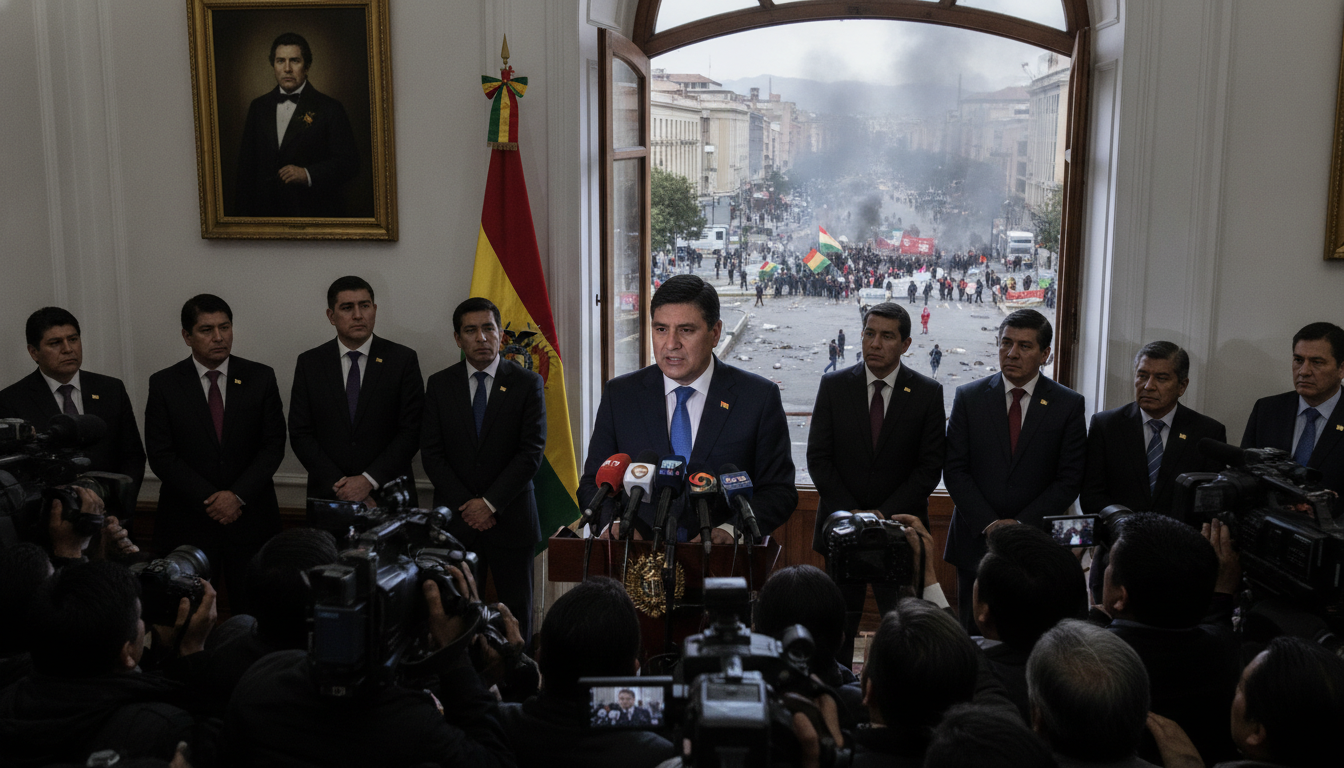
Bolivia state of emergency declared after 50 days of protests against austerity and privatisation
Bolivia state of emergency declared by President Paz on July 1, 2026, after 50 days of protests that began on May 12, 2026, over austerity cuts and privatisation.
Bolivia’s president, Luis Paz, declared a state of emergency on July 1, 2026, as mass protests entered their 50th day following a wave of strikes and demonstrations that began on May 12, 2026. The move, intended to restore order, comes amid deepening anger from workers and labour groups who accuse the government of abandoning them through austerity measures and plans to privatize state services. Authorities said the measure would expand security powers; demonstrators said it represented an escalation that risks further confrontation.
Emergency decree and expanded powers
The presidential decree announced on July 1 grants security forces broader authority to disperse gatherings and enforce restrictions on movement in affected areas. Government officials have framed the declaration as a temporary, necessary step to protect public order and critical infrastructure. Critics contend the measures risk curbing civil liberties and may inflame tensions rather than defuse them.
Workers cite austerity cuts and privatisation plans
Labour federations and public-sector employees leading the protests say their demands focus on reversing austerity cuts, protecting jobs and halting any moves to privatize essential services. Protest leaders have accused President Paz’s administration of abandoning longstanding social commitments in favour of market-oriented reforms. Union representatives continue to call for formal negotiations and legal guarantees before any fiscal or structural changes proceed.
Government rationale and economic context
The Paz administration has argued that the proposed fiscal adjustments are necessary to stabilise public finances and attract investment, though officials have not published a comprehensive reform timetable. Economic advisers close to the government say long-term measures will be needed to address deficits, but details remain sparse and contested. The lack of a clear, public roadmap for reforms has become a central fault line between the executive and labour groups.
Disruptions, marches and local clashes
Across major cities and regional centres, protesters have staged regular marches, workplace stoppages and road blockades, disrupting transport and public services. Local authorities reported arrests and clashes in some locations, while emergency services in affected areas said they were operating under pressure. Business associations and civic groups have warned that prolonged unrest risks broader economic fallout for supply chains and tourism.
Political fallout and calls for mediated talks
Opposition parties and civic organisations have urged both sides to move toward mediated talks to prevent further escalation, proposing independent facilitation and clear agendas for negotiation. International actors and regional bodies have expressed concern about the declaration and called for restraint by security forces, while offering to support dialogue if requested. Analysts say a negotiated settlement will require concessions by the government and binding guarantees for workers to rebuild trust.
The declaration of a state of emergency marks a turning point in a dispute that has lasted since May 12, 2026, and that shows no immediate sign of resolution. As tensions continue, the pace and transparency of any government proposals — and the response of labour leaders — will determine whether protests wind down or intensify. The coming days are likely to test both the administration’s capacity to govern and the opposition’s ability to translate street pressure into a negotiated outcome.
