
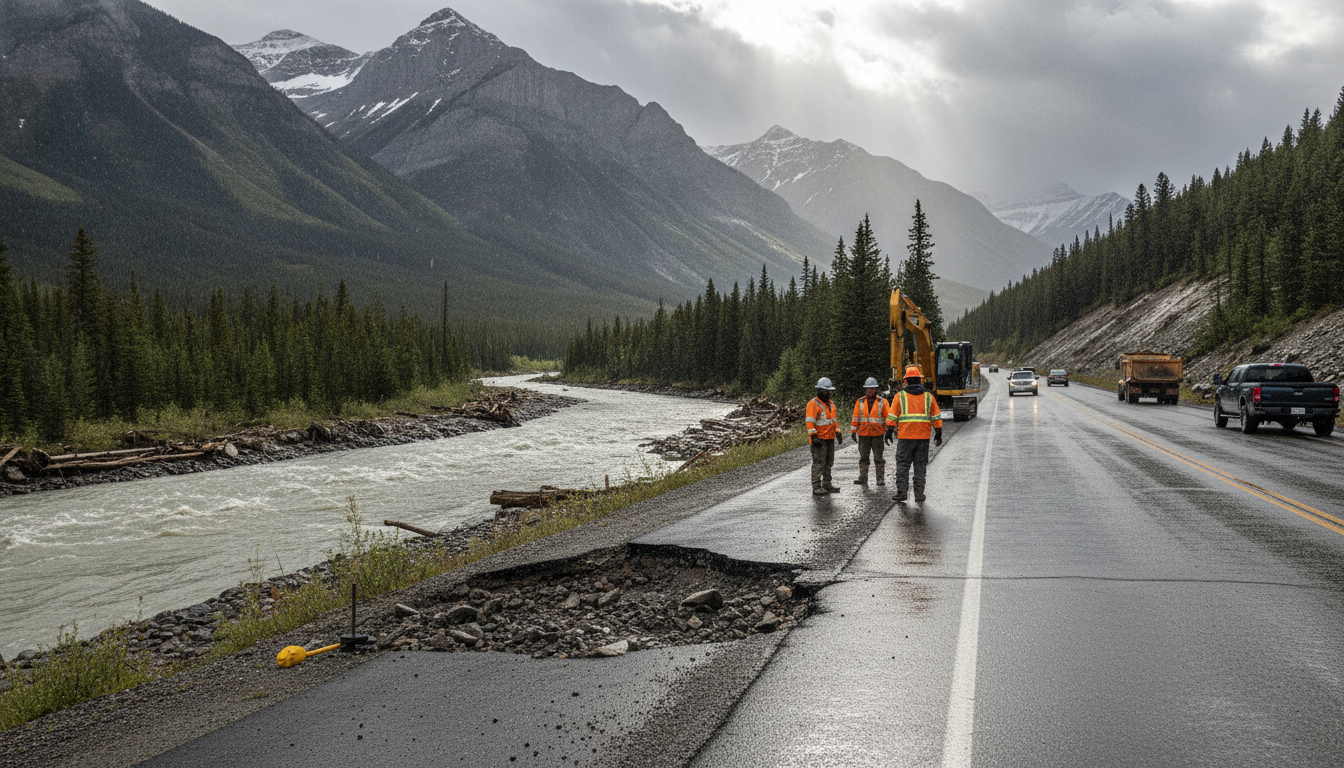
Kananaskis flooding strands 1,500 visitors as crews begin road and trail cleanup
Kananaskis flooding forced a local state of emergency after more than 100 mm of rain; crews are now assessing washouts, a washed-out bridge and trail closures ahead of Canada Day.
Heavy rainfall over the weekend prompted emergency crews to begin a coordinated cleanup and damage assessment in Kananaskis Country after a local state of emergency was declared for the provincial park. The event, described by officials as a severe surface-water and mudflow incident, stranded roughly 1,500 visitors and forced the temporary closure of multiple trails and campgrounds. Environment and Climate Change Canada recorded more than 100 millimetres of rain from Friday night through Monday morning, with additional rainfall reported through Monday afternoon. Provincial ministers and park operators said water levels are receding slowly, allowing teams to move from immediate rescue and shelter operations into road and infrastructure repairs.
Early reports from government officials and park operators indicate a mix of washed-out roads, mudslides and localized stream flooding that disrupted access along key routes in the park. Transportation engineers and forestry crews have been deployed to inspect bridges and assess the stability of roads before reopening them to the public. Officials emphasized the situation remains dynamic, with ongoing monitoring of slides and stream flows to prevent secondary failures as cleanup proceeds.
Heavy rain prompts local state of emergency in provincial park
Provincial authorities declared a local state of emergency for Kananaskis Country after intense rainfall overwhelmed drainage channels and triggered multiple mudflows. The declaration allowed for the rapid mobilization of provincial crews, emergency responders and temporary shelters to assist visitors and residents affected by roadway and trail damage.
Todd Loewen, Alberta’s minister of forestry and parks, said the rainfall caused significant washouts in several locations and that teams were prioritizing public safety and access for emergency services. Officials stressed that while flood waters are falling in some areas, saturated slopes and unsettled ground conditions continue to pose risks for both crews and visitors.
Environment and Climate Change Canada’s rainfall totals were cited by authorities as the primary cause of the event, with more than 100 mm of precipitation reported in parts of Kananaskis over the weekend. That volume of rain, delivered in a short timeframe, exceeded drainage capacities on several watersheds and led to rapid rises in stream flows and roadside erosion.
Highway 40 largely reopens while Evan-Thomas Bridge remains out
Provincial transportation crews reopened most of Highway 40 after clearing debris and stabilizing key sections, allowing the majority of visitors who had been stranded to exit the park. Officials said Highway 40 is passable from the Trans-Canada Highway to Kananaskis Village, restoring an important north–south corridor through the park.
Despite the reopening, Todd Loewen confirmed the Evan-Thomas Bridge sustained critical damage and remains washed out, requiring several days of repair work before it can reopen. Authorities said the bridge loss isolates certain trailheads and sections of roadway, and that travel across assessed bridges will only be permitted after engineers confirm safety.
Transportation engineers are conducting inspections before reopening any damaged structures, and temporary traffic measures have been put in place to support movement of staff and supplies. The province warned drivers to expect changing conditions and to obey signage and directions from crews working on repairs.
Shelters, evacuations and the status of stranded visitors
At the peak of the incident, roughly 1,500 people were unable to leave the park because of washed-out access routes and closed roads. Provincial response teams established temporary shelters at Peter Lougheed Centre and the Williams Watson Lodge to assist those displaced by the flooding. Between 150 and 200 people used the temporary shelters on Monday night as crews arranged safe transport for visitors.
By Tuesday most visitors were able to depart as road access improved, though officials reported approximately 50 people remained near the Smith Dorrien Trail awaiting safe passage. Crews working along the Smith Dorrien corridor have been clearing mudslides and repairing short sections of washout to allow controlled movement out of affected areas.
Emergency coordinators said priority was given to vulnerable visitors and those with limited supplies, and that search-and-rescue teams remained available to assist if conditions deteriorate. Local emergency crews emphasized that while rescues have been largely completed, access for support vehicles and supply runs continues to be carefully managed.
Mudslide response and engineered assessments of parks infrastructure
Crews are concentrating on clearing mudslides and stabilizing slopes where runoff undermined roads and trails, with heavy equipment and hand crews working in tandem. Remediation work includes removing debris, regrading eroded shoulders, and shoring up drainage channels to prevent immediate repeat failures while longer-term repairs are planned.
Loewen said teams are cleaning out areas where slides occurred and may extend cleanup work farther back from slide toes to reduce the likelihood of near-term reactivation. The province emphasized that short-term fixes will be followed by detailed geotechnical assessments to inform permanent repairs and future mitigation measures.
Engineers are inspecting bridges and culverts for structural compromise before allowing travel, and water-level data are being used to guide reopening decisions. Officials cautioned that some trail and campground repairs will require more extensive work and cannot be completed until flows return to normal and slopes dry sufficiently.
Park operations and Canada Day plans at Kananaskis Mountain Lodge
With Highway 40 reopened to Kananaskis Village, the Pomeroy Kananaskis Mountain Lodge has been preparing to host Canada Day activities while coordinating closely with Alberta Parks. General manager Liz Hovey-Smith said staff have been working to ensure residents, employees and supplies can move safely through the park and that the lodge would look after guests who are already on site.
Hovey-Smith encouraged visitors to follow provincial guidelines and to check trail and closure notices before venturing out, noting some backcountry routes near the lodge have reopened while others remain unsafe. The lodge team has been liaising with provincial authorities to monitor conditions and to adjust programming and guest access plans as needed.
Park operators also highlighted contingency plans should weather or infrastructure conditions change, including measures to shelter guests and to prioritize essential services. Officials emphasized that reopening does not mean all risks are resolved, and they asked visitors to exercise caution and to respect closures for their own safety.
Trail and campground closures, public safety advisories
Alberta Parks reported multiple trail and campground closures across Kananaskis because of high stream flows and unstable ground conditions, and said locations will remain closed until conditions improve. The province urged hikers and campers to consult official closure lists and to avoid travel into areas where washouts and mudflows have occurred.
Trails with recent washouts and sections of the Smith Dorrien and other popular routes were specifically mentioned as areas where rockfall, undermining and rapid runoff pose hazards. Park officials warned that even minor precipitation in the days following heavy rain can trigger fresh slides in soils already saturated by the weekend event.
Public safety messaging emphasized staying on designated routes, heeding signage, and avoiding riverbanks and stream channels where flows remain elevated. Authorities also reminded the public that recreational rescues in hazardous conditions place additional strain on emergency services and increase risk to responders.
Provincial officials and park managers said they will provide updated information on road and trail status as assessments are completed and as repairs progress. The immediate priority remains restoring safe access, completing bridge and roadway repairs where practicable, and ensuring shelters and support services are available for those affected. Inspectors will maintain watch on water levels and slope stability while crews undertake both emergency repairs and plans for longer-term rehabilitation of impacted areas.
Provincial ministers reiterated the importance of public caution and advance planning for anyone intending to travel into Kananaskis in the coming days. Authorities advised that while some access points are restored, conditions are variable and visitors should confirm the latest closures and travel advisories before departing.
Local businesses and tourism operators in the park stressed that communication with authorities has been ongoing and that contingency measures were in place to protect guests and staff. Operators also noted that while they aim to welcome visitors, they will do so only when safety assessments indicate it is prudent.
As crews continue cleanup and engineers assess infrastructure, officials said further weather and runoff will determine the pace of recovery. The province is coordinating with park staff, emergency responders and transportation crews to sequence repairs and openings in a way that balances access with safety.
Residents and visitors are being asked to remain patient and to respect temporary restrictions while more permanent repairs are scheduled. Officials said that information about sheltering, road status and trail access will be released as assessments are concluded and safe reopening is approved.
Recovery planners noted that repair timelines for bridges and heavily damaged road segments will depend on the extent of underlying erosion and slope instability. Short-term reopening may be achieved through temporary structures or reroutes, but full restoration could require engineered reconstruction and seasonal work windows.
Authorities encouraged anyone with concerns about missing persons or property impacted by the flooding to contact local emergency lines and park offices for guidance. They also reminded the public that the period immediately following heavy rain is one of heightened hazard and to avoid unnecessary travel into affected areas.
Local search-and-rescue organizations and park staff said their teams stand ready to respond to emergencies but reiterated the need for visitors to be self-sufficient and aware of conditions. They advised carrying appropriate gear, informing others of travel plans, and checking official sources before setting out on hikes or backcountry trips.
The coming days will see a shift from immediate emergency response to damage assessment and staged repair work, with ongoing monitoring of slopes and waterways. Authorities said they will publish further updates as conditions evolve and as new safety information becomes available.
Members of the public planning travel or recreation in Kananaskis are urged to check official Alberta Parks advisories and to plan for alternate routes or postponements if their intended access is affected. Park managers reminded visitors that closures remain necessary to protect both public safety and the integrity of ongoing emergency operations.
Cleanup teams and provincial crews continue to coordinate logistics for heavy equipment movements, material deliveries and site stabilization work. Officials said traffic and access management will be used to protect repair crews and to minimize additional impacts on vulnerable terrain.
Longer-term recovery planning will include geotechnical studies to identify underlying vulnerabilities and to guide design of resilient repairs that will better withstand extreme precipitation events. The province indicated that lessons learned from the incident will inform future planning and park management decisions.
The collaboration between provincial ministries, park operators and local emergency responders has been central to managing the immediate impact of the Kananaskis flooding. Authorities said that maintaining clear communication with visitors and residents while ensuring safe, staged restoration of access remains their top priority.
Officials urged everyone planning to visit Kananaskis in the near term to be flexible, to prioritize safety, and to use official channels for the latest information on road, bridge and trail status. The province and park operators committed to providing timely updates as recovery progresses and as repairs allow for gradual reopening of the recreational landscape.
Cleanup and repair work will continue through the weekend and into next week as crews work to reopen more routes and to stabilize damaged slopes. The province asked the public for patience as it balances speed of reopening with thorough safety checks and permanent repair planning.
For now, the emphasis remains on completing immediate hazard mitigation, assessing the full extent of infrastructure damage and ensuring those still affected have access to shelter and support services. Officials confirmed that once conditions allow, a phased approach to reopening trails and campgrounds will follow the necessary engineering reviews.
