
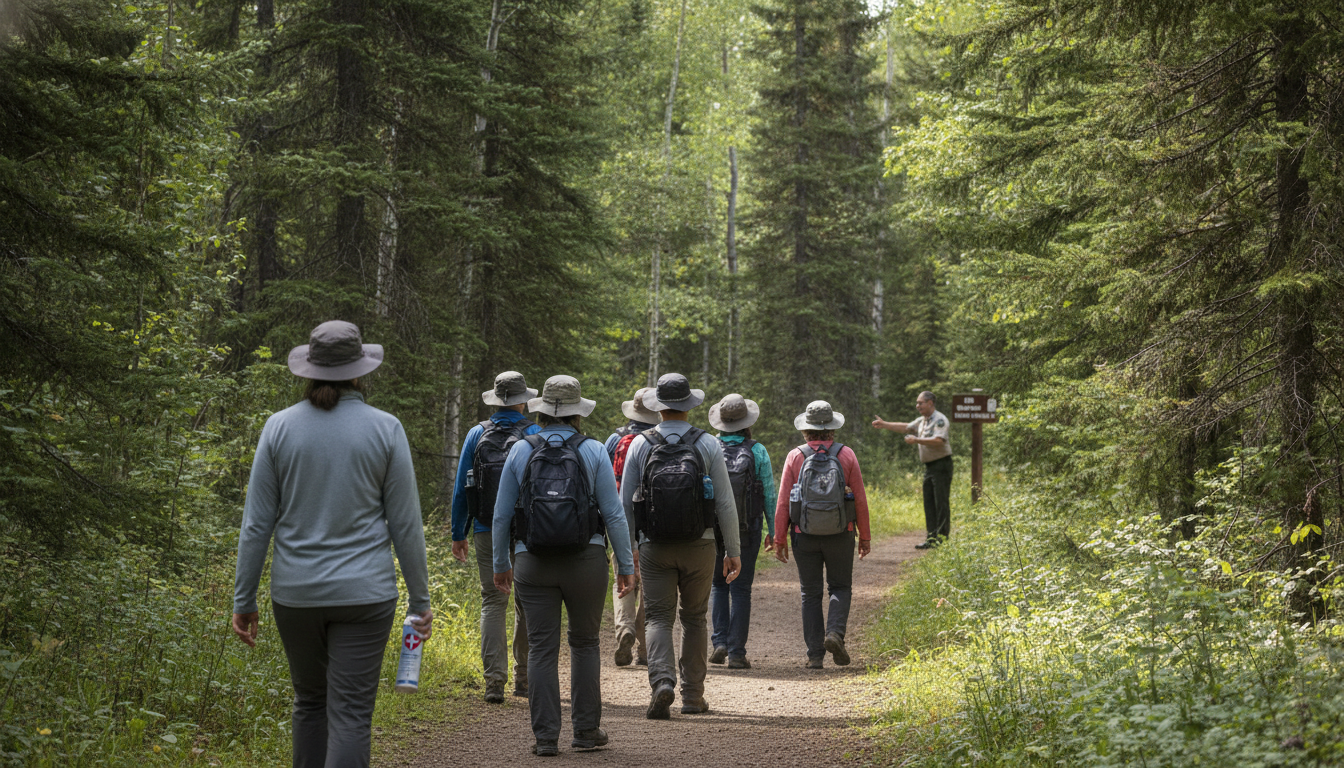
Alberta health advisory: Use insect repellent, wear long sleeves and light colours when outdoors
Primary Care Alberta urges insect repellent use and full-body coverings outdoors, recommending Health Canada–approved DEET or Icaridin and light clothing.
Primary Care Alberta is advising residents to cover as much skin as possible and to use insect repellent when spending time outdoors this season. The agency specifically recommends long-sleeved shirts, wide-brimmed hats and light-coloured clothing, and notes that Health Canada–approved products containing DEET or Icaridin are effective options. The guidance is aimed at reducing bites from mosquitoes, blackflies and ticks while people engage in recreational activities and backyard outings.
Agency issues practical clothing guidance
Primary Care Alberta recommends long sleeves and hats as the first line of defence against biting insects. Light-coloured fabrics make it easier to spot ticks and other pests before they attach. The release emphasizes combining clothing choices with other protective measures rather than relying on a single approach.
Health Canada–approved repellents: DEET and Icaridin highlighted
The advisory names DEET and Icaridin as examples of repellents approved by Health Canada for preventing insect bites. Officials encourage consumers to choose products that carry Health Canada registration and to follow the manufacturer’s instructions. Using approved repellents reduces the risk of exposure to insect-borne pathogens and minimizes the chance of ineffective or unsafe products being applied.
How to apply repellents safely
Consumers are advised to read product labels for directions on application frequency and age restrictions. Apply repellents only to exposed skin and clothing; avoid applying directly to cuts, wounds or irritated skin. When using both sunscreen and an insect repellent, apply sunscreen first and then the repellent—follow label guidance on timing to maintain protection.
Children, pregnancy and medical cautions
The advisory urges caregivers to follow age-specific label instructions and to apply repellent to a child’s clothing rather than directly to the face or hands. Adults should spray repellent onto their own hands before applying it to a young child to limit ingestion or accidental contact with eyes. People who are pregnant, breastfeeding or who have chronic health conditions are advised to consult a health professional if they have concerns about which product is appropriate.
Clothing and environmental measures to reduce exposure
Beyond repellents, the statement recommends tucking pant legs into socks, wearing closed-toe shoes and choosing breathable fabrics for comfort. Light colours and fitted cuffs make it easier to notice and remove ticks before they bite. Maintaining screens on windows, draining standing water near yards and avoiding peak mosquito activity times can further reduce encounters.
When bites or reactions require medical attention
Most insect bites are minor and resolve on their own, but the advisory says to seek medical attention for signs of severe allergic reaction, spreading redness, fever, or symptoms consistent with vector-borne illness. For embedded ticks, remove the tick promptly with fine-tipped tweezers, taking care to remove the head and mouthparts, and consult health services if there is concern about infection. Individuals should keep a record of where and when the bite occurred to inform clinical assessment.
The agency’s guidance underscores a layered, practical approach to outdoor safety: cover up, choose approved repellents, follow label directions, and combine chemical protection with clothing and environmental measures. Residents are reminded that product labels and Health Canada resources provide up-to-date regulatory information and usage instructions.
As warm-weather activities increase across Alberta, the advisory aims to give people clear steps to reduce insect bites and the potential for related illnesses. Combining simple behavioural changes with approved repellents can lower risk while allowing residents to continue outdoor recreation with greater confidence.
