
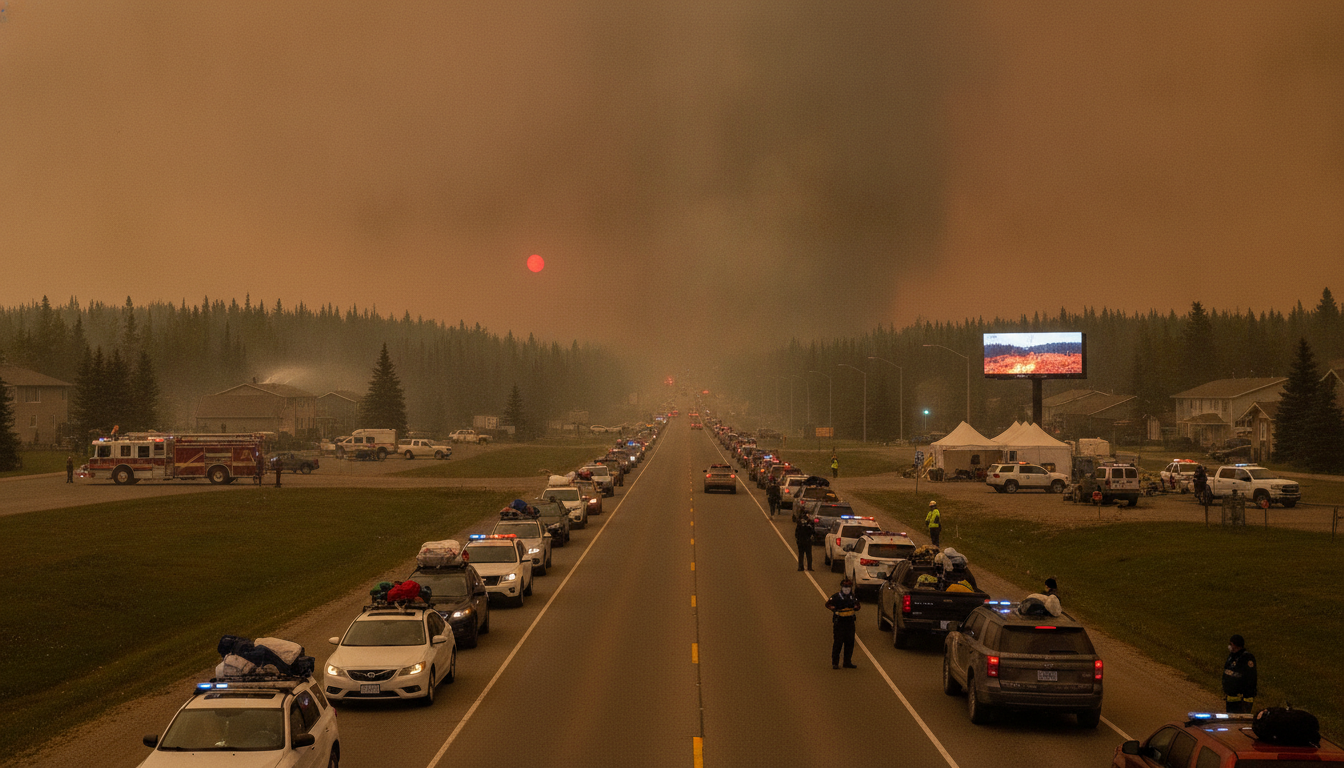
Walsh River wildfire near Labrador City forces evacuations as crews battle 200-hectare blaze
Walsh River wildfire near Labrador City has prompted a state of emergency and the evacuation of about 120 people as crews, water bombers and helicopters fight a roughly 200-hectare blaze west of the town.
The Walsh River wildfire, burning roughly 8 kilometres west of Labrador City, prompted the municipal government to declare a state of emergency and order evacuations for cottages, homes and recreational areas in the immediate path of the fire. Provincial estimates put the active burn at about 200 hectares on Monday evening, and officials said the blaze remained uncontained despite local successes by ground crews. Residents were urged to follow municipal instructions and head to designated reception centres as aircraft and firefighters worked through the night.
Evacuations ordered for Walsh River area
Local authorities directed people in the Walsh River sector, including several dozen cottages and homes, to evacuate immediately, along with residents near the Tamarack golf course and the Throne Lake and Duley Lake parks. The municipality asked evacuees to report to Labrador City and noted that a reception centre established by the Canadian Red Cross is operating at Menihek High School. Officials emphasized that the evacuation order applied to a specific geographic area and that those outside the zone should monitor updates and be prepared to leave if conditions change.
Fire size and proximity to community
Provincial officials estimated the fire at approximately 200 hectares and located about 8 kilometres west of Labrador City, a mining town of roughly 7,500 people. The ministry responsible for forests, agriculture and lands reported that crews achieved some local containment by Monday night, but the incident was not yet under control. Given the fire’s proximity to Route 500 — the principal connector across the Quebec border to Fermont — authorities said they were closely monitoring potential risks to transportation corridors and nearby settlements.
Air and ground response mobilized
Emergency crews prepared a coordinated response that included aerial and ground assets, with water bombers and helicopters slated to operate as visibility and conditions allowed. Firefighters from Labrador City and nearby Wabush joined provincial crews to hold fire lines and protect properties, while suppression efforts focused on keeping the blaze from advancing toward residential areas. Authorities said the combination of aircraft support and local suppression work would be used to strengthen containment where conditions permit.
Residents report visible smoke and concern
Local business owners and residents described visible smoke and noticeable odours across Labrador City, with one dealership owner saying people were anxious and had been filling vehicles at gas stations in case evacuation orders expanded. The town’s mayor urged calm while also stressing preparedness, advising residents to top up fuel, prepare extra clothing and not to leave pets behind if evacuation becomes necessary. Municipal leaders said they were monitoring conditions closely and coordinating with provincial officials to keep the public informed.
Provincial confirmation and emergency measures
On social media, Newfoundland and Labrador’s premier confirmed that about 120 people had been evacuated in connection with the Walsh River wildfire, and the municipality issued a formal message directing those displaced to the designated reception centre. The town’s declaration of a state of emergency allows local authorities to marshal additional resources and coordinate shelter, logistics and public messaging. The Canadian Red Cross and local emergency management teams were activated to support evacuees with short-term needs.
Route 500 and neighbouring Fermont on alert
Route 500, which links Labrador City to Fermont roughly 25 kilometres to the southwest, remained open at the time authorities released the update, though officials said the situation was being closely watched for any escalation. The neighbouring Quebec town of Fermont activated its emergency measures plan as a precaution and kept residents informed about potential cross-border impacts. Transport and municipal officials advised drivers to expect possible traffic controls and to obey directions from emergency personnel should conditions require closures or detours.
Fire behaviour remained the primary variable affecting response plans, with crews adjusting tactics to shifting winds, fuel conditions and visibility. Officials warned that even with aircraft support, containment can be slow in remote, heavily forested terrain and that weather will be a critical factor in how quickly the situation can be brought under control.
Evacuees and residents in affected zones were asked to rely on official municipal and provincial channels for real-time information, to register with the reception centre if displaced, and to avoid the fire area so emergency teams can operate without obstruction. Authorities said assessments would continue through Tuesday and that further updates would be issued as conditions evolved.
