
Montreal shooting suspect’s Lethbridge unit searched as neighbours describe him as reclusive
Lethbridge neighbours say their quiet community was shaken after police searched a student’s unit linked to the Montreal shooting; investigators probe motive.
The Montreal shooting on Monday, June 22, 2026, has drawn investigators to Lethbridge after authorities executed a prolonged search of a townhouse unit tied to the accused, according to local residents and institutional confirmations. Neighbours at a complex on Lemoyne Crescent reported an unusual and sustained police presence the day after the attack, describing officers in tactical gear and extended activity that transformed a normally quiet street. The man charged in the Montreal incident has been identified in public records as Seth Scott Hatfield, and city and university officials have acknowledged links to the Lethbridge community while investigators continue to assemble a timeline. Police and university statements so far have confirmed investigative activity but provided limited operational detail as authorities work to connect events in Montreal with the Lethbridge address.
Investigation focuses on Lethbridge address
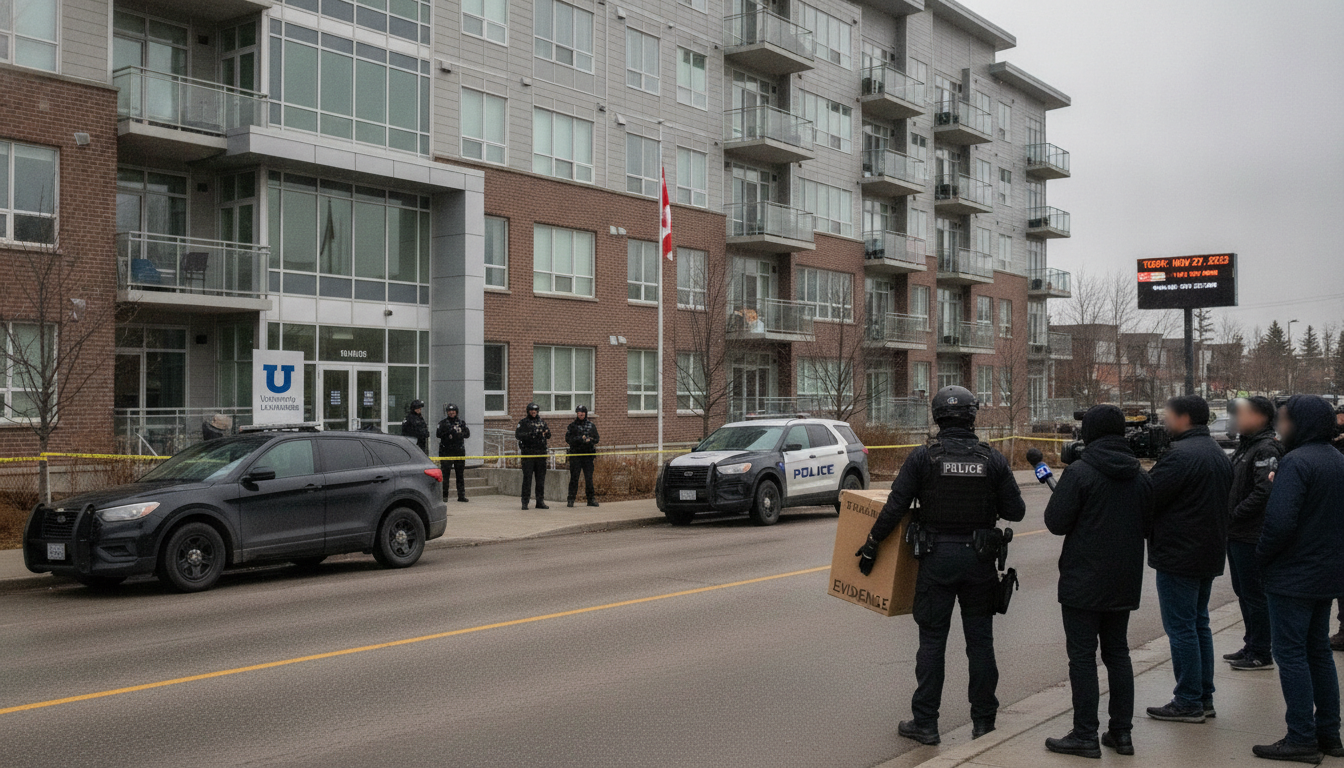
The search of the Lemoyne Crescent townhouse occupied a central role in the local response after the Montreal shooting. Neighbours said officers remained on scene for several hours, conducting what they described as a high-risk search that involved multiple police vehicles and specialized units. Local law enforcement has not released a full account of the evidence sought or recovered, citing the integrity of the ongoing criminal investigation. Investigators have indicated the activity in Lethbridge is one element of a broader, multi-jurisdictional inquiry into the June 22 attack.
Officials have signalled that the Lethbridge search was coordinated with partners in other jurisdictions, though they have not publicly detailed which agencies were involved. Sources in the area reported that the operation included both uniformed officers and plainclothes investigators, consistent with evidence-gathering and forensic procedures for major incident probes. Residents said forensic teams and police canine units were present at times, suggesting a methodical sweep of the property. Law enforcement emphasized that public safety remains a priority while investigative steps continue.
Neighbour recalls reclusive behaviour
Neighbours interviewed at the townhouse complex described the man linked to the Montreal shooting as someone who mostly kept to himself and did not readily engage with others. One resident, Anika Medema, said she had only seen the accused in passing and that his demeanour struck her as reserved rather than sociable. Community members said the complex is usually calm and that the arrival of multiple police units was a jarring change to their routine. The scene left neighbours unsettled and prompted conversations about how little they knew about those living nearby.
Residents expressed surprise that a unit in their quiet neighbourhood could be connected to such a grave incident in another province. Several neighbours noted that people who live in condominium and townhouse communities often keep to themselves, and that appearances can conceal private struggles. Medema and others described a sense of disbelief, underscoring how ordinary neighbourhoods can become part of criminal investigations. The reaction reflected a broader unease about safety and awareness within tight-knit residential settings.
University confirms student ties
The University of Lethbridge confirmed the accused had been enrolled at the institution, issuing condolences to those affected by the Montreal attack and condemning the violence. University officials said they are cooperating with investigators and are assessing their internal records to determine any further steps regarding campus safety and student supports. The confirmation prompted questions among students and faculty about access to resources and communication during active investigations. The university emphasized that its priority is the welfare of the campus community while respecting the investigative process.
Campus leaders also pointed to the need for counselling and mental health services following traumatic events linked to members of the university community. Student affairs staff told reporters that outreach efforts were being made to ensure supports are available and visible to those who may be affected. Administrators noted that universities must balance transparency with privacy and legal constraints when responding to law enforcement activity involving their students. The institution pledged to update its community as appropriate while investigations proceed.
Police search and tactical response described by witnesses
Witnesses at the Lemoyne Crescent address said officers treated the scene with a high degree of caution, indicating the search was conducted under measures typically used when safety risks are considered. Neighbours recounted seeing police in vests, patrol cars lining the street and forensic teams entering and exiting the unit throughout the day. Some residents who returned home after leaving earlier in the morning found the complex cordoned and described the operation as thorough and visible. The scale of the response drew attention from other community members and prompted local officials to monitor the situation.
Law enforcement has refrained from discussing specific tactical tactics or evidence found during the search, citing ongoing investigative needs. Public safety advisories issued to neighbours during active operations often limit the information released to preserve operational security, and that appears to be the case here. Investigators typically follow forensic protocols at residences associated with violent crimes, collecting and cataloguing materials that could aid in establishing motive and timeline. Authorities have told the public that updates will be provided when they do not compromise the investigation.
Community concerns and calls for clarity
The search and the connection to the Montreal shooting have heightened concerns among residents about safety, neighbourliness and the difficulty of recognizing warning signs. Many said the incident underscores how little is sometimes known about the private lives of people who live nearby. Community groups and residents called for more visible supports and clearer communication channels between law enforcement, municipal authorities and neighbourhood associations. Some asked whether increased outreach or safety education could help communities better identify and respond to potential red flags.
Local residents said they wanted reassurance that authorities are pursuing all leads and that measures are in place to prevent similar tragedies. At the same time, neighbours cautioned against speculation and urged respect for the privacy of those whose homes are involved in criminal inquiries. Community leaders encouraged calm and noted that authorities must conduct their work without interference. The prevailing sentiment among those interviewed was a desire for information balanced with deference to the investigative process.
Investigative steps and what remains unknown
Investigators have pointed to multiple avenues of inquiry in the days following the Montreal shooting, including digital records, witness statements and forensic analysis from locations connected to the accused. Officials have signaled that building a complete timeline remains a priority, as do efforts to establish motive and any potential links to other individuals. At this stage, public updates have been limited to confirm the Lethbridge search and the accused’s ties to the University of Lethbridge. Law enforcement has said they will release additional details as they are able without jeopardizing the case.
Observers note that complex investigations connecting incidents across provinces often require extended coordination and can take weeks or months to resolve. Evidence collected at residential properties can contribute essential forensic data, but it can also raise privacy and legal questions that investigators must navigate. Prosecutors typically await completion of investigative work before disclosing detailed findings in court filings or public statements. For residents and institutions involved, the priority remains to support investigative requirements while addressing community concerns.
The Montreal shooting, and the subsequent search of a Lethbridge townhouse, has left residents seeking answers even as officials continue to withhold operational specifics while the case progresses. Neighbours described a scene that contrasted sharply with their everyday experience and called for both transparency from authorities and sensitivity toward those affected. The University of Lethbridge’s confirmation of the accused’s enrollment has prompted internal outreach and a pledge to cooperate with investigators. As police assemble evidence and pursue leads, local communities are left processing the shock of events that began hundreds of kilometres away but touched their own streets.
