
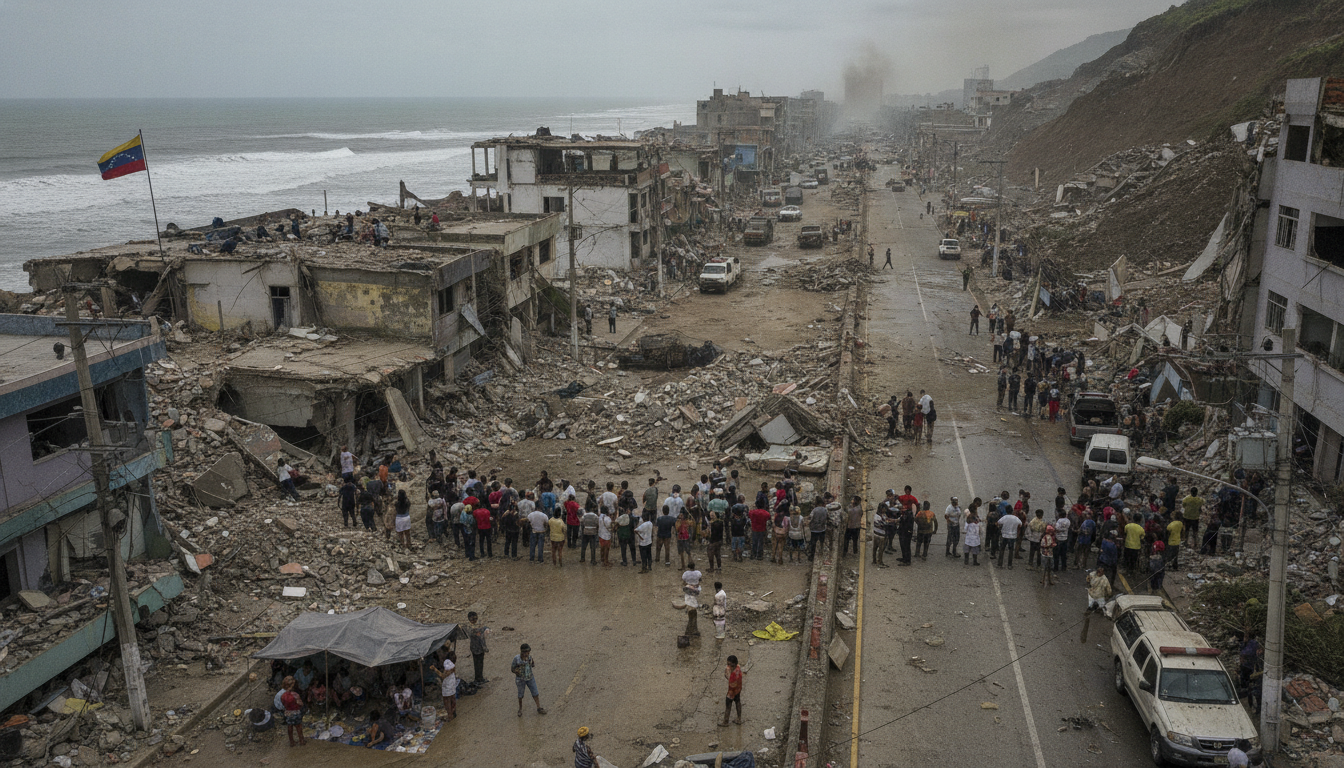
La Guaira earthquake devastates Venezuelan coastal region as families search for survivors
La Guaira earthquake devastates Venezuela’s coast on June 25, 2026; families search for survivors amid slow, under-resourced rescue efforts and widespread damage.
The La Guaira earthquake struck the Venezuelan coastal region on June 25, 2026, leaving entire neighbourhoods in ruins and families scrambling to find loved ones. Two powerful tremors within hours of each other reduced buildings to rubble in the area hardest hit, forcing mass evacuations and street-level searches. Residents and first responders described rescue operations as slow and ill-equipped as they contend with collapsed structures and damaged infrastructure.
La Guaira left hardest hit by twin quakes
Local accounts and on-the-ground reports identify La Guaira as the epicentre of the disaster, with densely populated districts suffering extensive structural collapse. Streets in several suburbs are littered with concrete and twisted metal, making movement difficult and dangerous for both residents and emergency crews. The concentration of damage in coastal communities has compounded the challenge of accessing those trapped beneath debris. Authorities and neighbours alike have warned that the full scope of destruction will only become clear as search teams reach isolated pockets.
Search teams and families comb through rubble
Families in La Guaira spent the day and night sifting through wreckage, calling names and knocking on fractured walls in hopes of finding survivors. Makeshift search parties formed quickly, combining neighbours with limited tools and trained rescuers working in rotation amid unstable structures. Many relatives described long delays before professional teams arrived with heavy-lifting equipment, increasing anxiety about people still unaccounted for under collapsed buildings. The desperate searches are punctuated by the slow, methodical tapping and calls that continue across the worst-affected districts.
Hospitals report strain and resource shortages
Local health centres have reported surges in injured people arriving with crush injuries, fractures and shock, stretching medical capacity to the limit. Hospital staff have had to prioritise care while requesting additional supplies, blood donations and trauma specialists to treat complex injuries. With diagnostic equipment and operating theatres operating under pressure, some patients are being stabilised in corridors and outdoor triage areas. Medical personnel and residents have voiced concern about shortages of critical supplies as the list of needs grows.
Roads, utilities and communications hinder relief
Damage to roads and blocked access points have delayed the arrival of heavy machinery and vital supplies to neighbourhoods most in need. Utility disruptions, including power outages and intermittent phone service, have complicated coordination between local responders and central authorities. Debris-strewn thoroughfares force ambulances and supply convoys to detour, slowing the overall pace of relief operations. Residents report that insufficient lighting at night and damaged infrastructure are increasing risks for rescuers and trapped survivors alike.
Local volunteers lead community response
In the immediate aftermath, neighbourhood groups and volunteers organised shelter, food distribution and ad hoc medical assistance for displaced families. Community members have converted schools and sports halls into temporary reception centres while sharing contact lists and centralising missing-person reports. These grassroots efforts have provided crucial early support where formal emergency services were delayed or overwhelmed. Local leaders say the volunteer response will need to be sustained and coordinated to prevent gaps in shelter, sanitation and food for weeks to come.
Calls grow for national and international aid
Residents and community representatives have urged national authorities to deploy additional search-and-rescue teams, heavy cranes and medical units to La Guaira without delay. Appeals have also been made for international assistance to fill shortfalls in specialised equipment and emergency funding. Organisers emphasise the urgency of rapid deliveries of generators, field hospitals and reinforced logistics to prevent further loss of life. Long-term recovery planners warn that reconstruction and support for displaced households will require sustained financial and technical commitments.
Recovery officials caution that the situation remains fluid and that aftershocks, weather and damaged roads could further complicate operations. As families continue to search and emergency teams work around the clock, the region faces an extended period of rescue, relief and rebuilding that will test local capacity and demand broader assistance. The coming days will reveal the full human and material toll of the La Guaira earthquake and shape the next phase of the response.
