
AI drive-thru ordering spreads across U.S. chains as Canadian unions raise alarm
Major fast-food brands test conversational AI at drive-thrus, prompting debates over efficiency, customer experience and potential job impacts in Canada.
The use of AI drive-thru ordering systems is expanding among major U.S. fast-food chains and entering public discussion in Canada as labour groups warn of possible job displacement. Restaurants and technology firms say the automated systems can shorten wait times and increase sales through targeted offers, while critics point to service errors and the risk of replacing human workers. Several technology providers and restaurant operators have indicated plans to bring these systems to Canadian outlets in the near term.
Major chains expand tests in U.S.
Several high-profile quick-service brands are piloting conversational AI at drive-thrus after initial trials that began in 2021. McDonald’s and Wendy’s have experimented with Google-backed systems, while KFC and Taco Bell have been reported to work with Nvidia on their own AI agents. These pilots reflect a broader industry push to digitize front-line customer interactions.
Industry sources say collaborations vary by company and vendor, with some tests focusing on voice recognition, others on order accuracy or upselling features. The cumulative effect has been a rapid increase in live pilots across thousands of locations, especially where labour shortages and rising costs have pressured margins.
White Castle deploys “Julia” in dozens of locations
White Castle has rolled out an intelligent voice agent named Julia in about 40 restaurants, where the system takes drive-thru orders and relays them to in-store staff. Managers report that the system registers orders faster than individual employees and can free team members to focus on food preparation and assembly. Company representatives also point to higher consistency in order capture as a key benefit.
Store-level managers say the technology required tweaks during installation but now contributes to shorter queue times during peak hours. SoundHound, the vendor behind Julia, has highlighted the system’s ability to suggest add-ons, a feature designed to increase average ticket values.
Technology partnerships and planned Canadian deployments
A number of technology firms have been central to the rollout of conversational AI for drive-thrus, offering speech-to-text, natural language understanding and machine-learning training services. Presto, SoundHound and other vendors have announced intentions to expand their platforms into Canada in the coming months. Restaurant companies contacted in Canada have, however, not uniformly confirmed domestic launch timelines.
Vendors emphasize that multilingual support and regional menu variations are priorities for Canadian deployments, given the country’s linguistic diversity and regulatory environment. Retailers weigh customization, privacy compliance and integration with existing point-of-sale systems before broader rollouts.
Customer interaction and speed concerns
Marketing and AI specialists caution that the conversational model can introduce friction that contradicts the fast-food promise of speed and simplicity. Experts say customers must adapt to a new interaction pattern, which can initially lengthen transactions and increase frustration when the system misinterprets requests. Training the models requires substantial audio data and human review to correct misrecognitions, a process that gradually improves accuracy but takes time.
Proponents argue that generative AI and improved speech models are reducing those errors rapidly, while critics counter that human patience is limited during short, drive-thru exchanges. The balance between natural-sounding dialogue and efficient ordering remains a focal point for engineers and restaurant operators.
High-profile errors and temporary rollbacks
Early pilots have produced notable setbacks that highlight edge cases for conversational systems. There have been instances in which customers exploited vulnerabilities in automated ordering, including an episode in which a large, unrealistic water order overloaded a system and circulated widely online. Such episodes prompted some operators to revert temporarily to human operators until the technology could be hardened.
These failures have reinforced industry caution about unchecked deployment and spurred additional testing protocols, including automated safeguards to detect and block anomalous orders. Companies say those measures are reducing the frequency of disruptive incidents.
Unions and labour leaders press for consultations in Canada
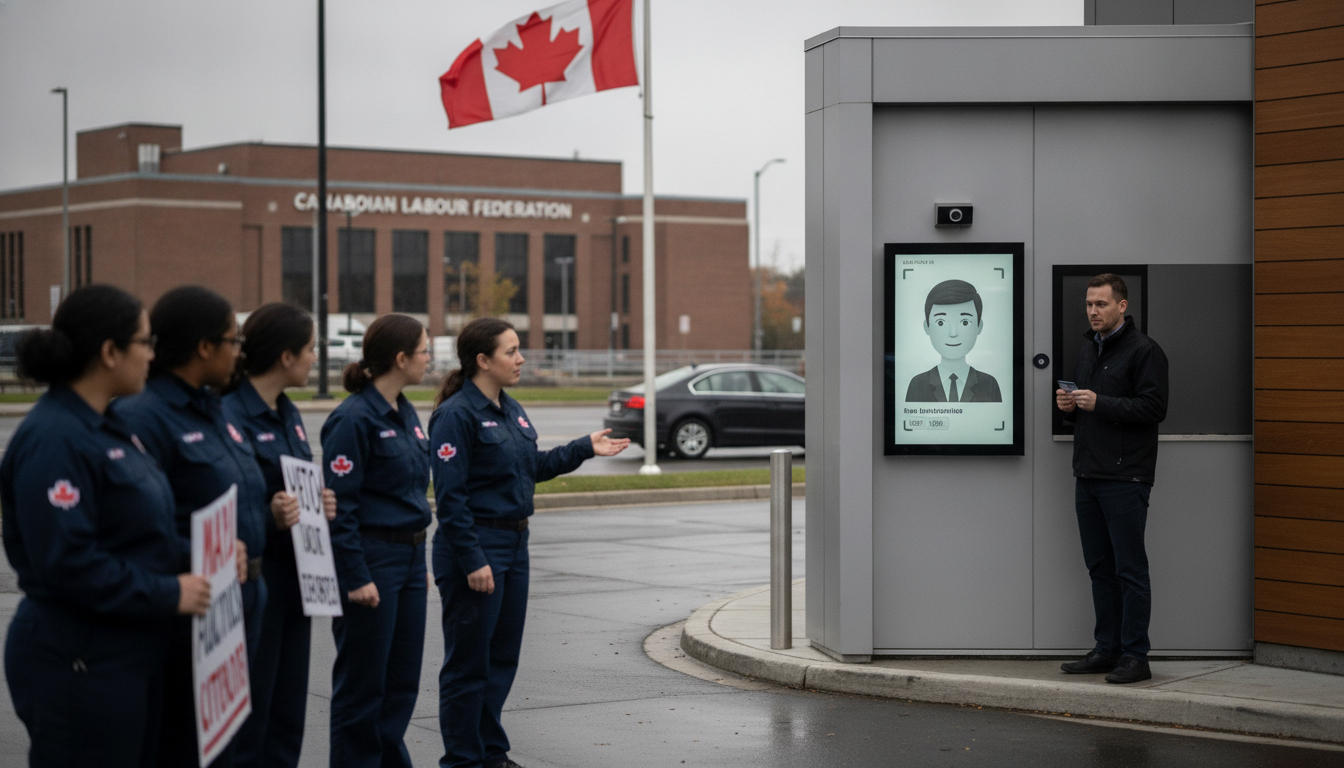
Canadian labour organizations are urging government and industry to involve unions and workers in discussions about workplace AI. Representatives from the Canadian Labour Congress have called for federal consultation and protections to ensure that automation complements rather than replaces staff. They stress that employees are a company’s public face and that removing humans from customer interactions risks eroding service quality and worker livelihoods.
Union leaders advocate for transition plans, retraining programs and collective bargaining on AI implementation to protect jobs and working conditions. The debate in Canada is taking place as vendors prepare pilot launches and as individual chains determine whether to mirror U.S. deployments.
The fate of AI drive-thru ordering in Canada will depend on a mix of technological performance, business decisions and regulatory oversight. As pilots advance and companies tune systems for local markets, the conversation among operators, workers and policymakers is likely to intensify. Ultimately, whether automated voice agents become a standard part of the drive-thru experience will hinge on demonstrated improvements in speed and accuracy, clear labour transition plans, and public acceptance.
