
El Niño’s Ocean Heat Drives Global Rainfall Shifts, ECCC Scientist Says
ECCC explains El Niño: Pacific ocean warming that alters rainfall and shifts global atmospheric patterns, with potential impacts on Canadian weather and risks.
Opening summary: ECCC links Pacific warming to global weather shifts
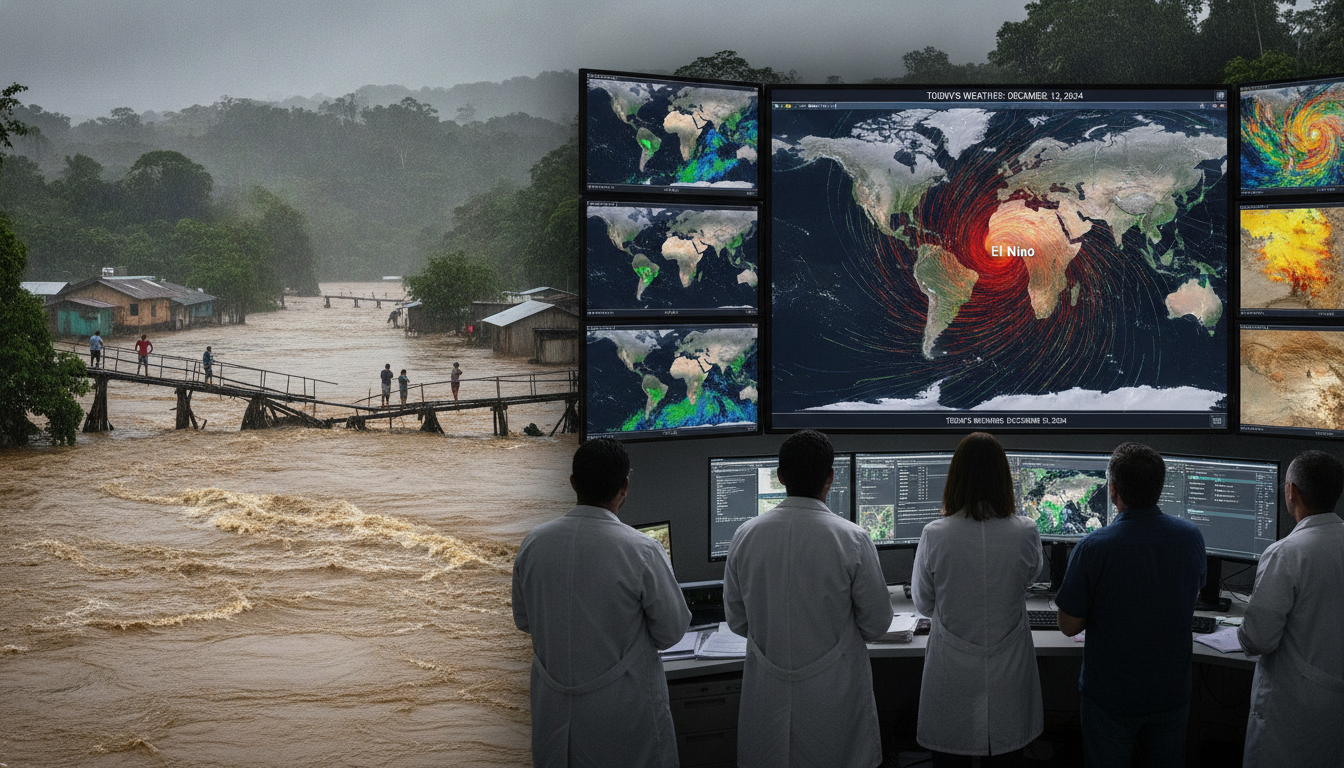
El Niño, a recurring climate pattern marked by warming of the tropical Pacific, is responsible for major shifts in rainfall and atmospheric circulation worldwide, Environment and Climate Change Canada (ECCC) says. Bill Merryfield, a research scientist at ECCC, noted those ocean changes cause “massive shifts in the rainfall in that region,” which then propagate through the atmosphere. The phenomenon typically appears every two to seven years and usually persists for nine to 12 months. Scientists monitor El Niño closely because its ripple effects influence weather, agriculture and disaster risk across many nations.
El Niño’s Pacific warming and cycle
El Niño occurs when surface waters in the eastern and central tropical Pacific become anomalously warm relative to long-term averages. That warming alters the usual east-west temperature gradient across the Pacific and weakens trade winds, which changes ocean and atmospheric circulation patterns. The cycle’s timing is irregular but generally follows the two-to-seven-year cadence described by climate scientists. Because El Niño affects large-scale circulation, its consequences extend far beyond the Pacific basin.
Atmospheric ripple effects worldwide
Warming in the tropical Pacific shifts convection and rain belts, which forces adjustments in the jet streams and large-scale atmospheric waves. Those changes can alter storm tracks, intensity and seasonal rainfall patterns across distant regions from Southeast Asia to the Americas. The global atmospheric response is why a localized ocean warming event in the Pacific can yield weather anomalies on other continents. Meteorologists watch those teleconnections to anticipate droughts, floods and temperature departures months in advance.
Observed consequences in rainfall patterns
Historically, El Niño episodes have been associated with wetter-than-normal conditions in parts of the southern United States and along the Pacific coast of South America. At the same time, regions such as Indonesia and northern Australia often experience reduced rainfall and heightened drought risk during El Niño. These shifts can affect crop yields, freshwater availability and wildfire danger, with cascading economic and humanitarian impacts. Merryfield’s observation about “massive shifts in the rainfall” underscores the broad and sometimes abrupt changes communities can face.
Implications for Canadian weather and sectors
Canada’s response to El Niño is complex and regionally variable, with impacts depending on season and the strength of the event. Western Canada can experience milder, drier winters in some El Niño cases, while Atlantic Canada’s weather may be influenced by altered storm tracks and shifting temperature regimes. Changes in precipitation and temperature patterns affect water resource management, agriculture, fisheries and energy demand, making early planning important for provinces and industry. Public institutions and private operators typically use seasonal forecasts informed by El Niño signals to prepare for a range of possible outcomes.
ECCC analysis and monitoring efforts
Environment and Climate Change Canada maintains continuous monitoring of ocean temperatures, winds and atmospheric indicators to detect El Niño onset and evolution. Researchers like Bill Merryfield analyze observational data and model projections to interpret likely near-term impacts and communicate risk to stakeholders. Seasonal forecasting combines historical analogs with climate model ensembles to provide probabilistic outlooks rather than definitive predictions. ECCC’s briefings aim to give federal and provincial planners the lead time needed to adjust resource allocations and emergency preparedness.
Preparing communities and infrastructure for variability
Given El Niño’s potential to shift rainfall and storm patterns, officials encourage resilience measures in sectors vulnerable to climate variability. Municipalities can review drainage and flood-control capacity, while agricultural operations may alter crop choices, planting schedules or irrigation plans. Emergency management agencies often update contingency plans for wildfire, flood and drought response when seasonal forecasts indicate elevated risk. Clear communication of uncertainties and actionable guidance helps communities weigh options and reduces the likelihood of costly surprise.
Scientific context and long-term outlook
El Niño is one component of a complex climate system that also includes La Niña and longer-term trends such as global warming. Climate change can modulate the baseline conditions on which El Niño events act, potentially affecting their frequency and intensity, a subject of active research. Researchers emphasize that while El Niño produces predictable patterns of anomaly, local impacts depend on interaction with other climate drivers and regional factors. Ongoing investments in observational networks and modeling are central to improving forecast skill and risk management.
El Niño remains a key seasonal signal for forecasters and planners because its ocean-driven forcing often sets the stage for pronounced deviations from typical weather. Environment and Climate Change Canada’s monitoring and analysis are intended to translate those signals into usable information for governments, businesses and the public. Maintaining preparedness and flexible response plans will reduce vulnerability when shifts in rainfall and atmospheric circulation occur.
